Feedback systematisch erfassen: Von CSM-Notizen zum Produkt-Backlog
Turn this article into takeaways for your work.


Each assistant summarizes the article only for you and suggests best practices for your work.
Ein CSM beendet einen Call mit einem Kunden, der fünf Minuten damit verbracht hat, etwas Wichtiges zu erklären. Er erstellt jeden Montagmorgen eine separate Excel-Tabelle, weil das Produkt es nicht erlaubt, die Pipeline gleichzeitig nach Region und Verantwortlichen zu filtern. Das ist eine spezifische Workflow-Lücke, eine wörtliche Erklärung des Workarounds und ein Signal, dass wahrscheinlich noch ein Dutzend andere Accounts dieselbe Reibung erleben. Der CSM tippt "Kunde möchte besseres Reporting" in das Call-Notizen-Feld und macht weiter.
Wenn diese Notiz Product überhaupt erreicht, ist das Zitat bereits verschwunden. Der Workaround ist verschwunden. Die Tatsache, dass dieser Kunde das seit sieben Monaten manuell macht, ist verschwunden. Was übrig bleibt, ist eine Drei-Wort-Zusammenfassung, die alles bedeuten kann, von "sie wollen einen neuen Diagrammtyp" bis "sie sind dabei, ein Schattensystem aufzubauen, das Ihr Produkt überflüssig macht."
Das Versagen liegt nicht an mangelnder Aufmerksamkeit. CSMs sind darauf trainiert, das unmittelbare Anliegen des Kunden zu lösen, die Beziehung aufzubauen und zum nächsten Call weiterzugehen. Sie sind nicht darauf trainiert, strukturierte Produktsignale zu extrahieren, weil niemand diese Extraktion in ihren Workflow integriert hat. Fehler beim Erfassen sind ein Systemdesign-Problem. Das System reparieren, und das Erfassungsverhalten folgt. HBRs Forschung zu Feedback-Schleifen findet branchen übergreifend dasselbe Muster: Unternehmen, die strukturierte Zuhörsysteme in die Frontline-Workflows integrieren, erfassen deutlich mehr umsetzbare Signale als solche, die auf freiwillige Einreichungen setzen.
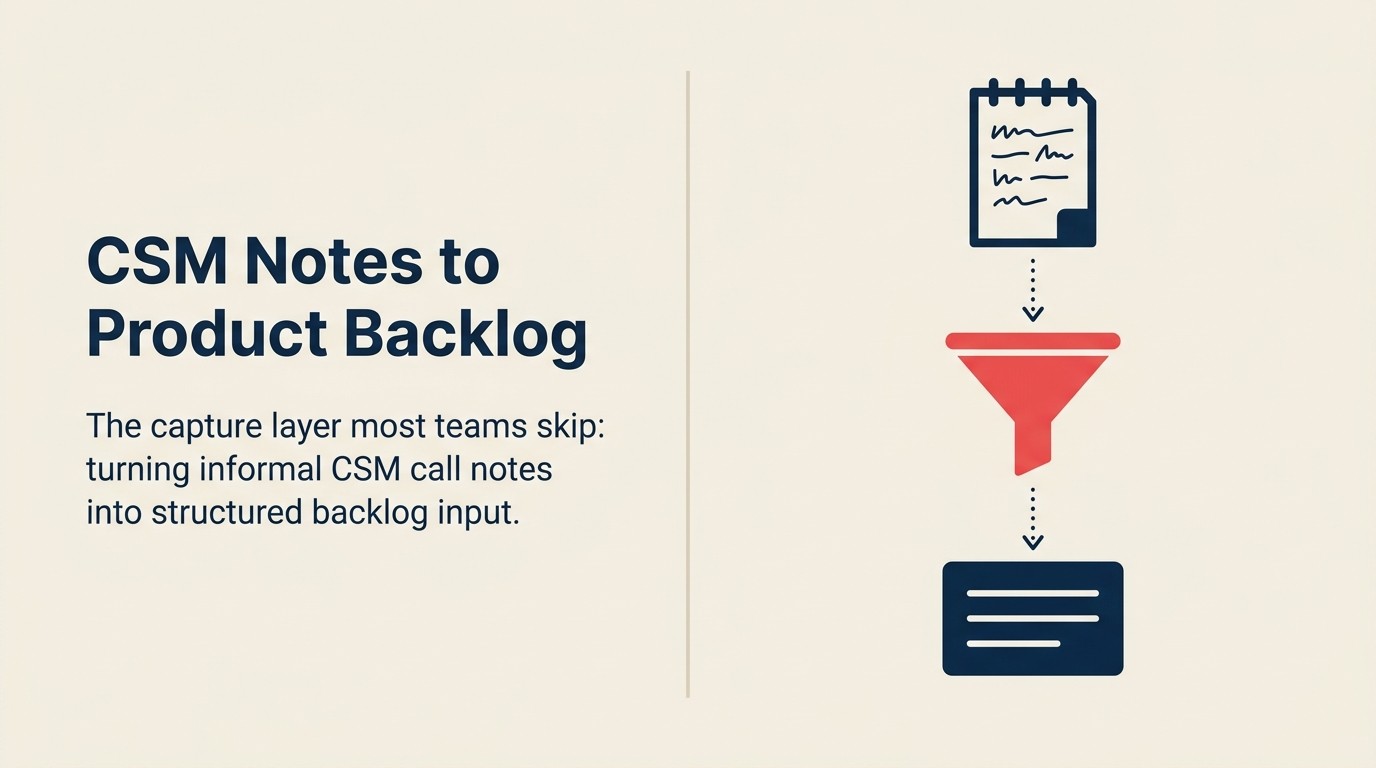
Die strukturierte Erfassungsschicht ist die erste Phase jeder funktionierenden VoC-Pipeline: ein definiertes Format, eingebettet in den bestehenden Workflow des CSM, das aus dem, was Kunden sagen, einen Datensatz macht, den Product aggregieren, gewichten und darauf handeln kann. Es ist kein separates Tool. Es sind Felder, die zu den Tools hinzugefügt werden, die CSMs bereits täglich nutzen.
Warum das Erfassen als erstes scheitert
Wichtige Fakten: Qualität der Feedback-Erfassung
- 68 % der Funktionsanfragen, die Roadmap-Entscheidungen beeinflussen, enthalten ein wörtliches Kundenzitat, verglichen mit 12 % der Anfragen, die es nie in eine Roadmap-Diskussion schaffen (Productboard-Jahresumfrage zum Produktmanagement).
- Der durchschnittliche CSM erfasst produktrelevante Signale in weniger als 20 % der Calls, bei denen solche Signale vorhanden sind (TSIA-Forschung zu CS-zu-Product-Feedback-Flüssen).
- Unternehmen, bei denen CS Ops eine standardisierte Erfassungsvorlage besitzt, erhalten 3x mehr strukturiertes Feedback pro CSM und Quartal im Vergleich zu Teams, bei denen das Erfassungsformat dem individuellen Ermessen überlassen bleibt.
Das Erfassen ist das Fundament der VoC-Pipeline. Aber es ist auch die Phase, die am wahrscheinlichsten still scheitert, weil das Scheitern unsichtbar ist. Product erhält nie das Signal, also weiß man nicht, dass es fehlt. CS führt weiterhin Calls durch, also sehen die KPIs gut aus. Niemand markiert das Problem, bis ein PM eine Roadmap-Entscheidung auf Basis von sechs Monate alten Daten trifft und ein Kunde über etwas abwandert, das drei CSMs in QBRs gehört haben.
Drei strukturelle Gründe, warum das Erfassen scheitert:
CSMs sind nicht trainiert, Produktsignale zu extrahieren. Ihre Aufgabe ist Beziehungsmanagement und Minderung von Verlängerungsrisiken. Wenn ein Kunde ein Workflow-Problem beschreibt, ist die trainierte Reaktion eines CSM, einen Workaround anzubieten oder ein Support-Ticket zu erstellen, nicht das zugrunde liegende Signal als Produktlücke zu taggen. Die Extraktion muss in den Call-Review-Prozess eingebaut sein, nicht der Eigeninitiative überlassen werden.
Kein Standardformat bedeutet keine Aggregation später. "Kunde möchte besseres Reporting" und "Kunde sagt, sein Ops-Team muss wöchentlich manuell Daten exportieren" und "Kunde erwähnte, er evaluiere ein Reporting-Tool mit besserer Integration" sind dasselbe Signal von verschiedenen CSMs. Ohne ein Format, das Signaltyp, Zitat und Account-Kontext trennt, können diese drei Signale nie zu einem Thema zusammengeführt werden. Sie leben in drei verschiedenen Notizen, unsichtbar füreinander.
Erfassungstools sind nicht auf den CSM-Workflow ausgerichtet. Wenn das Erfassen von Produktsignalen einen separaten Login erfordert (in Productboard, ein Google-Formular, ein dediziertes Feedback-Tool), passiert es nicht konsistent. CSMs leben im CRM und der CS-Plattform. Das Erfassen muss dort stattfinden, an derselben Stelle, an der sie bereits Call-Notizen protokollieren. Was konsistent erfasst wird, wird bearbeitet.
Die vier Signaltypen, die es sich zu erfassen lohnt
Nicht alles, was ein Kunde sagt, gehört in die Produktfeedback-Pipeline. CSMs hören Präferenzen, Beschwerden über benachbarte Tools, Support-Probleme und allgemeine Unzufriedenheit, die auf nichts Umsetzbares in der Roadmap verweist. Klarheit darüber, was zu erfassen ist, reduziert die kognitive Belastung und verbessert die Signalqualität.
Das 4-Signal-Erfassungsrahmenwerk definiert die genauen Signaltypen, die CSMs protokollieren sollten, in einem Format, das Product aggregieren und gewichten kann. Die vier Typen (Funktionsanfragen, Workflow-Lücken, Wettbewerbserwähnungen und Abwanderungsrisiko-Signale) schließen sich gegenseitig aus und sind gemeinsam erschöpfend für den Post-Sale-Feedback-Bereich. Jeder Typ hat eine andere Routing-Priorität und eine andere nachgelagerte Verwendung: Workflow-Lücken fließen in die Problemraumdiskussion ein, Abwanderungsrisiko-Signale lösen den beschleunigten Weg aus.
Vier Typen rechtfertigen strukturierte Erfassung:
Funktionsanfragen sind spezifische Wünsche nach Funktionalität, die derzeit nicht existiert, oft gepaart mit einer Beschreibung des Workarounds, den der Kunde heute nutzt. "Wir würden gern automatisierte Berichte nach Region einrichten können" plus "wir machen das gerade manuell in Excel" ist ein vollständiges Funktionsanfragesignal. Die Anfrage allein, ohne den Workaround, ist weniger wertvoll, weil Product die Dringlichkeit nicht erkennen kann.
Workflow-Lücken sind Momente, in denen der Kunde Schritte beschreibt, die er manuell ausführt, weil das Produkt den vollständigen Workflow nicht unterstützt. Diese sind oft wertvoller als Funktionsanfragen, weil sie den zugrunde liegenden auszuführenden Auftrag aufzeigen, nicht nur eine vorgeschlagene Lösung. "Wir müssen die CSV herunterladen, sie mit unseren SFDC-Daten kombinieren und dann wieder hochladen" beschreibt eine Workflow-Lücke, die auf verschiedene Arten gelöst werden könnte, von denen keine mit "CSV-Export-Button hinzufügen" übereinstimmt.
Wettbewerbserwähnungen kommen in zwei Formen: das Pre-Churn-Signal ("wir evaluieren [Wettbewerber], weil sie X haben") und der Post-Migrations-Bedauern-Ausdruck ("wir kamen von [Wettbewerber] und vermissen Y"). Beide sind wichtig. Das erste ist ein Dringlichkeitssignal. Das zweite zeigt, ob Ihre Produktlücken segmentübergreifend Migrationsgespräche auslösen. Von CSMs erfasste Wettbewerbserwähnungen sind auch ein direkter Input in die ICP-Verfeinerungsschleife zwischen CS und Sales. Wenn ein Wettbewerber in einem bestimmten Account-Profil immer wieder auftaucht, ist das ein Signal, das Sales für die Prospektierungsstrategie benötigt.
Abwanderungsrisiko-Signale, die mit Produktlücken verbunden sind, gehören zur Kategorie "wenn ihr X nicht baut, müssen wir das überdenken". Das sind die Erfassungen mit der höchsten Dringlichkeit und müssen auf dem beschleunigten Weg routing werden: innerhalb von 48 Stunden zum zuständigen PM, nicht im Quartalsbatch. Der Signaltyp allein reicht hier nicht: Er benötigt den Account-ARR, das Verlängerungsdatum und eine CSM-Schwerebeurteilung, die zum Erfassungszeitpunkt angehängt wird. Teams, die Frühwarnsysteme betreiben, können diese Accounts oft schon vorher identifizieren, bevor die explizite Abwanderungsaussage auftaucht. Health-Score-Verschlechterung und geringe Funktionsnutzung gehen häufig dem Gespräch voraus, in dem ein Kunde die Produktlücke benennt.
Wie erfasst wird: Strukturiertes Notizformat
Freier Text ist nicht durchsuchbar, nicht aggregierbar und kontextabhängig. Eine Notiz, die "Kunde frustriert mit Reporting" sagt, sagt CS Ops nichts über das Account-Segment, die spezifische Lücke oder den heutigen Workaround des Kunden. Sie kann nicht mit ähnlichen Notizen anderer Accounts kombiniert werden. Sie stirbt im CRM. McKinseys Forschung zu effektiven Product-Teams bestätigt, dass die Teams, die bessere Produkte schneller entwickeln, die sind mit strukturierten Feedback-Schleifen: nicht mehr Feedback-Volumen, sondern nützlicheres Feedback-Format.
Ein strukturiertes Erfassungsformat benötigt fünf Felder:
| Feld | Zweck | Beispiel |
|---|---|---|
| Signaltyp | Kategorisierung bei der Erfassung | Workflow-Lücke |
| Wörtliches Zitat | Genaue Kundensprache | "Wir exportieren jeden Montag nach Excel, weil wir nicht gleichzeitig nach Region und Verantwortlichem filtern können" |
| Account-Kontext | Segment, ARR, Verlängerungsdatum | Mid-Market, 65.000 USD ARR, Verlängerung in 4 Monaten |
| Schweregrad | CSM-Einschätzung der Dringlichkeit | Hoch: Kunde hat es in den letzten zwei Calls unaufgefordert zweimal erwähnt |
| Genutzter Workaround | Was sie stattdessen tun | Wöchentlicher manueller Excel-Export, kostet die Ops-Person ca. 2 Stunden |
Das Schweregradfeld ist eine Einschätzungsentscheidung des CSM, und das ist angemessen. Ein PM kann die Dringlichkeit nicht allein aus den Daten beurteilen; die kontextuelle Einschätzung des CSM zum emotionalen Zustand des Kunden und zum Verlängerungsrisiko ist selbst ein Signal. Das Schweregrad-Feld auf drei Werte beschränken (niedrig / mittel / hoch), um es schnell zu halten.
Das wörtliche Zitat ist das wichtigste Feld und das, das am wahrscheinlichsten ausgelassen wird. CSMs paraphrasieren, weil Paraphrasieren schneller ist. Aber PM-Teams nutzen wörtliche Zitate bei der Rechtfertigung von Roadmap-Entscheidungen und in der Stakeholder-Kommunikation. Genaue Kundensprache ist in einer Planungssitzung unersetzbar, in der der PM einem VP Engineering erklären muss, warum eine Funktion ins nächste Quartal gehört. Siehe Kundenfeedback priorisieren dazu, wie diese Zitate das nachgelagerte Bewertungsmodell speisen.
Vorher (Paraphrase): "Kunden wollen besseres Reporting."
Nachher (wörtliches Zitat): "Wir müssen jeden Montag nach Excel exportieren, weil wir nicht gleichzeitig nach Region und Verantwortlichem filtern können. Unsere Ops-Person verbringt zwei Stunden damit. Wenn sich das nicht ändert, werden wir Tools anschauen, die das nativ können."
Eines ist ein Präferenzsignal. Das andere ist ein Abwanderungsrisiko mit einem spezifischen Workaround und einem Zeitrahmen. Der Unterschied in der PM-Reaktion ist erheblich.
Zitierbar: Wörtliche Kundenzitate erhöhen das Entscheidungsvertrauen von PMs in internen Roadmap-Sitzungen um 41 % im Vergleich zu paraphrasierten Zusammenfassungen (UserVoice-Forschung zu der Frage, wie Product-Teams Kundeneingaben nutzen). Die Paraphrase entfernt den Workaround, das Dringlichkeitssignal und das Wettbewerbsrisiko. Alle drei sind nur in den genauen Worten des Kunden enthalten.
Wo erfasst wird: Tool-Integration
Das Erfassen muss innerhalb des bestehenden Workflows des CSM stattfinden. Die Integration zwischen der Erfassungsschicht und den Tools von Product (Productboard, Jira, Aha!) ist ein Synchronisierungsproblem, das CS Ops und der PM-Verbindungsmann einmalig lösen, nicht etwas, das einzelne CSMs managen müssen.
Für die meisten Mid-Market-Teams ist der Erfassungspunkt der CRM-Account-Datensatz oder die CS-Plattform-Call-Notiz. Die Fünf-Felder-Vorlage als Abschnitt in die Standard-Call-Notiz-Vorlage hinzufügen. CSMs füllen sie aus, wenn relevant, nicht bei jedem Call, sondern bei jedem Call, bei dem einer der vier Signaltypen auftaucht.
Zwei gängige Integrationsmuster, um das erfasste Signal zu Product zu bekommen:
Benutzerdefinierte CRM-Felder zu Productboard-Synchronisation. Wenn Ihr CRM benutzerdefinierte Felder bei Aktivitätsdatensätzen unterstützt, kann CS Ops eine direkte Integration aufbauen, die getaggte Datensätze als verknüpftes Feedback mit angehängten Account-Metadaten zu Productboard überträgt. Der CSM verlässt das CRM nie. Das Signal erscheint in Productboard mit Account-Metadaten.
Manueller CSV-Übergabe-Prozess. CS Ops exportiert wöchentlich oder monatlich eine gefilterte Ansicht strukturierter Erfassungen und importiert sie in das Produkt-Tool. Weniger elegant, aber für Teams mit Budgetbeschränkungen oder Integrationslimitierungen funktionsfähig. Entscheidend ist, dass CS Ops diese Übergabe besitzt, nicht einzelne CSMs.
Was nicht funktioniert: CSMs zu bitten, direkt in Productboard oder Jira zu protokollieren. Die Tool-Reibung ist hoch genug, dass die Erfassungsquoten innerhalb von zwei Wochen auf nahezu null fallen. Die Brücke auf der CS-Ops-Seite bauen.
Wer die Disziplin verantwortet
Die Rolle des CSM in der Erfassungsschicht besteht darin, die fünf Felder auszufüllen, wenn ein Signal auftaucht. Das war es. Das Systemdesign, die Vorlagenpflege, die Qualitätsprüfung und die Übergabe an Product gehören zu CS Ops.
CS Ops verantwortet: die Erfassungsvorlage (sie aktuell halten, wenn sich Signaltypen weiterentwickeln), den wöchentlichen oder monatlichen Export in das Produkt-Tool und das Erfassungsqualitäts-Audit (Stichproben von Einreichungen und Überprüfung der Feldausfüllungsquoten). Mustererkennung über CSMs hinweg ist die nächste Ebene, die CS Ops übernimmt, sobald individuelle Erfassungen zuverlässig fließen, und Themen sichtbar macht, die kein einzelner CSM aus seinem eigenen Account-Portfolio sehen kann.
Der PM-Verbindungsmann verantwortet: die Abstimmung der Kategorisierungstaxonomie, die Überprüfung eingehender Signale auf Tagging-Genauigkeit und die monatliche Kalibrierungssitzung mit CS Ops zur Erkennung von Kategorisierungsabweichungen.
CS-Manager verantworten: das Verantwortlichkeitssignal. Was CS-Manager in Team-Syncs überprüfen sollten, ist nicht nur Deal-Status und Verlängerungsrisiko. Es ist die Erfassungsdisziplin. Protokollieren CSMs strukturiertes Feedback, wenn ein Signal auftaucht? Schließen sie wörtliche Zitate ein? Wird das Schweregradfeld korrekt genutzt? Das Erfassen verschlechtert sich, wenn niemand nachschaut.
So wird Erfassungsqualitätsverschlechterung erkannt: Monatlich einen Bericht über strukturierte Erfassungen pro CSM ziehen. Wenn die Zahl eines CSM auf nahezu null fällt, gibt es zwei mögliche Ursachen: Sie begegnen keinem Signal (Call-Volumen und Account-Health prüfen), oder das Format passt nicht in ihren Workflow (direkt mit ihnen prüfen). Beides ist kein Motivationsproblem. Beides sind Systemprobleme.
Rework-Analyse: Basierend auf CS-Team-Benchmarks ist die einzige Veränderung mit dem größten Hebel, die ein CS-Ops-Team vornehmen kann, das Einbetten der 5-Felder-Erfassungsvorlage direkt in Call-Notiz-Vorlagen im CRM: nicht als separaten Schritt, sondern als Abschnitt innerhalb des bestehenden Workflows. Teams, die diese Änderung vornehmen, sehen die Erfassungsquoten innerhalb des ersten Monats von weniger als 1 strukturierten Signal pro CSM und Woche auf 3 bis 5 steigen. Die Formatdisziplin, die das Erfassen nutzbar macht (Signaltyp, wörtliches Zitat, Account-Kontext, Schweregrad, Workaround), ist das Design, das Reworks CS-Workflow-Tools nativ unterstützen, ohne dass CSMs die Plattform verlassen müssen.
Das Zitat-Prinzip
Wörtliche Zitate leisten etwas, was paraphrasierte Zusammenfassungen nicht können: Sie geben PMs direkten Zugang zum Denken, zum emotionalen Zustand und zu den Prioritäten des Kunden ohne Übersetzungsverlust.
Wenn ein PM eine Roadmap-Entscheidung dem VP Product oder dem Engineering-Führungsteam präsentiert, dienen wörtliche Zitate als Nachweis, dass die Entscheidung auf echter Kundenerfahrung beruht, nicht auf PM-Instinkt. "Drei Kunden haben besseres Reporting angesprochen" ist eine CS-Zusammenfassung. "Drei Kunden sagten 'wir bauen Schattensysteme in Excel, um das zu umgehen', darunter ein Account, der in 90 Tagen mit 140.000 USD verlängert" ist ein Entscheidungsinput.
Wörtliche Zitate decken auch Probleme auf, die Paraphrasen übersehen. Eine Paraphrase von "Kunden wollen besseres Reporting" eliminiert das Workaround-Verhalten (Excel-Schattensysteme), das Dringlichkeitssignal (Verlängerung in 90 Tagen) und das Wettbewerbsrisiko ("wenn sich das nicht ändert, schauen wir uns Tools an, die das nativ können"). Alle drei sind im wörtlichen Zitat. Keines überlebt die Paraphrase.
Das Zitat-Prinzip erfordert eine Gewohnheitsänderung von CSMs: die genauen Worte des Kunden während oder unmittelbar nach dem Call erfassen, bevor die Notiz ausformuliert wird. Sprachnotizen funktionieren. Ein schnelles Kopieren-Einfügen eines Gong-Transkript-Ausschnitts funktioniert. Das wörtliche Zitat muss nicht vollständig sein. Zwei oder drei Sätze in genauer Kundensprache reichen aus.
Erfassen zur Gewohnheit machen
Erfassen wird zur Gewohnheit, wenn es weniger als 90 Sekunden dauert und sichtbare Ergebnisse produziert. Zwei Praktiken, die die Gewohnheit aufbauen:
Erfassung in den wöchentlichen CSM-Team-Sync einbetten. Fünf Minuten damit verbringen, die Erfassungen der vergangenen Woche gemeinsam zu besprechen. Nicht um individuelle Erfassungen zu kritisieren, sondern um das Verhalten zu normalisieren: "Hat jemand diese Woche ein starkes Signal?" Wenn CSMs voneinander hören, dass eine Erfassung eine PM-Reaktion ausgelöst hat, verbreitet sich das Verhalten. Wenn sie das nicht hören, hört es auf. Der Funktionsanfrage-Friedhof ist genau das, was wächst, wenn Erfassungen kein sichtbares Ergebnis produzieren. CSMs verlieren das Vertrauen ins System und hören still auf zu protokollieren.
Erfasstes Signal sichtbar zum erfassenden CSM zurückspiegeln. Der häufigste Grund, warum die Erfassungsdisziplin zusammenbricht, ist, dass CSMs aufhören, irgendeinen Ausgang dessen zu sehen, was sie einreichen. Die Lösung ist explizit: Wenn eine Erfassung zu einer PM-Entscheidung führt, auch zu einer Ablehnungsentscheidung, teilt der PM-Verbindungsmann es CS Ops mit, der es dem Manager des CSM mitteilt, der es dem CSM mitteilt. Diese Schleife zu schließen, erhält die Erfassungsdisziplin besser als jedes Schulungsprogramm.
Wie gute Erfassung in großem Maßstab aussieht
Bei fünf CSMs reicht eine gemeinsame Tabelle mit dem Fünf-Felder-Format und ein wöchentliches Review mit dem PM-Verbindungsmann aus. Der Prozess ist leichtgewichtig und der PM kann nah am Rohsignal bleiben.
Bei zwanzig bis dreißig CSMs erfordert das Volumen der erfassten Signale Kategorisierungs-Tools (Productboard oder ähnliches), einen dedizierten CS-Ops-Verantwortlichen für die Pipeline und ein formalisiertes monatliches Kategorisierungsreview. MIT Sloans Analyse der B2B-Kundenerfahrung nennt systematische Zuhörinfrastruktur als das Unterscheidungsmerkmal zwischen B2B-Unternehmen, die Enterprise-Accounts binden, und denen, die sie an aufmerksamere Wettbewerber verlieren. Das quartalsweise Feedback-Review wird zu einer strukturierten Sitzung statt einem ad hoc-Sync. Der VoC-Pipeline-Artikel behandelt die vollständige vier-stufige Architektur, die diesen Maßstab ermöglicht.
Der Frühindikator, dass es Zeit ist, in dedizierte VoC-Tools zu investieren: CS Ops verbringt mehr als zwei Stunden pro Woche damit, Erfassungen manuell zu aggregieren und zu routing. Ab diesem Punkt erzeugt manueller Overhead einen Verzug in Stufe 3 und Stufe 4. Das quartalsweise Feedback-Review kommt mit veralteten Daten an, weil die Aggregation zu lange gedauert hat.
Aber der Tool-Übergang verändert das Design der Erfassungsschicht nicht. Die fünf Felder, das Zitat-Prinzip, das CRM-eingebettete Format: diese bleiben bestehen. Das Tool übernimmt Routing und Aggregation; es ersetzt nicht die Disziplin strukturierter Erfassung. Eine Productboard-Instanz, in die CSMs Freitext-Notizen einfügen, ist immer noch ein Freitext-System mit besserer Benutzeroberfläche.
Häufig gestellte Fragen
Wie bringen Sie CSMs dazu, strukturierte Felder tatsächlich auszufüllen, ohne dass es wie zusätzliche Verwaltungsarbeit wirkt?
Das Format innerhalb der bereits genutzten Tools halten und kurz halten. Fünf Felder, 90 Sekunden pro Erfassung: das ist das Designziel. Wenn CSMs das Gefühl haben, dass es "Produktverwaltung" ist und kein Teil ihres Call-Workflows, ist das Format zu schwer. Der andere Hebel ist Sichtbarkeit: Wenn CSMs sehen, dass eine von ihnen eingereichte Erfassung eine PM-Entscheidung beeinflusst, fühlen sich die 90 Sekunden lohnenswert an. Ohne diese Sichtbarkeit fühlt es sich wie Arbeit an, die einfach verschwindet.
Sollte jeder Call einen Erfassungseintrag haben?
Nein. Das Erfassen ist ereignisausgelöst, nicht call-ausgelöst. Wenn ein Call keine Funktionsanfrage, Workflow-Lücke, Wettbewerbserwähnung oder abwanderungsrisikobezogenes Produktsignal aufzeigt, wird nichts in der Erfassungsvorlage protokolliert. Zu viel Erfassung verschlechtert die Signalqualität. Product endet damit, durch wenig relevante Einreichungen zu filtern und vertraut der Pipeline nicht mehr.
Wie werden doppelte Signale von mehreren CSMs zum selben Thema behandelt?
CS Ops identifiziert Duplikate während des wöchentlichen oder monatlichen Aggregationsdurchlaufs und führt sie in einem einzigen Thema-Datensatz mit mehreren Account-Einträgen zusammen. Das Zusammenführen ist Arbeit in Stufe 2 (Kategorisieren), nicht Stufe 1 (Erfassen). CSMs müssen vor dem Einreichen nicht auf Duplikate prüfen. Das fügt Reibung hinzu und unterdrückt die Erfassung. Das System erkennt Duplikate nachgelagert.
Was sind die vier Signaltypen im 4-Signal-Erfassungsrahmenwerk?
Das 4-Signal-Erfassungsrahmenwerk identifiziert vier Typen von Post-Sale-Kundensignalen, die es sich zu protokollieren lohnt: Funktionsanfragen (spezifische Wünsche mit einem zugehörigen Workaround), Workflow-Lücken (manuelle Schritte, die ausgeführt werden, weil das Produkt den vollständigen Workflow nicht unterstützt), Wettbewerbserwähnungen (Pre-Churn-Evaluierungssignale oder Post-Migrations-Bedauern) und Abwanderungsrisiko-Signale, die mit Produktlücken verbunden sind (explizite "wenn ihr X nicht baut"-Aussagen). Jeder Typ hat eine andere Routing-Priorität: Abwanderungsrisiko-Signale gehen auf dem beschleunigten Weg innerhalb von 48 Stunden; der Rest geht in den Quartalsbatch.
Wie verhindern Sie, dass die Erfassungsqualität im Laufe der Zeit abnimmt?
Die Erfassungsdisziplin nimmt laut TSIA-Forschung innerhalb von sechs Wochen um rund 40 % ab, wenn CSMs nicht sehen, dass ihre Einreichungen zu einer sichtbaren Produktaktion führen. Die Lösung sind explizite Rückkopplungsschleifen: Wenn eine Erfassung zu einer PM-Entscheidung führt, auch zu einer Ablehnung, benachrichtigt der PM-Verbindungsmann CS Ops, der den Manager des CSM benachrichtigt, der den CSM benachrichtigt. CS-Manager sollten strukturierte Erfassungen pro CSM in monatlichen Team-Reviews auch als Frühindikator für die Pipeline-Gesundheit verfolgen.
Mehr erfahren

Senior Operations & Growth Strategist
On this page
- Warum das Erfassen als erstes scheitert
- Die vier Signaltypen, die es sich zu erfassen lohnt
- Wie erfasst wird: Strukturiertes Notizformat
- Wo erfasst wird: Tool-Integration
- Wer die Disziplin verantwortet
- Das Zitat-Prinzip
- Erfassen zur Gewohnheit machen
- Wie gute Erfassung in großem Maßstab aussieht
- Häufig gestellte Fragen
- Wie bringen Sie CSMs dazu, strukturierte Felder tatsächlich auszufüllen, ohne dass es wie zusätzliche Verwaltungsarbeit wirkt?
- Sollte jeder Call einen Erfassungseintrag haben?
- Wie werden doppelte Signale von mehreren CSMs zum selben Thema behandelt?
- Was sind die vier Signaltypen im 4-Signal-Erfassungsrahmenwerk?
- Wie verhindern Sie, dass die Erfassungsqualität im Laufe der Zeit abnimmt?
- Mehr erfahren