More in
Sales-Process-Playbook
Die SDR-zu-AE-Übergabe: So halten Sie sie schriftlich fest, damit sie wirklich funktioniert
Apr. 18, 2026
Deal-Desk-Grundlagen: So können kleinere Vertriebsteams schneller genehmigen und abschließen
Apr. 18, 2026
Commit, Best Case, Pipeline: Forecast-Begriffe einheitlich im Team definieren
Apr. 18, 2026
Win/Loss-Analyse ohne Verzerrung: Ein wiederholbarer Prozess für Vertriebsteams
Apr. 18, 2026
Einen Vertriebsprozess Schritt für Schritt nach Deal-Typ aufbauen
Apr. 18, 2026 · Currently reading
Deals mit mehreren Ansprechpartnern vorantreiben, ohne den Champion zu verärgern
Apr. 18, 2026
Der Pipeline-Einbruch in der Mitte: Stockende Deals diagnostizieren und beheben
Apr. 18, 2026
Mutual Action Plans: Wann sie helfen und wann sie schaden
Apr. 18, 2026
Sales-Operating-Kadenz: Vom Daily Stand-up bis zum quartalsweisen QBR
Apr. 18, 2026
Forecast-Kadenz: Wöchentlich vs. Monatlich vs. Kontinuierlich – was funktioniert und wann
Apr. 6, 2026
Den Vertriebsprozess Deal-Typ für Deal-Typ aufbauen
Turn this article into takeaways for your work.


Each assistant summarizes the article only for you and suggests best practices for your work.
Die meisten Vertriebsteams führen eine einzige Pipeline für alle Deals. New Logo-Interessenten, Expansion-Gespräche mit Bestandskunden und Renewals durchlaufen alle dieselben Phasen mit denselben Abschlusskriterien und denselben erwarteten Close-Timelines. Das ist der Standard, weil er einfach einzurichten ist.
Aber das Ergebnis ist eine Pipeline, die weder Forecasts noch Coaching ermöglicht. Die Lösung beginnt mit dem Gestalten von Pipeline-Phasen, die tatsächlich dem Kaufverhalten der Kunden entsprechen, und dem anschließenden Aufbau einer Deal-Typ-Segmentierung darüber.
Ein Renewal in Phase 3 ist nicht dasselbe wie ein New Logo in Phase 3. Ein New Logo erfordert vom Käufer eine völlig neue Entscheidung; ein Renewal erfordert, eine bestehende zu rechtfertigen. Die Risiken sind unterschiedlich, die Einwände sind unterschiedlich, die beteiligten Stakeholder sind unterschiedlich, und die durchschnittliche Zeit bis zum Abschluss ist unterschiedlich. Beide durch denselben Prozess zu führen bedeutet, dass Ihre Phasendefinitionen für keinen von beiden gut passen.
Das Ziel ist nicht, ein Dutzend Pipeline-Varianten zu erstellen, die Ihr CRM unhandhabbar machen. Es geht darum, drei separate Prozess-Tracks zu gestalten, einen für jeden Deal-Typ, die die Forecast-Genauigkeit verbessern und Managern konkrete Coaching-Ansätze bieten.
Warum Einheitspipelines Manager in die Irre führen
Wenn Sie Deal-Typen in einer einzigen Pipeline vermischen, entstehen zwei Probleme.
Gartner-Forschung zum Thema Pipeline-Management hat ergeben, dass Unternehmen mit Deal-Typ-Segmentierung in ihrem CRM eine um 28 % höhere Forecast-Genauigkeit und deutlich bessere Coaching-Spezifität erzielen als solche, die eine einzige gemischte Pipeline führen.
Erstens werden Ihre Kennzahlen uninterpretierbar. Ihre win rate liegt wahrscheinlich irgendwo zwischen 20 und 50 %, aber dieser Durchschnitt verbirgt die Tatsache, dass Renewals zu 80 %, Expansions zu 55 % und New Logos zu 25 % abgeschlossen werden. Das sind drei verschiedene Geschäftsrealitäten. Eine „gemischte win rate von 40 %" liefert weder Erkenntnisse noch verwertbare Ziele.
Zweitens hören Ihre Phasendefinitionen auf, das reale Kaufverhalten widerzuspiegeln. Phase 3 bedeutet „Angebot übermittelt" für ein New Logo (bei dem der Käufer noch lernt) und etwas ganz anderes für ein Renewal (bei dem der Käufer das Produkt bereits kennt und die Wechselkosten abwägt). Ein Manager, der „10 Deals in Phase 3" sieht, sieht eine Zahl, kein Geschäft.
Die Lösung ist nicht mehr Komplexität. Es ist angemessene Segmentierung: separate Prozesse für Deals, die sich grundlegend unterscheiden, und eine einheitliche Infrastruktur, damit Sie nicht drei völlig getrennte CRM-Systeme verwalten müssen.
Schritt 1: Kerntypen identifizieren
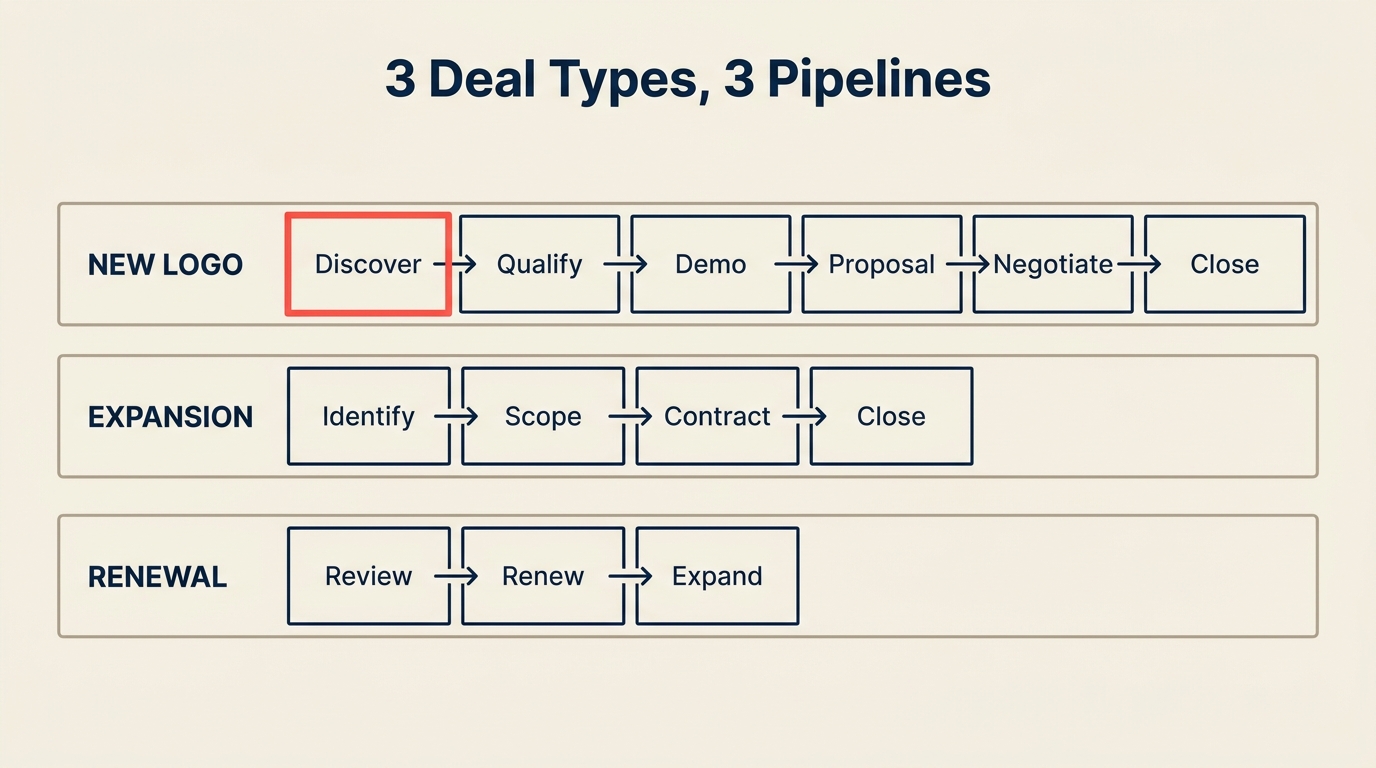
Die meisten B2B-Vertriebsteams können 90 % ihres Umsatzes mit drei Deal-Typen abdecken:
New Logo: Neukundengewinnung. Der Käufer hat keine bestehende Beziehung zu Ihrem Unternehmen und trifft eine neue Kaufentscheidung.
Expansion: Verkauf von zusätzlichen Produkten, Lizenzen oder Leistungsumfang an einen bestehenden Kunden. Die Beziehung besteht; die Frage ist, ob sie ausgebaut werden soll.
Renewal: Erneuerung eines bestehenden Kunden für die weitere Nutzung vor Ablauf des Vertrags. Der Standard ist die Fortführung; das Risiko ist Churn.
Bevor Sie separate Prozesse entwickeln, zählen Sie Ihre Deals nach Typ für das vergangene Jahr. Wenn 90 % Ihres Umsatzes aus New Logos stammen und Expansions sowie Renewals nur vereinzelt vorkommen, ist der Aufbau vollständiger Prozesse für alle drei möglicherweise verfrüht. Konzentrieren Sie sich zunächst auf New Logos und fügen Sie die anderen hinzu, wenn das Volumen es rechtfertigt.
Bei einer gemischten Situation: segmentieren Sie jetzt. Und widerstehen Sie der Versuchung, sofort einen vierten Typ hinzuzufügen. Mehr als drei Deal-Typen in der ersten Iteration schafft mehr Probleme als es löst.
Schritt 2: New Logo-Prozess gestalten
New Logo-Deals sind am schwierigsten abzuschließen und am aufwändigsten zu managen. Jedes Phasen-Abschlusskriterium sollte eine echte Verschiebung im Kaufverhalten widerspiegeln.
Empfohlene Phasen:
| Phase | Name | Abschlusskriterien |
|---|---|---|
| 1 | Prospecting | ICP bestätigt; sinnvoller Kontakt hergestellt |
| 2 | Discovery | Problem vom Käufer artikuliert; economic buyer identifiziert |
| 3 | Qualification | Budgetrahmen bestätigt; Entscheidungsprozess verstanden; Timeline genannt |
| 4 | Evaluation | Demo oder Trial abgeschlossen; interner champion identifiziert; Stakeholder-Map erstellt |
| 5 | Proposal | Formales Angebot übermittelt; mündliches Interesse bestätigt |
| 6 | Negotiation | Geschäftliche Konditionen vereinbart; Beschaffungsprozess oder rechtliche Prüfung läuft |
| 7 | Closed Won/Lost | Vertrag unterschrieben oder Entscheidung gefallen |
Wesentliche Merkmale des New Logo-Prozesses:
- Längste durchschnittliche Zyklusdauer (typischerweise 2-4x länger als Expansion)
- Höchstes Risiko durch multi-stakeholder-Komplexität
- Erfordert explizite Discovery von Problem, Budget und Kaufprozess
- Champion-Identifikation ist eine Phasenvoraussetzung, keine optionale Aktivität
- Wettbewerb ist hier am aktivsten
Qualifikationsfragen für Net-New:
- Warum schauen sie sich jetzt um? (Auslöseereignis)
- Wer evaluiert intern und extern noch?
- Wie haben sie zuvor ähnliche Software gekauft?
- Was würde sie beim Status quo halten?
Jede dieser Fragen verweist auf ein spezifisches Kriterium in Ihrem Qualifizierungsrahmen. Wenn Sie MEDDIC verwenden, ordnet sich das Auslöseereignis dem „Implicate the Pain" zu und die Stakeholder-Frage der Identifikation des economic buyers.
Schritt 3: Expansion-Prozess gestalten
Expansion-Deals werden schneller abgeschlossen und erfordern weniger Discovery, da der Käufer Sie bereits kennt. Aber sie haben eigene Risiken.
Empfohlene Phasen:
| Phase | Name | Abschlusskriterien |
|---|---|---|
| 1 | Opportunity Identified | Expansion-Auslöser bestätigt (Wachstum, neuer Use Case, neues Team) |
| 2 | Internal Champion | Täglicher champion eingebunden; Business Case skizziert |
| 3 | Evaluation | Spezifischer Expansion-Umfang vereinbart; Stakeholder für neuen Umfang identifiziert |
| 4 | Proposal | Expansion-Konditionen vorgeschlagen; bestehender Vertragskontext geprüft |
| 5 | Negotiation | Kommerzielle Konditionen vereinbart; Beschaffungsprozess eingebunden falls erforderlich |
| 6 | Closed Won/Lost | Nachtrag unterzeichnet oder abgelehnt |
Was sich gegenüber New Logo unterscheidet:
Das Customer-Success-Team bringt die Expansion-Gelegenheit oft ein, bevor der Vertrieb beteiligt ist. Dieser Handoff von CS zu Sales muss ebenso klar definiert sein wie Ihr SDR-to-AE Handoff für New Logos. Wer löst ihn aus? Welche Informationen werden übergeben? Welche Rolle spielt das CS-Team während des Expansion-Vertriebsprozesses?
Expansion-Deals scheitern am häufigsten aus zwei Gründen: Der neue Käufer (zum Beispiel eine andere Abteilung) vertraut der bestehenden Beziehung nicht, oder der bestehende champion hat keine Entscheidungsbefugnis über den neuen Umfang. Beides ist durch frühes Stakeholder-Mapping lösbar.
Zu identifizierende Stakeholder bei Expansions:
- Der economic buyer für den neuen Umfang (kann sich vom ursprünglichen Käufer unterscheiden)
- Der Umsetzungsverantwortliche (neue Nutzer bedeutet oft neue IT-Beteiligung)
- Der interne champion, der die Expansion befürwortet
Schritt 4: Renewal-Prozess gestalten
Renewals sind der am meisten vernachlässigte der drei Deal-Typen, oft als administrative Aufgaben statt als Vertriebsprozesse behandelt. Das ist ein Fehler. Churn entsteht am häufigsten, wenn Renewal als selbstverständlich gilt, bis es das nicht mehr ist.
Empfohlene Phasen:
| Phase | Name | Abschlusskriterien | Start |
|---|---|---|---|
| 1 | At-Risk Assessment | Health Score geprüft; CS meldet Risikosignale | 90 Tage vor Renewal |
| 2 | Executive Alignment | Business Review mit economic buyer terminiert | 75 Tage vor Renewal |
| 3 | Value Confirmation | ROI oder Ergebnisse dokumentiert und präsentiert | 60 Tage vor Renewal |
| 4 | Terms Negotiation | Kommerzielle Konditionen vorgeschlagen; etwaige Änderungen abgestimmt | 45 Tage vor Renewal |
| 5 | Closed Won/Lost | Renewal unterzeichnet oder Churn | Vor Vertragsablauf |
90 Tage vor Renewal zu starten ist nicht aggressiv. Es ist das Minimum.
Forrester-Forschung zur Kundenbindung zeigt, dass proaktives Renewal-Engagement ab 90+ Tagen vor Vertragsablauf stark mit höheren Renewal-Raten und geringerem Churn korreliert, verglichen mit reaktiven Prozessen, die innerhalb von 30 Tagen eingeleitet werden.
Teams, die Renewal-Gespräche erst 30 Tage vorher starten, verhandeln bereits aus einer schwachen Position. Der Käufer, der zwei Monate lang über Alternativen nachgedacht hat, bewertet Ihr Renewal-Angebot anders als jemand, der während der gesamten Beziehung eingebunden und an den Wert erinnert wurde.
So sieht „at risk" 90 Tage vorher aus:
- Nutzung unterhalb erwarteter Schwellenwerte
- Ungelöste Support-Tickets oder Produktbeschwerden
- Interner champion hat das Konto verlassen
- Fusion, Akquisition oder Budgetumstrukturierung beim Kunden
- Kein Kontakt zum Executive Sponsor seit 60+ Tagen
Übernehmen Sie jedes gefährdete Konto, bevor der Renewal-Prozess formal beginnt. CS und Vertrieb müssen sich einigen, was „at risk" bedeutet und wer für den Wiederherstellungsplan verantwortlich ist.
Schritt 5: CRM-Implementierung
Sie benötigen keine vollständig separate CRM-Pipeline für jeden Deal-Typ. Aber Sie brauchen eine Deal-Typ-Segmentierung in Ihrem bestehenden Setup.
Was zu konfigurieren ist:
Deal-Typ-Feld: Ein Pflichtfeld bei jeder Opportunity (New Logo, Expansion, Renewal). Dieses eine Feld ermöglicht die segmentierte Berichterstattung. Ihr CRM-Datenmodell sollte dieses Feld von Anfang an berücksichtigen, nicht als nachträglichen Gedanken.
Pipeline-Phasen: Wenn Ihr CRM mehrere Pipeline-Ansichten unterstützt, erstellen Sie einen pro Deal-Typ. Falls nicht, verwenden Sie eine einzige Pipeline mit Phasennamen, die allgemein genug sind, um für alle drei zu gelten (Discovery, Evaluation, Proposal, Negotiation, Closed), ergänzt durch deal-typspezifische Anforderungen im Deal-Datensatz.
Gemeinsame Felder (für alle Deal-Typen):
- Deal-Inhaber
- Close Date
- ARR/TCV
- Forecast-Kategorie
- Datum der letzten Aktivität
Deal-typspezifische Felder:
- New Logo: Wettbewerber, Auslöseereignis, Anzahl gemappter Stakeholder
- Expansion: Expansion-Auslöser, Ende des bestehenden Vertrags, CS-Handoff-Datum
- Renewal: Vertragsablaufdatum, Health Score, At-Risk-Flag, Tage seit letztem Executive-Kontakt
Was zu vermeiden ist: Erstellen Sie keine sechs Phasen für New Logos und sechs andere für Renewals, wenn Sie nur eine Pipeline-Ansicht haben. Ihre Vertriebsmitarbeiter werden das Einfachste nutzen. Komplexität, die nicht genutzt wird, ist schlechter als keine Komplexität.
Schritt 6: Reporting nach Deal-Typ
Sobald Sie den Deal-Typ bei jeder Opportunity hinterlegt haben, wird Ihr Reporting deutlich aussagekräftiger.
Metriken, die separat nach Deal-Typ ausgewiesen werden sollten:
| Metrik | Warum getrennte Ausweisung wichtig ist |
|---|---|
| Win rate | Eine gemischte win rate verbirgt, wo Sie Probleme haben |
| Durchschnittliche Deal-Größe | Expansions und New Logos haben typischerweise unterschiedliche Größenverteilungen |
| Durchschnittlicher Sales Cycle | Präzise Close-Date-Erwartungen erfordern typspezifische Daten |
| Phasenübergang-Konversionsrate | Wo Deals abspringen, unterscheidet sich je nach Typ |
| Forecast-Genauigkeit | Commits sollten je nach Typ unterschiedliche Abschlussraten haben |
Worauf zu achten ist, wenn die Daten vorliegen:
Wenn Ihre Expansion-win-rate bei 60 % und Ihre New-Logo-win-rate bei 20 % liegt, brauchen diese zwei Geschäftsbereiche völlig unterschiedliche Coaching-Prioritäten. Wenn Ihr Renewal-Zyklus im Schnitt 75 Tage beträgt, sollten Sie Renewal-Gespräche früher starten, nicht einen schnelleren Prozess entwickeln.
Die gemischte Zahl sagt Ihnen nichts davon.
Häufige Fehler
Laut einer McKinsey-Analyse zu B2B Revenue Operations berichten Unternehmen, die ihren Vertriebsprozess nach Deal-Typ segmentieren, von 15 bis 20 % Verbesserung bei der durchschnittlichen deal velocity, vor allem weil Phasen-Abschlusskriterien präziser werden und Coaching-Gespräche fokussierter sind.
Zu viele Deal-Typen. Wenn Sie separate Prozesse für Enterprise New Logos, Mid-Market New Logos, SMB New Logos, Enterprise Renewals und Mid-Market Renewals sowie Expansions entwerfen, haben Sie ein System geschaffen, das Ihr Ops-Team nicht pflegen kann und Ihren Vertriebsmitarbeitern nicht folgen wird. Starten Sie mit drei. Fügen Sie einen vierten Typ nur hinzu, wenn die drei sauber laufen.
Expansion als Überraschung behandeln. Das häufigste Expansion-Versagen ist, dass niemand das Signal beobachtet hat. Ein Kunde, der von 20 auf 60 Lizenzen gewachsen ist, hätte vor Monaten ein Expansion-Gespräch ausgelöst haben sollen. Definieren Sie die Nutzungs- oder Auslöseschwellen, die eine Expansion-Opportunity erzeugen, und automatisieren Sie den Alert, wenn möglich.
Renewal als administrative Aufgabe. „Renewal" sollte nicht bedeuten „schicken Sie ihnen den Vertrag und hoffen Sie auf eine Unterschrift." Ein Renewal ohne Business Review, ROI-Dokumentation und Executive-Kontakt ist ein gefährdetes Renewal, das sein Risiko nur noch nicht gezeigt hat.
Phasen-Abschlusskriterien nach Deal-Typ (Referenztabellen)
New Logo: Phasen-Abschlusskriterien
| Phase | Muss erfüllt sein zum Weiterkommen |
|---|---|
| Prospecting zu Discovery | ICP bestätigt, sinnvoller beidseitiger Kontakt hergestellt |
| Discovery zu Qualification | Problem vom Käufer artikuliert, economic buyer identifiziert |
| Qualification zu Evaluation | Budgetrahmen bestätigt, Entscheidungsprozess verstanden |
| Evaluation zu Proposal | Trial oder Demo abgeschlossen, champion bestätigt, Stakeholder gemappt |
| Proposal zu Negotiation | Angebot übermittelt, mündliches Interesse bestätigt, Legal/Beschaffung eingebunden |
| Negotiation zu Close | Geschäftliche Konditionen vereinbart, Unterschriftsprozess eingeleitet |
Expansion: Phasen-Abschlusskriterien
| Phase | Muss erfüllt sein zum Weiterkommen |
|---|---|
| Identified zu Champion | Expansion-Auslöser bestätigt (Nutzung, neues Team, neuer Use Case) |
| Champion zu Evaluation | Expansion-Umfang definiert, neue Stakeholder identifiziert |
| Evaluation zu Proposal | ROI-Argumentation für Expansion erstellt, champion aligned |
| Proposal zu Negotiation | Angebot übermittelt, neuer Käufer eingebunden |
| Negotiation zu Close | Kommerzielle Konditionen vereinbart |
Renewal: Phasen-Abschlusskriterien
| Phase | Muss erfüllt sein zum Weiterkommen |
|---|---|
| At-Risk Assessment zu Exec Alignment | Health Score geprüft, Risiko-Flags adressiert oder eskaliert |
| Exec Alignment zu Value Confirmation | Business Review mit economic buyer terminiert |
| Value Confirmation zu Negotiation | Ergebnisse dokumentiert, präsentiert, positiv aufgenommen |
| Negotiation zu Close | Konditionen vorgeschlagen, keine offenen Einwände |
Nächste Schritte
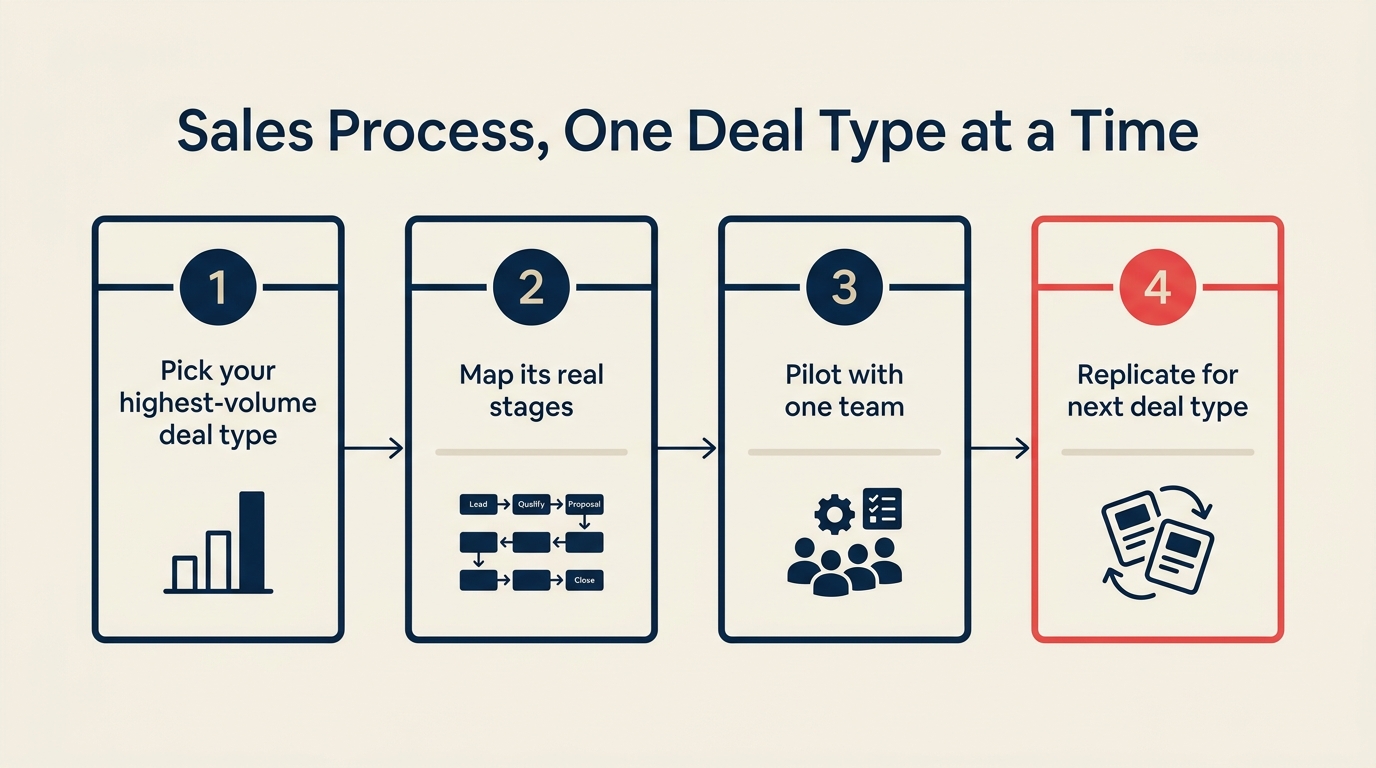
Beginnen Sie nicht mit der Umgestaltung Ihres CRM. Starten Sie mit der Zuordnung der Deals aus dem letzten Quartal. Die Forschung der Harvard Business Review zu Sales Analytics zeigt konsistent, dass inkrementelle Datenverbesserungen schneller zu Verhaltensänderungen führen als vollständige Systemumgestaltungen.
Ziehen Sie alle abgeschlossenen Deals des letzten Quartals heraus und ordnen Sie jeden manuell zu: New Logo, Expansion oder Renewal. Berechnen Sie dann für jeden Typ: win rate, durchschnittliche Deal-Größe und durchschnittliche Tage bis zum Abschluss.
Wenn diese Zahlen sich zwischen den Deal-Typen wesentlich unterscheiden (was fast sicher der Fall sein wird), haben Sie die Grundlage für segmentierte Prozesse geschaffen. Und Sie haben jetzt eine Baseline, an der Sie messen können, sobald Sie diese aufgebaut haben.
Starten Sie mit dem Deal-Typ, bei dem Sie das größte Volumen und die stärkste Varianz bei den Ergebnissen haben. Dort wird ein klarerer Prozess die schnellste Wirkung haben. Und sobald die Daten segmentiert sind, führen Sie eine win/loss-Analyse pro Deal-Typ statt über die gemischte Pipeline durch. Die Erkenntnisse werden deutlich schärfer sein.
Weiterführende Artikel

Head of Enterprise Solutions
On this page
- Warum Einheitspipelines Manager in die Irre führen
- Schritt 1: Kerntypen identifizieren
- Schritt 2: New Logo-Prozess gestalten
- Schritt 3: Expansion-Prozess gestalten
- Schritt 4: Renewal-Prozess gestalten
- Schritt 5: CRM-Implementierung
- Schritt 6: Reporting nach Deal-Typ
- Häufige Fehler
- Phasen-Abschlusskriterien nach Deal-Typ (Referenztabellen)
- Nächste Schritte