More in
Playbook del Proceso de Ventas
El Traspaso de SDR a AE: Cómo Documentarlo para que Funcione de Verdad
abr. 18, 2026 · Currently reading
Conceptos Básicos del Deal Desk: Cómo los Equipos de Ventas Pequeños Pueden Aprobar y Cerrar Más Rápido
abr. 18, 2026
Commit, Best Case, Pipeline: Cómo Definir los Términos de Forecast para que Todo el Equipo los Use Igual
abr. 18, 2026
Análisis de Win/Loss sin Sesgos: un Proceso Repetible para Equipos de Ventas
abr. 18, 2026
Construir un Proceso de Ventas un Tipo de Deal a la Vez
abr. 18, 2026
Multi-Threading en Deals sin Incomodar a su Champion
abr. 18, 2026
El Estancamiento en la Mitad del Pipeline: Cómo Diagnosticar y Resolver Deals Bloqueados
abr. 18, 2026
Planes de Acción Mutua: Cuándo Ayudan y Cuándo Perjudican
abr. 18, 2026
Cadencia Operativa de Ventas: desde el Stand-Up Diario hasta el QBR Trimestral
abr. 18, 2026
Cadencia de Forecast: Semanal, Mensual o Continua — Qué Funciona y Cuándo
abr. 6, 2026
El Handoff de SDR a AE: cómo documentarlo para que realmente funcione
Turn this article into takeaways for your work.


Each assistant summarizes the article only for you and suggests best practices for your work.
La mayoría de los Handoffs de SDR a AE fallan en silencio. El lead queda marcado como "transferido" en el CRM, el AE lo ve tres días después, y todo el momentum que el SDR pasó dos semanas construyendo se ha evaporado. El prospecto ya pasó a otra cosa mentalmente. El AE empieza desde cero.
El instinto es culpar al AE por el seguimiento lento o al SDR por la mala qualification. Pero el problema real casi siempre es estructural: el proceso de Handoff no está documentado con suficiente especificidad para que alguien lo siga de manera consistente.
Este no es un problema de cultura. La cultura no puede arreglar un SLA que no existe. La documentación sí puede. Y qué tan bien documente el Handoff determina si sus etapas de pipeline reflejan la realidad o simplemente el pensamiento desiderativo.
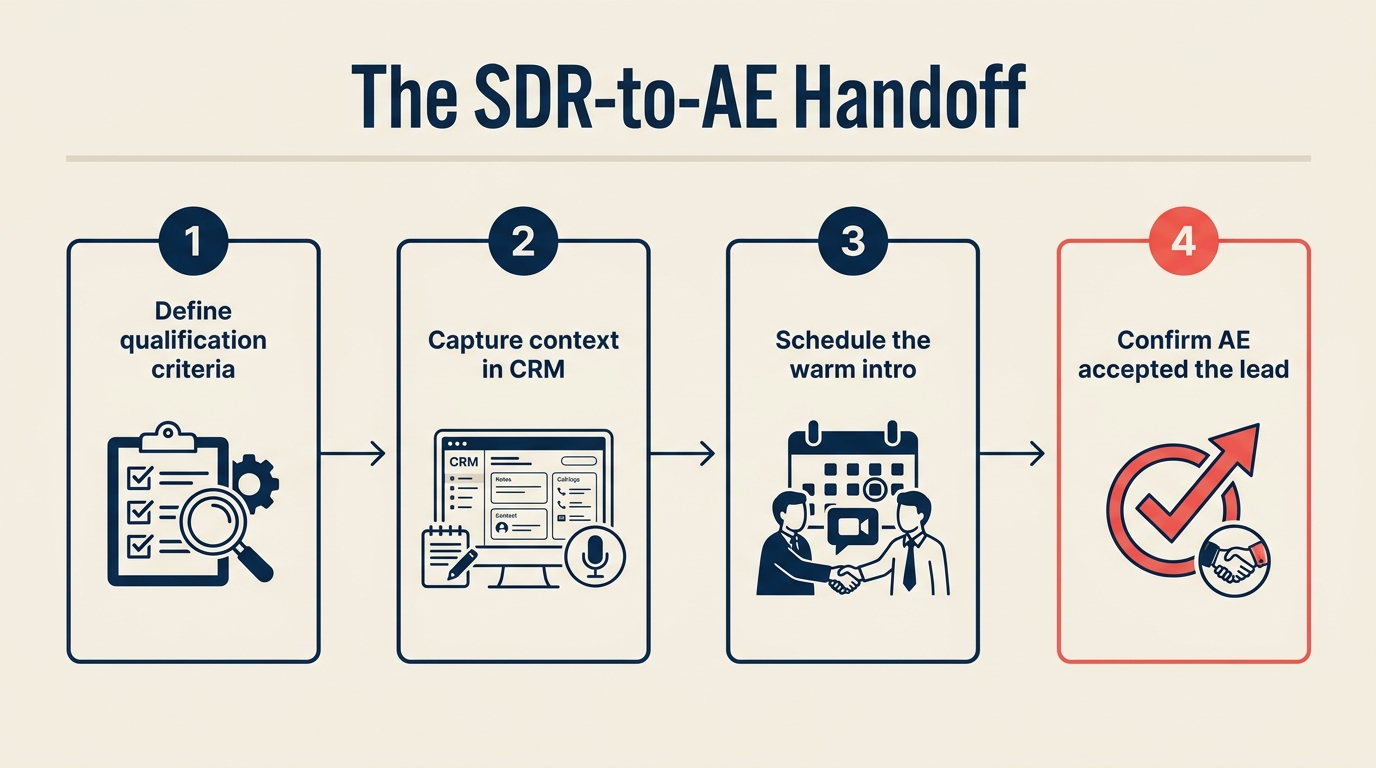
Así es como se escribe un proceso de Handoff lo suficientemente específico para que un representante contratado el lunes pueda seguirlo sin ambigüedad.
Por qué los Handoffs verbales fallan
Cuando usted le pregunta a los representantes cómo funciona el Handoff, la respuesta suele ser algo como: "El SDR reserva una reunión, deja una nota en Salesforce, le envía un mensaje al AE por Slack, y el AE se hace cargo desde ahí."
La investigación de Forrester ha encontrado que los Handoffs de SDR a AE con estructura deficiente son uno de los principales contribuyentes a la pérdida de pipeline en organizaciones de ventas B2B.
Ese proceso tiene cuatro puntos de falla:
- "Deja una nota en Salesforce": ¿qué nota? ¿Cuánto espacio? ¿Qué formato?
- "Le envía un mensaje al AE por Slack": ¿y si el AE no lo ve en 6 horas?
- "El AE se hace cargo desde ahí": ¿cuándo? ¿Qué cuenta como "hacerse cargo"?
- Sin ciclo de retroalimentación: el SDR nunca descubre si el AE usó su investigación
El resultado es un Handoff que depende completamente de la relación entre un SDR específico y un AE específico. No escala. No sobrevive la rotación de personal. Y no puede ser objeto de coaching ni mejora porque nadie está de acuerdo en qué significa "bueno".
El objetivo de documentar el proceso es que cada Handoff se parezca a su mejor Handoff, independientemente de qué SDR y qué AE estén involucrados. Es la misma lógica que hay detrás de escribir un sales playbook que los nuevos empleados realmente lean: si el proceso solo vive en la cabeza de las personas, muere en el momento en que esas personas se van.
Paso 1: Defina el disparador del Handoff
Antes que nada, acuerde qué condiciones deben cumplirse para que un SDR pueda marcar un lead como transferido.
Esto parece obvio. No lo es. La mayoría de los equipos tiene una regla vaga como "la reunión está reservada", pero ¿qué cuenta como reservada? ¿Una invitación de calendario aceptada? ¿Un acuerdo verbal en una llamada? ¿Un "sí" en un mensaje de LinkedIn sin tiempo programado?
Documente los criterios del disparador de forma explícita:
Condiciones mínimas del Handoff (todas deben cumplirse):
- Invitación de calendario aceptada por al menos un contacto del prospecto
- Criterios ICP confirmados (tamaño de empresa, industria, nivel del cargo)
- Umbral de qualification alcanzado (puntaje mínimo o criterios explícitos de su marco de calificación)
- El SDR ha hablado o ha intercambiado mensajes significativos con el prospecto (no se permiten invitaciones de calendario en frío)
Puede añadir criterios específicos del deal (autoridad presupuestaria confirmada, pain específico articulado), pero mantenga la barra mínima alcanzable sin una sobre-qualification que ralentice el pipeline. El registro de Handoff se encarga del resto.
Paso 2: El registro de Handoff, cinco campos obligatorios
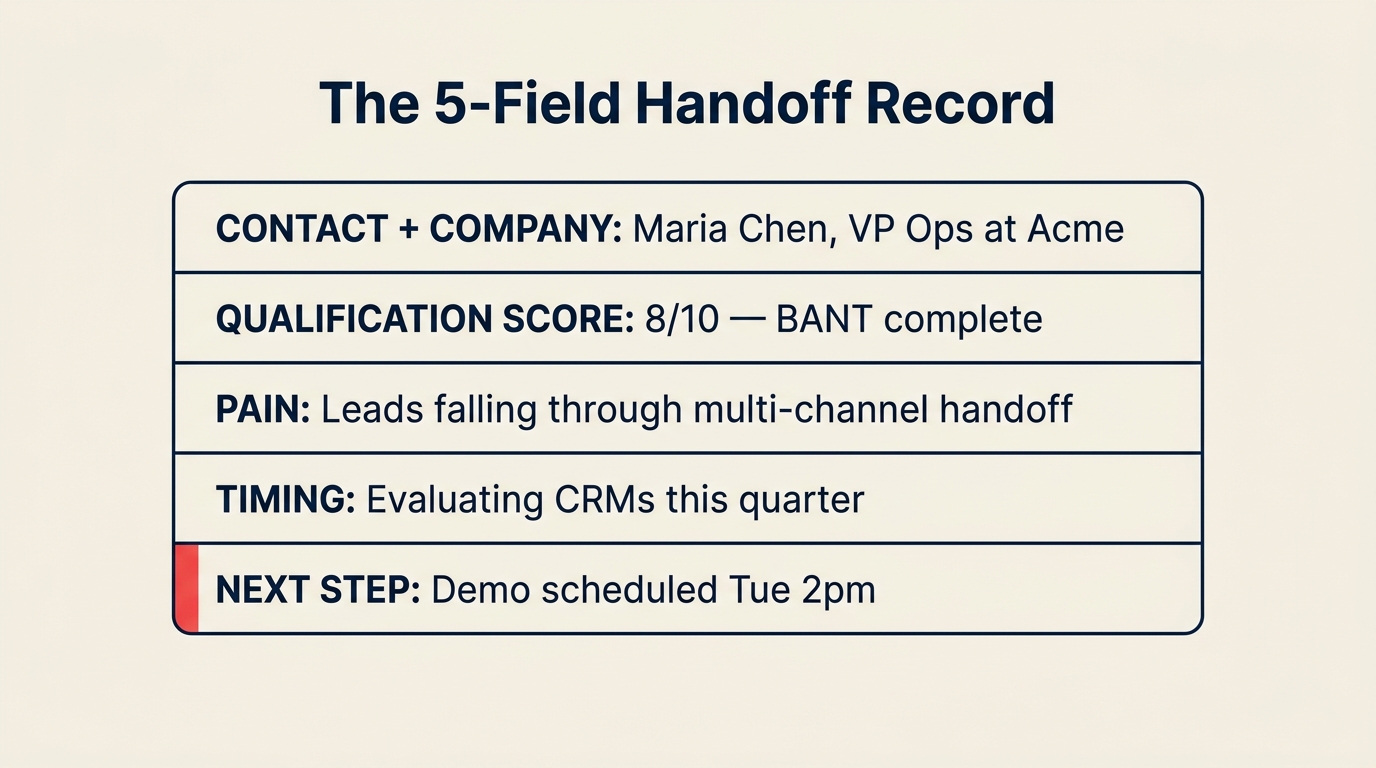
El registro de Handoff es lo que transfiere el conocimiento institucional del SDR al AE. No es una novela. No es un resumen con viñetas de cada conversación. Son cinco campos específicos, completados antes de que se marque como completo el disparador del Handoff.
Campo 1: Pain expresado con las palabras exactas del prospecto
No su interpretación. No "necesitan mejor visibilidad del pipeline". La frase real que usó el prospecto: "Nuestros representantes pasan 20 minutos al día actualizando Salesforce y de todas formas omiten la mitad de los campos."
Esto importa porque le indica al AE qué lenguaje reflejar en la primera reunión.
Campo 2: Detalles de la próxima reunión
Fecha, hora, formato (videollamada/presencial), asistentes confirmados y la agenda acordada. Una oración es suficiente: "Zoom de 30 minutos el martes a las 2pm ET con Sarah (VP de Ventas) y James (Sales Ops). Agenda: revisar el pain actual en reporting y hacer demo del Dashboard de pipeline."
Campo 3: Stakeholders identificados
Todas las personas con las que el SDR habló o que sabe que existen en la cuenta: nombre, cargo, rol en el deal (decisor, evaluador, gatekeeper, usuario final). Incluso personas con las que el SDR no se conectó pero que sabe que existen.
Campo 4: Objeciones detectadas
Qué objeciones surgieron y cómo las manejó el SDR. No solo "mencionaron el precio". Escriba la objeción específica y la respuesta: "Preguntaron por el costo versus la herramienta actual. Dije que cubriríamos el ROI en el demo. No insistieron más."
Campo 5: Competidor mencionado
Cualquier competidor nombrado por el prospecto, directa o indirectamente. Si ninguno surgió, indique "ninguno mencionado".
Eso es todo. Cinco campos. Cualquier AE que lea un registro completo debería poder llegar a la primera reunión preparado sin necesitar una llamada de briefing de 30 minutos.
Paso 3: SLA para el primer contacto del AE
Establezca un SLA basado en tiempo para que el AE realice su primer contacto sustancial con el prospecto después del Handoff.
"Lo antes posible" no es un SLA. Es una aspiración que cada AE interpreta de manera diferente.
Según Harvard Business Review, las empresas que contactan a leads dentro de una hora tienen casi siete veces más probabilidad de calificarlos que aquellas que esperan más tiempo. El estándar que recomienda la mayoría de los equipos de SalesOps: 4 horas desde la finalización del Handoff durante el horario comercial. No 24 horas. No "el mismo día".
Documente qué cuenta como primer contacto:
- Respuesta personalizada al correo de introducción del SDR (ver Paso 4)
- Confirmación de Calendly o invitación de calendario enviada directamente
- Mensaje de video personal o nota confirmando la reunión
Una invitación de calendario que ya está en ambos calendarios no cuenta. El AE necesita hacer contacto real.
Tabla de SLA:
| Momento del Handoff | SLA para primer contacto del AE |
|---|---|
| Handoff antes del mediodía | Respuesta el mismo día antes de las 5pm |
| Handoff después del mediodía | Siguiente mañana hábil antes de las 10am |
| Handoff el viernes por la tarde | Lunes por la mañana antes de las 10am |
Disparador de escalación: Si el SLA vence sin acuse de recibo del AE, el SDR notifica directamente al manager de ventas. No de forma pasivo-agresiva, no como queja. Solo como señal: "Oye, el Handoff de [Empresa] de esta mañana todavía no ha sido atendido. Quería señalarlo."
Paso 4: El correo de introducción en caliente
El SDR envía un correo de introducción en caliente que transfiere formalmente la relación al AE. Este correo tiene una estructura específica.
El SDR escribe:
- Línea de asunto que hace referencia a la conversación (no una "Introducción" genérica)
- Una oración sobre lo que se discutió y el interés declarado del prospecto
- Una declaración breve y genuina sobre por qué el AE es la persona indicada ("Calvin trabaja exclusivamente con líderes de ventas a nivel VP que están navegando consolidaciones de CRM")
- La confirmación de la reunión y qué esperar
El AE añade (dentro del SLA de primer contacto):
- Una respuesta directa en el mismo hilo (no inicie un nuevo correo)
- Una oración personal específica al pain del prospecto (demuestra que leyó el registro de Handoff)
- Cualquier adición logística o aclaración de agenda
Lógica de CC:
- El SDR permanece en el primer correo del AE
- El SDR sale del hilo después de la primera respuesta del AE
- No se copian hilos internos de Slack como cadena de respuesta (esto ocurre con más frecuencia de la que se cree)
Formato de línea de asunto de muestra: "Sarah, presentación de Calvin + agenda del jueves"
Paso 5: Criterios de aceptación del AE
"Aceptar" el Handoff no es pasivo. Es una acción explícita que señala que el AE ha revisado el registro y ha tomado la propiedad del siguiente paso.
Documente las acciones de aceptación:
- Registro de Handoff abierto y revisado en el CRM
- Campo de responsable del deal actualizado al AE
- Primer contacto enviado dentro del SLA
- Notas personales de preparación añadidas al registro del deal (opcional pero recomendado)
Algunos equipos usan una convención simple de Slack: el AE responde a la notificación del Handoff con un pulgar arriba o una nota breve. Otros usan un campo en el CRM que el AE marca. Cualquiera de los dos funciona. El punto es que "aceptado" signifique algo observable, no solo que el AE no lo rechazó.
Paso 6: El ciclo de retroalimentación del SDR
El proceso no termina en el primer contacto del AE. Los SDRs necesitan saber si su qualification fue precisa, porque esa es la única manera en que mejoran.
Un estudio de McKinsey sobre excelencia en ventas B2B destaca que los ciclos de retroalimentación entre los roles de prospecting y cierre son un rasgo distintivo de las organizaciones de ventas de alto rendimiento.
Documente lo que los AEs deben a los SDRs después de la primera reunión con el prospecto:
- Resultado: reunión celebrada, reprogramada o no-show
- Puntaje de calidad de la qualification: ¿el prospecto coincidió con lo que estaba en el registro de Handoff? (escala del 1 al 5 o sí/no simple)
- Cualquier error en el registro: errores factuales o contexto faltante que el AE tuvo que redescubrir
Esta retroalimentación no necesita ser formal. Dos oraciones en Slack funcionan. Pero debe ocurrir dentro de las 24 horas de la primera reunión.
¿Por qué importa esto? Porque los SDRs que nunca reciben retroalimentación sobre sus Handoffs o bien sobre-califican (ralentizando el pipeline) o bien sub-califican (desperdiciando el tiempo del AE) sin saber cuál de los dos están haciendo. La retroalimentación es el único mecanismo de calibración.
Errores frecuentes
Según la investigación de Gartner sobre comportamiento de compra B2B, los compradores completan hoy entre el 57% y el 70% de su proceso de decisión de compra antes de contactar a un representante de ventas, lo que hace aún más valiosa la calidad de la información capturada durante la prospección del SDR.
Hacer el Handoff demasiado pronto. Algunos SDRs, bajo presión por cumplir métricas de volumen de reuniones, transfieren prospectos que no han confirmado un pain real ni una reunión real. El AE termina haciendo el discovery que el SDR debía haber hecho. Solución: refuerce los criterios del disparador y verifíquelos en su revisión semanal de pipeline.
AEs que ignoran el registro de Handoff. Si un AE llega sistemáticamente a las primeras reuniones sin preparación porque no leyó el registro, esa es una conversación de coaching sobre profesionalismo, no un fallo de proceso. Pero si múltiples AEs lo omiten, el registro probablemente es demasiado largo o engorroso de completar. Simplifique los cinco campos antes de añadir más.
SDRs que sobre-califican y ralentizan el pipeline. Algunos SDRs se vuelven tan exhaustivos que convierten un ciclo de qualification de 5 días en uno de 15. El registro de Handoff está pensado para transferir información, no para reemplazar el trabajo del AE. Si sus SDRs están haciendo llamadas de demo completas antes del Handoff, reduzca los criterios del disparador.
Plantilla de registro de Handoff
REGISTRO DE HANDOFF: [Nombre de Empresa] | [Fecha]
SDR: [Nombre] | AE: [Nombre]

CONDICIONES DEL DISPARADOR (marcar todas antes de señalar como transferido):
[ ] Invitación de calendario aceptada
[ ] Criterios ICP confirmados
[ ] Umbral de qualification alcanzado
[ ] Contacto significativo establecido

1. PAIN (palabras exactas del prospecto):


2. PRÓXIMA REUNIÓN:
   Fecha/Hora:
   Formato:
   Asistentes:
   Agenda:

3. MAPA DE STAKEHOLDERS:
   Nombre | Cargo | Rol en el deal
   ---    | ---   | ---

4. OBJECIONES DETECTADAS:
   Objeción:
   Cómo se manejó:

5. COMPETIDOR MENCIONADO:


ESTADO DEL CORREO DE INTRODUCCIÓN EN CALIENTE: [ ] Enviado por SDR
PRIMER CONTACTO DEL AE: [ ] Completado dentro del SLA
Próximos pasos
Empiece con una auditoría, no con un rediseño. Extraiga los últimos 30 Handoffs de su CRM y haga tres preguntas para cada uno:
- ¿Existe un registro de Handoff completo (los cinco campos)?
- ¿El AE realizó el primer contacto dentro de la ventana del SLA?
- ¿El SDR recibió retroalimentación dentro de las 24 horas de la primera reunión?
Casi con certeza encontrará los mismos dos modos de fallo repitiéndose. Arregle esos primero. La mayoría de los equipos descubre que el registro no se está completando del todo, y que el SLA no se está aplicando en absoluto. Solo esos dos cambios reducirán notablemente el tiempo entre el Handoff y el primer contacto sustancial del AE.
Una vez que lo básico sea consistente, añada el ciclo de retroalimentación. Esa es la parte que la mayoría de los equipos omite, y la que mejora la calidad de qualification del SDR con el tiempo. Si también está viendo deals estancarse poco después del Handoff, el proceso de diagnóstico en cómo desatascar deals estancados en la mitad del pipeline aplica igual de bien para los estancamientos en etapas tempranas.
Aprenda más

Head of Enterprise Solutions
On this page
- Por qué los Handoffs verbales fallan
- Paso 1: Defina el disparador del Handoff
- Paso 2: El registro de Handoff, cinco campos obligatorios
- Paso 3: SLA para el primer contacto del AE
- Paso 4: El correo de introducción en caliente
- Paso 5: Criterios de aceptación del AE
- Paso 6: El ciclo de retroalimentación del SDR
- Errores frecuentes
- Plantilla de registro de Handoff
- Próximos pasos