Estilo de Liderança de Evan Spiegel: Tese de Conteúdo Efêmero, Rejeitando Facebook e a Longa Aposta em AR
Turn this article into takeaways for your work.


Each assistant summarizes the article only for you and suggests best practices for your work.
Fatos-Chave: Evan Spiegel (nascido em 4 de junho de 1990) co-fundou o Snapchat em 2011 na Stanford com Bobby Murphy (e brevemente Reggie Brown). Recusou uma oferta de aquisição de $3 bilhões do Facebook em novembro de 2013, levou Snap Inc. ao IPO em março de 2017 com avaliação de aproximadamente $33 bilhões, e inventou o formato Stories que toda plataforma social importante depois clonou. Lançou Spectacles — óculos de câmera AR do Snap — em 2016 e distribuiu quatro gerações de hardware. No momento do IPO, era o bilionário mais jovem e auto-feito do mundo, e o Snap hoje alcança mais de 800 milhões de usuários ativos mensais.
A Doutrina de Conteúdo Efêmero (Modelo de Convicção Contrária)
A Doutrina de Conteúdo Efêmero é a crença de que mensagens desaparecidas produzem comunicação mais honesta do que mídia social de registro permanente, e que um fundador deveria manter essa tese através de imitação, pressão de investidores e reação pública negativa em vez de negociá-la. O Modelo de Convicção Contrária emparelha essa recusa de identidade de produto com um horizonte operacional de 10 anos: você constrói em uma tese impopular, aceita punição de acionistas enquanto o mercado alcança, e protege a aposta com governança (ações de dupla classe) em vez de persuasão.
Mark Zuckerberg ofereceu Evan Spiegel $3 bilhões pelo Snapchat em 2013. Spiegel tinha 23 anos. Ele disse não. A maioria das pessoas chamou isso de arrogância. Um ano depois, o Instagram lançou Stories, uma cópia quase direta do recurso principal do Snapchat, e começou sistematicamente a desmantelar o crescimento de usuários do Snapchat. Mark Zuckerberg executou um playbook que Spiegel havia visto chegando — clone o recurso, absorva o público e espere que o produto independente estagne. Snap foi ao IPO em março de 2017 com uma avaliação de $33 bilhões. A ação foi negociada bem abaixo desse pico pela maioria de sua vida pública.
E no entanto Spiegel ainda é CEO, ainda perseguindo a tese de câmera AR que mantém desde 2011, e ainda dirigindo uma empresa com 800 milhões de usuários mensais e um programa de hardware dedicado. Essa é uma resistência diferente de fundador. Não a história triunfante de IPO, aquela onde você constrói algo real em uma tese contrária e absorve anos de ceticismo de mercado público sem abandonar a aposta.
Para operadores, a pergunta interessante não é se Spiegel fez a chamada certa na oferta do Facebook. É que tipo de liderança é necessária para continuar construindo através de 12 anos de competição existencial, uma eliminação de capitalização de mercado de $1,3 bilhão de um único tweet de Kylie Jenner, e uma ação que está aproximadamente 80% abaixo de seu máximo de IPO. Esse tipo de resistência não vem de confiança. Vem de convicção sobre uma tese específica e uma tolerância incomummente alta por estar publicamente errado enquanto você espera a tese se provar.
Análise do Estilo de Liderança
| Estilo | Peso | Como aparecia |
|---|---|---|
| Construtor de Tese Contrária | 60% | Construiu todo o produto Snapchat em torno da ideia de que permanência é um bug em mídia social, não um recurso. Recusou duas ofertas de aquisição totalizando mais de $33 bilhões combinados. Continuou construindo hardware AR através de 4 gerações de Spectacles que não alcançaram mercado em massa. Apostou a identidade de longo prazo da empresa em uma tese de plataforma centrada em câmera antes de AR ser viável comercialmente. |
| Operador de Plataforma de Horizonte Longo | 40% | Sustentou o investimento em AR mesmo quando os resultados trimestrais decepcionavam investidores. Reposicionou Snap+ como um produto de assinatura em vez de pivotar puramente para receita de anúncios. Manteve o núcleo de mensagens efêmero enquanto gradualmente adicionava recursos de plataforma que a tese centrada em câmera exigia. Aceitou punição de mercado público em vez de perseguir métricas de engajamento de curto prazo que teriam diluído a visão de produto. |
A divisão 60/40 importa porque essas duas tendências operam em diferentes escalas de tempo. A convicção contrária de Spiegel chuta no nível de identidade de produto, ele decide o que Snapchat é e não negocia isso com Wall Street. O instinto operacional de horizonte longo é o que mantém a empresa financiada e com pessoal enquanto o mercado alcança a tese. Sem ambos, a aposta contrária ou fica sem dinheiro ou deriva para o que investidores querem que seja. Spiegel manteve ambos ativos simultaneamente, o que é genuinamente raro e genuinamente caro para acionistas que queriam a história mais simples.
Traços-Chave de Liderança
| Traço | Avaliação | O que significa na prática |
|---|---|---|
| Convicção de tese de produto sob pressão de imitação | Excepcional | Quando o Instagram clonou Stories em 2016 e o TikTok tomou a categoria de vídeo curto, Spiegel não abandonou a identidade efêmero-primeira do Snapchat e a reconstruiu como um clone do TikTok. Jan Koum fez uma escolha comparável no WhatsApp — liderança de Jan Koum mostra como recusar pressão de anunciantes e ficar próximo à tese original de produto pode manter uma base de usuários leal mesmo conforme plataformas maiores circulam. Ele aprofundou a tese de plataforma de câmera. Esse tipo de convicção sob pressão de imitação direta é raro em qualquer idade, excepcional aos 26. |
| Indiferença de mercado público | Alto | Spiegel nunca executou Snapchat para bater orientação trimestral. Executa para construir a plataforma de câmera AR. Investidores que queriam que ele priorizasse crescimento de receita de anúncios em vez de investimento de hardware não receberam um argumento nem um compromisso — receberam o roadmap de produto que ele já havia decidido. Isso não é relações com investidores. É operar com um horizonte de 10 anos enquanto gerencia uma empresa com ciclos de reporte de 90 dias. |
| Filosofia de UX efêmero-primeira | Muito Alto | O insight de que mídia social permanente cria um eu performado, curado — e que mensagens desaparecidas criam comunicação mais autêntica — foi genuinamente contrário em 2011 e provou-se durável. Spiegel construiu toda a filosofia de produto em torno dessa crença e a manteve através de cada pressão de mercado para fazer Snapchat parecer mais com Instagram ou Facebook. |
| Paciência com realidade aumentada como uma aposta de 10 anos | Alto | Spectacles falharam comercialmente em múltiplas gerações. A plataforma de desenvolvedor AR do Snap cresceu de forma constante mas não produziu o breakout de consumidor que justificaria a linha de tempo de investimento. Spiegel continuou construindo de qualquer forma. Se essa paciência é vindicada ou não, representa um nível de comprometimento com uma tese de tecnologia específica que muito poucos fundadores mantêm através de 4 falhas consecutivas de geração de produto. |
As 3 Decisões Que Definiram Evan Spiegel Como um Líder
1. Recusar a Oferta de $3 Bilhões do Facebook em 2013
Quando Spiegel recusou a oferta de $3 bilhões de Zuckerberg em novembro de 2013, o Snap tinha aproximadamente 26 milhões de usuários ativos diários e sem receita. A oferta era extraordinária por qualquer medida racional para um menino de 23 anos dirigindo um aplicativo de mensagens sem modelo de negócio.
Seu raciocínio declarado era que Snapchat estava construindo algo que Facebook não poderia replicar: a tese de comunicação efêmera. Ele acreditava que o valor do conteúdo desaparecido era arquitetonicamente incompatível com o modelo de registro permanente do Facebook. Você não poderia parafusá-lo. Você tinha que construir a partir dessa presunção, como o Snap havia feito, para acertar o produto.
Ele estava meio certo. Facebook não poderia replicar a identidade do produto. Mas poderia replicar o recurso, o que o Instagram fez com Stories em 3 anos. O crescimento de usuários ativos diários do Snap desacelerou materialmente conforme Stories do Instagram absorvia o público endereçável. A oferta de $3 bilhões que pareceu arrogância em 2013 parece mais complicada em retrospectiva, não obviamente errada, mas não a vindicação limpa que a história frequentemente é contada.
O que a decisão revela sobre a liderança de Spiegel: ele aposta em teses, não em números. Aos 23 anos, com $3 bilhões na mesa, ele estava operando a partir de uma crença sobre o que comunicação estava se tornando em vez de um cálculo sobre o acordo. Essa orientação é o que produziu tanto o upside quanto o downside que seguiu.
2. O Redesenho de 2018 Que Alienou a Base de Usuários Central
No início de 2018, o Snap lançou um redesenho importante que separava conteúdo de criador de conteúdo de amigo. Era uma mudança estrutural significativa em como os usuários experimentavam o aplicativo. A base de usuários existente reagiu mal. Uma petição do Change.org para reverter o redesenho reuniu mais de 1,2 milhão de assinaturas. Kylie Jenner tuitou que ela não usava mais Snapchat. A ação caiu aproximadamente $1,3 bilhão em capitalização de mercado em uma sessão de negociação. A Forbes mais tarde citou o incidente como um dos tweets de celebridade mais custosos da história da mídia social, observando como um único post pode apagar bilhões em valor de mercado.
Spiegel não reverteu o redesenho.
Sua tese era que os usuários existentes do Snapchat eram altamente engajados mas demograficamente estreitos. O redesenho foi construído para tornar o aplicativo mais acessível a usuários que encontravam a interface original confusa: especificamente usuários mais velhos e internacionais que não cresceram com as convenções de UX do Snapchat. O custo de engajamento de curto prazo era o preço de amplitude demográfica de longo prazo.
A execução foi imperfeita. A versão Android do redesenho foi notavelmente pior do que iOS, o que criou um problema secundário em mercados internacionais onde Android domina. Mas a lógica de produto subjacente era defensável: um produto que é amado por pessoas de 26 anos e confuso para todos os outros é um problema de teto demográfico, não um sucesso de produto. Spiegel viu isso e fez a chamada, sabendo que a custaria em curto prazo. Essa é uma coragem de produto específica que é genuinamente difícil de manter quando a ação está se movendo contra você em tempo real.
3. Se Comprometendo com AR Através de Quatro Gerações de Spectacles Falhos
O Snap lançou seu primeiro Spectacles de câmera de óculos AR em 2016. O lançamento foi deliberadamente limitado: máquinas de venda em localizações de praia, sem distribuição varejista ampla. Venderam aproximadamente 150.000 unidades e desapareceram da maioria das conversas em um ano.
Spectacles 2, 3 e 4 seguiram em intervalos, cada geração melhorando o hardware, cada geração falhando em alcançar escala comercial significativa. Em 2021, o Snap reduziu aproximadamente $40 milhões em inventário não vendido de Spectacles.
Através de tudo isso, Spiegel continuou investindo em hardware e ferramentas de desenvolvedor de AR. A plataforma de desenvolvedor AR do Snap cresceu para mais de 300.000 desenvolvedores e 3 milhões de lentes, o que é um ecossistema significativo por qualquer medida. Mas a pergunta de hardware se o Snap produzirá um dispositivo AR de consumidor com apelo de mercado em massa permanece genuinamente não resolvida em 2026.
O que essa aposta de uma década lhe diz sobre Spiegel: ele escolheu uma tese de plataforma em 2011, identificou o hardware como o mecanismo de entrega eventual e tem estado construindo em direção a isso através de falhas de produto que teriam matado o compromisso com a categoria de a maioria das empresas. Se a aposta funciona ainda está aberto. Mas o nível de convicção sustentada necessária para continuar construindo hardware AR através de 4 gerações falhas não é uma qualidade de liderança comum.
O Que Evan Spiegel Faria em Seu Papel
Se você é um CEO dirigindo uma empresa de 50-500 pessoas, o modelo Spiegel pede que você identifique a tese única em que sua empresa é construída que você não negociará com investidores ou o mercado. Não seu modelo de negócio, não sua estratégia de preços. A crença de produto fundamental que, se errada, significa que a empresa não deveria existir. Então pergunte honestamente se você está realmente mantendo essa tese ou gradualmente se desviando dela toda vez que uma pressão competitiva ou financeira chega. Spiegel mantém a sua há 15 anos. Quantos trimestres a sua sobreviveu?
Se você é um COO ou líder de operações, o histórico operacional do Snap mostra o que custa manter uma tese longa: a lacuna de receita de anúncios versus Meta e Google, os problemas de execução do Android, a rotatividade de talento pós-IPO. Empresas de tese longa pagam custos de ineficiência operacional que concorrentes focados não pagam. Seu trabalho nesse ambiente é construir a disciplina operacional para manter as luzes acesas e o time intacto enquanto a aposta de 10 anos do fundador se desenrola. Isso significa economia de unidade mais apertada, contratação mais deliberada e conversas mais honestas com investidores sobre cronogramas do que a maioria dos COOs quer ter.
Se você é um líder de produto, o redesenho de 2018 de Spiegel é o caso de estudo. Ele tinha uma tese de produto clara (melhorar amplitude demográfica mesmo a custo de engajamento de curto prazo) e executou através de reação pública significativa. Mas ele também teve a falha de execução do Android, o que era um problema separado que atingiu o mesmo ciclo de notícias. A lição não é que você deveria ignorar reação de usuário. É que você precisa saber qual reação é sinal (você cometeu um erro) e qual é ruído (usuários não gostam de mudança mas a lógica subjacente é sólida). Spiegel leu essa distinção corretamente na estratégia e incorretamente na execução do Android. Saiba qual você está lidando.
Se você é um líder de vendas ou marketing, o pivô de assinatura do Snap com Snap+ é uma lição diferente. Quando o crescimento de receita de anúncios desacelerou e a lacuna competitiva com Meta se ampliou, Spiegel adicionou um fluxo de receita de assinante direto em vez de puramente perseguir participação de mercado de anúncios. Jack Dorsey enfrentou um momento estruturalmente similar no Twitter — uma plataforma social estagnando em anúncios enquanto o fundador mantinha uma visão de produto que o mercado ainda não estava comprando. Snap+ alcançou 11 milhões de assinantes pagos em dois anos de lançamento. Se seu canal de crescimento está limitado, a pergunta não é como espremer mais dele. Pergunte se há um modelo de relacionamento diferente com seus clientes mais engajados que eles realmente pagariam.
Como Rework Apoia Times Fazendo Apostas de Produto Incomuns
A liderança de Spiegel funciona em duas coisas que a maioria das empresas de produto luta para coordenar: uma tese de produto não-negociável e um time operacional disciplinado o suficiente para sobreviver enquanto a tese se desenrola. Rework é construído para essa divisão. O lado de CRM e sales ops mantém receita previsível e sinais de cliente legíveis mesmo quando o fundador está mantendo um roadmap contrário, para que líderes de GTM possam relatar pipeline real sem serem pressionados a diluir a visão de produto por um trimestre. O lado de work ops dá aos fundadores orientados por design uma forma de executar programas cross-functional — hardware, plataforma de desenvolvedor AR, lançamentos de assinatura como Snap+ — em cronogramas compartilhados sem forçar engenheiros em ferramentas PM de teatro de ticket. Para times fazendo apostas de produto de horizonte longo, Rework mantém a superfície operacional apertada (economia de unidade, ritmo de contratação, status de programa) para que a chamada de 10 anos do fundador não seja silenciosamente erodida por ciclos de reporte de 90 dias. Ver preços — CRM/Sales Ops de $12/usuário/mo, Work Ops de $6/usuário/mo.
Citações Notáveis e Lições Além da Sala de Diretores
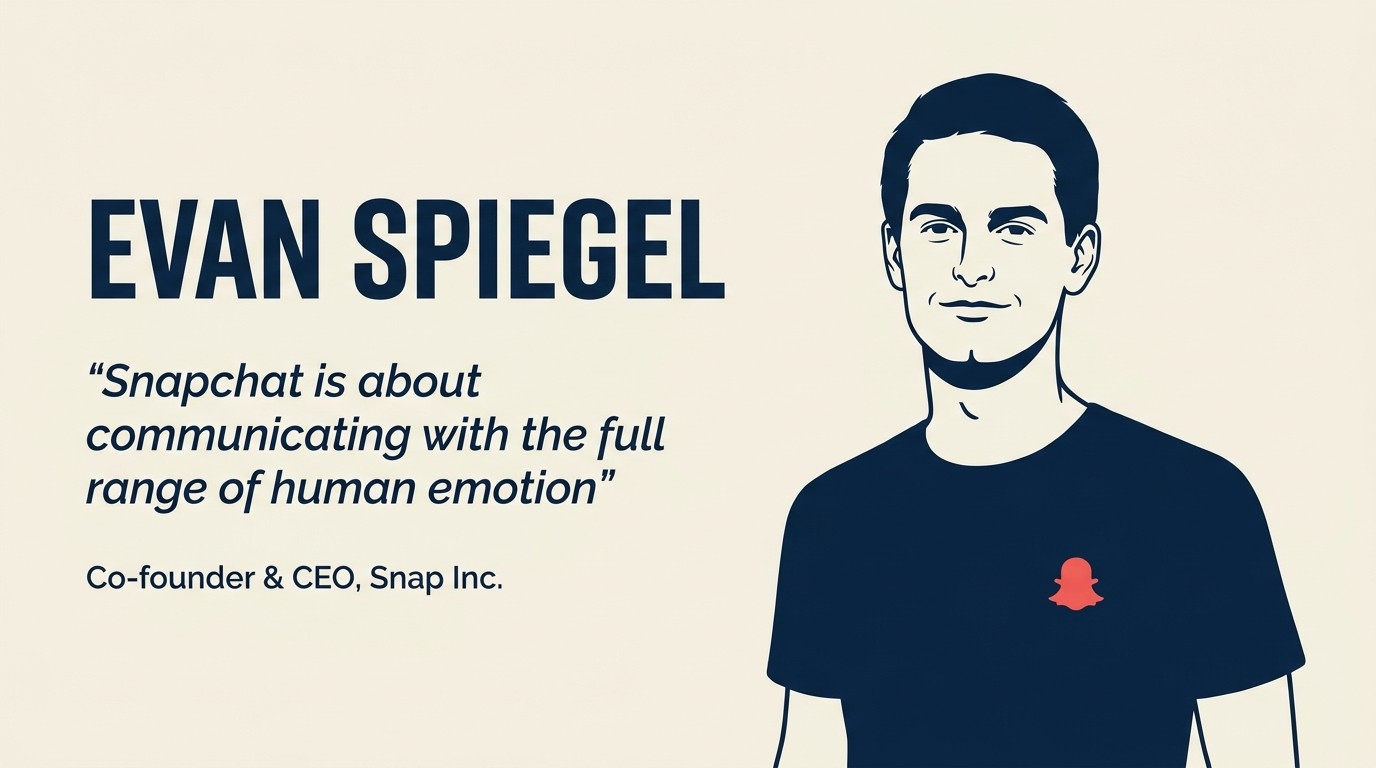
Spiegel disse: "A câmera é o novo teclado." É um resumo compacto da tese de plataforma que ele tem estado construindo desde 2011. O teclado era a interface primária para comunicação baseada em texto. A câmera, em seu modelo, é a interface primária para a geração que cresceu com smartphones. Tudo que o Snap construiu — Stories, lentes, camadas de AR, Spectacles — é uma aplicação dessa crença única sobre para onde comunicação está indo.
Ele também falou sobre comunicação efêmera como mais honesta do que o modelo de registro permanente do Facebook e Instagram. Seu argumento é que quando tudo que você posta é arquivado, você cura. Você performa. Quando desaparece, você se comunica. Esse enquadramento foi genuinamente contrário em 2011 e influenciou uma geração de pensamento de produto, mesmo conforme Instagram e TikTok tomaram o crescimento de público que Snap tinha criado conceitualmente.
Spiegel desistiu do programa de design de produto de Stanford três créditos antes da formatura para trabalhar no Snap, retornando mais tarde para receber seu diploma após o IPO. Drew Houston passou por ceticismo de timing de IPO similar antes do Dropbox finalmente ir ao IPO em 2018 — liderança de Drew Houston é um estudo de caso útil companheiro de paciência de fundador através de anos de pressão "por que você ainda não foi ao IPO". O fundo de design de produto é visível em como o Snap abordou hardware: Spectacles nunca foram feios, nunca puramente funcionais. Eram objetos projetados para serem usados. Se a aposta em AR funciona, a disciplina estética em como é perseguida reflete um fundador que pensa sobre a experiência do produto como uma variável primária, não um pensamento tardio.
Onde Este Estilo Falha
O modelo de convicção contrária de Spiegel funciona quando a tese central prova-se durável. Conteúdo efêmero tornou-se realmente um formato convencional, mas o Instagram o clonou rápido o suficiente para rebater a vantagem de crescimento do Snapchat. O fundador que se recusa a vender e mantém a longa aposta em AR está tanto vindicado pela história quanto deixando valor significativo de acionista na mesa enquanto isso.
Para operadores, o modelo Spiegel funciona apenas se você tem tanto a pista de capital quanto a estrutura de governança para manter uma tese longa sem pressão externa forçando pivôs prematuros. A estrutura de ação de dupla classe do Snap deu a Spiegel essa isolação. A maioria das empresas não a têm. E o modelo requer que sua tese original estava certa em primeiro lugar, não apenas direcional, mas certa o suficiente que a longa manutenção produz resultados que justificam o custo. Isso ainda não está resolvido para a aposta em AR do Snap em 2026, e esse status não resolvido é parte da contagem honesta desse estilo.
Perguntas Frequentes Sobre a Liderança de Evan Spiegel
Quem é Evan Spiegel?
Evan Spiegel (nascido em 1990) é o co-fundador e CEO do Snap Inc., a empresa por trás do Snapchat. Iniciou o produto na Stanford em 2011 com Bobby Murphy, levou o Snap ao IPO em março de 2017 com avaliação de aproximadamente $33 bilhões, e era o bilionário mais jovem e auto-feito do mundo no momento do IPO. Snapchat hoje alcança mais de 800 milhões de usuários ativos mensais.
Por que Spiegel recusou a oferta de $3B do Facebook?
Em novembro de 2013, aos 23 anos, Spiegel recusou a oferta de aquisição de $3 bilhões de Mark Zuckerberg porque acreditava que a tese de comunicação efêmera do Snapchat era arquitetonicamente incompatível com o modelo de registro permanente do Facebook — você não poderia parafusar mensagens desaparecidas em um produto construído em torno do arquivo. Ele estava apostando em uma tese de produto longa, não no acordo na mesa.
Qual é o formato Stories que o Snapchat inventou?
Stories é o formato de foto e vídeo desaparecido em 24 horas que o Snap lançou em 2013. Posts empilham cronologicamente, expiram automaticamente e são projetados para compartilhamento casual diário em vez de um feed permanente. O Instagram clonou o formato em agosto de 2016, e desde então foi copiado pelo Facebook, WhatsApp, YouTube, LinkedIn, X e TikTok — tornando Stories argumentavelmente o padrão de UX mais imitado na história da mídia social.
Por que a aposta em AR do Snapchat (Spectacles) é estrategicamente importante?
A tese de Spiegel desde 2011 é que "a câmera é o novo teclado" — a interface primária para a próxima geração de comunicação. Spectacles são o mecanismo de entrega de hardware para essa tese. Quatro gerações falharam em alcançar escala de mercado em massa, mas a plataforma de desenvolvedor de AR do Snap cresceu para mais de 300.000 desenvolvedores e milhões de lentes, posicionando o Snap para competir com Meta e Apple conforme AR de consumidor se torna viável.
Como Spiegel aborda competição de Meta?
Ele se recusa a re-plataforma Snap em torno de qualquer coisa que Meta apenas clonou. Quando Instagram copiou Stories em 2016 e Reels perseguiu TikTok, Spiegel aprofundou a identidade centrada em câmera, efêmero-primeira em vez de reconstruir Snap como um clone do Instagram ou TikTok. Ele também diversificou receita com Snap+ (assinatura), que alcançou 11 milhões de assinantes pagos em dois anos de lançamento, em vez de lutar contra Meta puramente em participação de mercado de anúncios.
O que fundadores podem aprender com Evan Spiegel?
Escolha uma tese de produto que você não negociará com investidores ou o mercado, depois construa a governança e disciplina operacional que deixa você mantê-la através de imitação, trimestres ruins e reação pública negativa. A estrutura de ação de dupla classe de Spiegel, sua recusa de reverter o redesenho de 2018 e seu comprometimento de mais de uma década em hardware AR através de quatro gerações de Spectacles falhadas todos vêm do mesmo playbook: fundadores mantêm teses, não números.

Co-Founder, Rework.com
On this page
- A Doutrina de Conteúdo Efêmero (Modelo de Convicção Contrária)
- Análise do Estilo de Liderança
- Traços-Chave de Liderança
- As 3 Decisões Que Definiram Evan Spiegel Como um Líder
- 1. Recusar a Oferta de $3 Bilhões do Facebook em 2013
- 2. O Redesenho de 2018 Que Alienou a Base de Usuários Central
- 3. Se Comprometendo com AR Através de Quatro Gerações de Spectacles Falhos
- O Que Evan Spiegel Faria em Seu Papel
- Como Rework Apoia Times Fazendo Apostas de Produto Incomuns
- Citações Notáveis e Lições Além da Sala de Diretores
- Onde Este Estilo Falha