Estilo de Liderança de Bob Iger: Quatro Aquisições, Um Retorno e a Arte de Comprar Storytelling em Escala
Turn this article into takeaways for your work.


Each assistant summarizes the article only for you and suggests best practices for your work.
Fatos Principais: Bob Iger serviu como CEO de Disney de 2005 a 2020, depois retornou em novembro de 2022 depois que o conselho demitiu seu sucessor Bob Chapek. Ele adquiriu Pixar por $7,4 bilhões (2006), Marvel por $4 bilhões (2009), Lucasfilm por $4 bilhões (2012) e 21st Century Fox por $71 bilhões (2019). Sua memória de 2019 The Ride of a Lifetime se tornou um dos livros de CEO mais amplamente citados da década.
Em 2005, Bob Iger herdou um Disney que era criativamente quebrado. O estúdio de animação — a identidade da empresa e motor — tinha produzido uma sequência de filmes com desempenho inferior. Pixar, a empresa que realmente sabia como fazer filmes de animação que audiências amavam, estava ameaçando não renovar seu deal de distribuição. O relacionamento de Disney com seu parceiro criativo mais importante estava colapsando.
A solução de Iger não era consertar animação de Disney de dentro. Era ligar para Steve Jobs diretamente, antes de ser CEO por 90 dias, e negociar a aquisição que eventualmente salvaria o estúdio. O deal de Pixar de $7,4 bilhões em 2006 era o primeiro de quatro aquisições transformativas: Marvel por $4 bilhões em 2009, Lucasfilm por $4 bilhões em 2012 e 21st Century Fox por $71 bilhões em 2019. Juntos, aqueles quatro deals transformaram uma empresa de entretenimento lutadora em a máquina de IP mais poderosa do mundo.
Depois ele se aposentou. Observou seu sucessor escolhido a dedo falhar. E voltou em novembro de 2022 para limpar.
Para operadores que constroem através de aquisição, o playbook de Iger é essencial. Para qualquer um pensando sobre sucessão, seu ponto cego lá é tão instrutivo. Uma comparação útil é era de operador de Meg Whitman em eBay e HP — um estilo diferente, escala similar de consequência.
O Playbook de M&A do Disney
O Playbook de M&A do Disney é um modelo de aquisição de quatro passos onde o adquirente compra empresas criativas por sua capacidade de gerar IP, estrutura o deal para proteger a cultura do alvo e liderança criativa, investe capital de relacionamento de nível de CEO pessoal antes de qualquer term sheet e depois recusa a extrair sinergias que danificariam as condições produzindo o valor. Ela trata excelência criativa como não-transferível: você não a absorve, você a protege.
A Armadilha de Sucessão
A Armadilha de Sucessão é o padrão onde um CEO de alta credibilidade constrói uma organização tão dependente de seus relacionamentos pessoais e gosto que nenhum sucessor pode herdar autoridade apenas por título. Toda extensão da permanência do CEO aprofunda a dependência. O retorno de 2022 de Iger resolveu uma crise de curto prazo mas alargou a armadilha — quanto mais longo ele fica, mais difícil a transferência eventual se torna.
Divisão de Estilo de Liderança
| Estilo | Peso | Como se manifestou |
|---|---|---|
| Adquirente Estratégico | 60% | Iger identificou cedo que o fosso competitivo de Disney era IP, não distribuição. Ele fez quatro aquisições em 15 anos que adicionou Pixar, Marvel, Star Wars, The Simpsons, Avatar e dezenas de outras franquias ao portfólio de Disney. Ele avaliava alvos baseado em uma pergunta: aquela empresa possui storytelling que audiências seguirão por décadas? Quando a resposta era sim, ele se movia rápido e pagava preços premium com convicção. |
| Líder de Relacionamento | 40% | Todo deal maior que Iger fez dependia de confiança pessoal antes que dependesse de termos financeiros. Ele ligou para Steve Jobs diretamente. Ele cultivou George Lucas pessoalmente por anos antes que Lucasfilm estivesse à venda. Ele descreveu sua abordagem de liderança como fundamentalmente sobre ler pessoas, dar-lhes espaço e construir relacionamentos que podem absorver conversas difíceis. Isso não é soft skill — é infraestrutura de M&A. |
A divisão 60/40 significa que o impacto de Iger compõe. As habilidades de relacionamento permitiram as aquisições. As aquisições exigiram os relacionamentos se manterem juntos pós-close, porque comprar empresas criativas significa manter os criadores. Pixar's John Lasseter e Ed Catmull se juntaram à liderança de Disney depois da aquisição. Aquela integração apenas funcionou porque Iger tinha construído confiança suficiente com Jobs para estruturar o deal de uma forma que a liderança de Pixar encontrou aceitável.
Principais Traços de Liderança
| Traço | Classificação | O que significa na prática |
|---|---|---|
| Visão de M&A | Excepcional | Iger compreendeu IP como uma classe de ativos composta antes que a maioria de executivos de mídia fizesse. Ele comprou Pixar quando animação de Disney estava falhando. Ele comprou Marvel quando seus melhores caracteres (Spider-Man, X-Men) eram licenciados para outros estúdios e o catálogo remanescente parecia fino. Ele comprou Lucasfilm quando Lucas ele mesmo era ambivalente sobre o futuro da franquia. Em cada caso, o mercado era cético e ele estava certo. Isso não é sorte — é uma teoria coerente sobre onde o valor de entretenimento acumula. |
| Stewardship de marca criativa | Muito Alto | Pós-aquisição, o track record de Iger em qualidade criativa é forte. Pixar manteve sua identidade de estúdio e cultura dentro de Disney. Marvel Studios, sob Kevin Feige, construiu um dos sistemas de franquia mais bem-sucedidos na história do filme. Ele compreendeu que você não pode adquirir excelência criativa e depois gerenciá-la como uma cadeia de suprimento. Você tem que proteger as condições que a produziram. A maioria dos adquirentes não sabe como fazer isto. Ele fez. |
| Construção de relacionamento executivo | Alto | Iger escreveu extensivamente sobre os relacionamentos pessoais diretos que cultivou com Jobs, Lucas e Rupert Murdoch como a fundação para cada deal. Essas não eram transações negociadas por banqueiros. Eram conversas orientadas por relacionamento onde confiança era construída ao longo de meses ou anos antes que números fossem discutidos. Aquela abordagem custa tempo e atenção pessoal. Os deals que permite são geralmente melhor estruturados e mais duráveis que M&A à distância. |
| Planejamento de sucessão | Médio | Esse é o fracasso mais claro de Iger. Ele adiou sua própria aposentadoria múltiplas vezes, promoveu Bob Chapek como sucessor em 2020, observou Chapek alienar a comunidade criativa e manejar mal um momento público de guerra cultural na Flórida, e demitiu-o 3 anos depois antes de retornar ele mesmo no final de 2022. O episódio de Chapek reflete um fracasso em construir profundidade de liderança que pudesse funcionar sem a credibilidade pessoal e gosto de Iger. Ele ainda está trabalhando para resolvê-lo. |
As 3 Decisões Que Definiram Bob Iger como Líder
1. Ligando para Steve Jobs para Negociar a Aquisição de Pixar
Quando Iger se tornou CEO em outubro de 2005, o relacionamento Disney-Pixar estava se deteriorando rápido. O deal de distribuição existente estava expirando. Pixar sob Steve Jobs queria melhores termos. Disney sob Michael Eisner tinha deixado o relacionamento se tornar adversarial. O predecessor de Iger e Jobs tinham parado de conversar produtivamente.
O primeiro movimento maior de Iger era ligar para Jobs diretamente, antes que o conselho aprovasse qualquer estratégia de aquisição, antes que banqueiros fossem engajados, e antes que qualquer processo oficial começasse. Walt Disney mesmo tinha construído um instinto similar — legado de fundador de Disney mostra como a obsessão de storytelling original se tornou o DNA da empresa muito antes que Iger chegasse. Seu argumento não era financeiro. Era estratégico: Disney precisava da cultura criativa de Pixar, não apenas seus próximos filmes. Uma aquisição, estruturada para proteger a independência de Pixar, era melhor para ambas as empresas que qualquer deal de distribuição poderia ser.
Jobs era inicialmente cético. Os dois passaram meses construindo confiança pessoal suficiente para a conversa se deslocar de termos de distribuição para termos de aquisição. Iger deixou claro que Pixar manteria sua identidade, que Lasseter e Catmull executariam animação de Disney — não apenas Pixar — e que instintos de design de Jobs sobre a estrutura do deal seriam respeitados.
O deal fechou em janeiro de 2006 por $7,4 bilhões em estoque de Disney. Jobs se tornou o maior acionista individual de Disney. O ano depois da aquisição, Cars foi o filme de maior bilheteria de 2006. Ratatouille e WALL-E seguiram. Animação de Disney, agora sob influência de Lasseter, produziu Tangled, Frozen e Zootopia nos anos depois.
Para operadores: o passo mais importante em qualquer aquisição maior ou parceria não é o term sheet. É o relacionamento pessoal que torna o term sheet possível. Iger compreendeu que Jobs não venderia para alguém que ele não confiava, independente do preço. Ele investiu em confiança primeiro.
2. Aprovando o Deal de Marvel de $4 Bilhões Quando Wall Street Era Cético
Em 2009, quando Iger aprovou a aquisição de Marvel por $4 bilhões, a tese de investimento não era óbvia. Os caracteres mais comercialmente valiosos de Marvel — Spider-Man (Sony), X-Men (Fox) e Fantastic Four (Fox) — eram licenciados para outros estúdios. O que permanecia no controle direto de Marvel era uma segunda fileira de caracteres: Iron Man, Thor, Captain America, Hulk.
Analistas de Wall Street questionaram se a IP remanescente justificava o preço. Muitos na indústria de mídia pensavam que filmes de super-herói eram um gênero maduro com retornos em declínio. O primeiro Iron Man, liberado em 2008, tinha tido desempenho bem. Mas ninguém tinha demonstrado que um universo cinematográfico compartilhado — múltiplos caracteres e storylines conectando através de filmes — era comercialmente viável em escala.
Iger apoiou a visão criativa de Kevin Feige para o Marvel Cinematic Universe e lhe deu os recursos e autonomia para executá-la. O MCU depois gerou mais de $30 bilhões em receita teatral através de 30+ filmes ao longo de 15 anos. Avengers: Endgame (2019) arrecadou $2,8 bilhões globalmente, o segundo maior box office de todos os tempos.
O princípio de liderança em funcionamento aqui é o mesmo que Iger aplicou em Pixar: aposte em liderança criativa e dê-lhe espaço. Ele comprou a franquia por seu IP, mas os retornos foram construídos pela capacidade de Feige de gerenciar um sistema de storytelling de longo-arco. Iger não microgerenciava aquilo. Ele o protegia.
3. Retornando como CEO em Novembro de 2022
Em fevereiro de 2020, Iger promoveu Bob Chapek a CEO e entrou em um papel de presidente executivo, intencionando se aposentar totalmente pelo final de 2021. Dentro de 18 meses, Chapek tinha feito uma série de decisões que alienaram a comunidade criativa de Disney, manejos mal uma declaração pública sobre legislação "Don't Say Gay" da Flórida e presidiu perdas significativas de streaming enquanto Disney+ tinha rapidamente incorporado assinantes.
Em novembro de 2022, o conselho de Disney demitiu Chapek e pediu a Iger para retornar. Ele concordou em um termo de dois anos. Depois ele estendeu.
Sua agenda de retorno tem sido clara: corte perdas de streaming, racionalize o orçamento de conteúdo, restaure relacionamentos criativos e decida o que fazer com ESPN conforme TV linear declina. A aquisição de 21st Century Fox em $71 bilhões permanece o desafio de integração mais consequente de seu mandato. Ele fez progresso em alguns. Disney+ se moveu em direção à lucratividade em 2024. O negócio de parques e experiências manteve margens fortes. Mas a integração de $71 bilhões da aquisição Fox permanece complicada, o futuro de ESPN é genuinamente incerto e a pergunta de sucessão — quem lidera Disney depois de Iger — permanece não resolvida.
A leitura honesta de liderança no retorno: Iger é genuinamente bom no trabalho. Ele também o tornou estruturalmente mais difícil para qualquer um mais fazer retornando. Cada mês que continua como CEO é outro mês onde a organização está orientada em torno de seu julgamento em vez do de um sucessor. Em algum ponto a empresa tem que funcionar sem ele. Quanto mais longo aquilo é adiado, mais disruptiva a transição eventual se torna.
O Que Bob Iger Faria no Seu Papel
Se você é um CEO executando uma empresa de 50-500 pessoas, a lição de M&A de Iger é sobre clareza de tese de aquisição antes de atividade de aquisição. Ele não estava tentando comprar participação de mercado ou eliminar competidores. Ele estava comprando capacidades criativas específicas que Disney não podia construir internamente a tempo. Antes de qualquer conversa de aquisição, responda isto: o que aquela empresa faz que nós não podemos construir a nós mesmos nos próximos três a cinco anos? Se a resposta é vaga, a tese do deal é vaga.
Se você é um COO ou líder de operações, a lição de integração pós-aquisição é a para estudar. O track record de Iger funciona porque ele protegia as condições criativas que tornaram cada aquisição valiosa. Ele não reestruturou Pixar na burocracia de Disney. Ele não cortou a liderança criativa de Marvel para atender alvos de sinergia. A disciplina de custo que manteve em integração era: não otimize a coisa que comprou. A maioria das falhas de integração fazem exatamente aquilo.
Se você é um líder de produto, o caso de Marvel é seu framework para pensamento de franquia. Feige construiu um roadmap de produto que abrange 30+ filmes com storylines interconectadas, arcos de caráter e payoffs de audiência que compõem através de anos. Seu pacote de produto provavelmente não funciona àquela escala, mas o princípio subjacente aplica: quais são as storylines que compõem através de sua linha de produto que recompensam clientes de longo prazo e criam custos de mudança ao longo do tempo?
Se você é um líder de vendas ou marketing, a abordagem orientada por relacionamento de Iger para deals de alto-risco é diretamente aplicável a vendas corporativa e parcerias-chave. Ele não mandou banqueiros encontrar Steve Jobs. Ele mesmo foi, construiu confiança ao longo de meses e estruturou o deal em torno do que Jobs precisava sentir bem sobre o resultado. Em qualquer venda dependente de relacionamento, a pessoa que controla o relacionamento controla os termos.
Como Rework Suporta Integração de M&A e Planejamento de Sucessão
O playbook de Iger expõe dois problemas operacionais que duram mais que o anúncio do deal: integração cross-equipe pós-aquisição e construir profundidade de liderança que não depende dos relacionamentos de uma pessoa. Rework é construído para ambos. Quando você adquire uma empresa, o friction não é no term sheet — é em alinhar o pipeline da equipe adquirida, contas e estrutura de relatórios com os seus sem desmantelar o que os tornou valiosos. Rework's CRM e Sales Ops (de $12/user/month) permite que você execute duas motions de go-to-market em uma plataforma durante integração, para que a equipe adquirida mantenha seu processo enquanto a liderança vê uma visão de pipeline única. Para sucessão, Rework's Work Ops (de $6/user/month) captura as decisões, workflows e relacionamentos de cliente que geralmente vivem na cabeça de um executivo — transformando conhecimento de liderança tácito em processo documentado, transferível. A armadilha de Iger é institucional; o fix é memória institucional.
Citações Notáveis e Lições Além da Sala de Diretores
O livro de Iger, The Ride of a Lifetime, publicado em 2019, é provavelmente a memória de CEO mais praticamente útil da última década. Você pode ler uma conta mais plena de seu record de aquisição em seu perfil Wikipedia. É específico onde a maioria de livros de liderança é vago. Ele descreve a dinâmica exata de cada conversa de aquisição, os erros que cometeu com a cultura Disney de era Eisner e os momentos onde quase não atuou quando deveria ter.
Sua mensagem mais consistente é sobre o relacionamento entre otimismo e credibilidade. "Pessimismo leva para lugar nenhum," ele escreveu. Mas ele é cuidadoso para distinguir otimismo útil de negação: você tem que reconhecer realidades duras enquanto mantém crença que pode abordá-las. Em seu retorno de 2022, ele foi direto sobre quão pobremente a permanência de Chapek tinha ido. Ele não protegia a reputação do CEO saído ao custo de sua própria clareza.
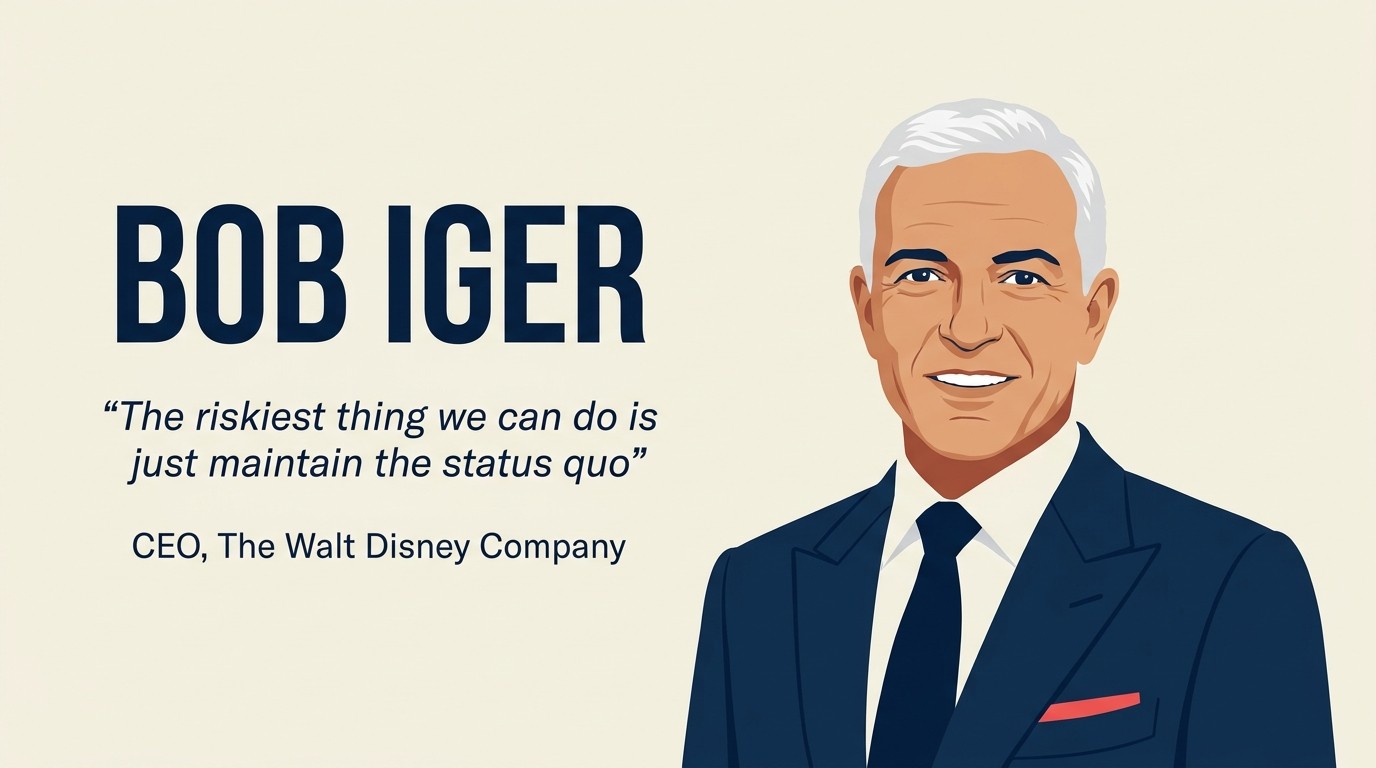
"A coisa mais arriscada que podemos fazer é manter o status quo" é uma linha que retornou a através de múltiplas entrevistas. Para Iger, ficar parado em um negócio de conteúdo — onde atenção de audiência é finita e IP envelhece — era sempre mais perigoso que sobrepagar pelo ativo criativo certo.
Onde Este Estilo Se Quebra
A abordagem aquisitiva de Iger tem dois modos de falha que operadores devem notar. O primeiro é débito de integração. A aquisição Fox em $71 bilhões trouxe conteúdo significante, distribuição internacional e a rede FX. Também trouxe complexidade de Hulu, complicações regulatórias e uma estrutura de custo que levou anos para racionalizar. Comprar em escala significa integrar em escala e a integração Fox nunca foi tão limpa quanto Pixar ou Marvel.
O segundo e maior fracasso é sucessão. O estilo de Iger é profundamente pessoal. Suas aquisições funcionaram por causa de seus relacionamentos específicos e credibilidade com Jobs, Lucas e Murdoch. Aqueles relacionamentos não são transferíveis. A empresa que construiu está organizada em torno de seu gosto e julgamento de formas que um sucessor não pode herdar por título. Aquele é o risco estratégico real que Disney enfrenta. Não perdas de streaming ou declínio de ESPN — aquelas são problemas operacionais solucionáveis. O problema insoluável é construir uma instituição que não depende dos relacionamentos de uma pessoa para fazer suas decisões mais importantes. Iger, para toda sua brilho de deal-making, não resolveu aquilo ainda. Para um caso contrastante, veja como transição de Andy Jassy em Amazon manejou a transferência de um CEO de era fundador sem a organização perder seus princípios operacionais.
Perguntas Frequentes sobre Liderança de Bob Iger
Quem é Bob Iger?
Bob Iger é o CEO de The Walt Disney Company, um papel que mantém de 2005 a 2020 e depois novamente de novembro de 2022 até o presente. Ele é mais conhecido por transformar Disney através de quatro aquisições maiores — Pixar, Marvel, Lucasfilm e 21st Century Fox — e por autorizar a memória de 2019 The Ride of a Lifetime.
Como Iger transformou Disney através de aquisições?
Iger executou quatro deals de definição de franquia: Pixar por $7,4 bilhões em 2006, Marvel por $4 bilhões em 2009, Lucasfilm por $4 bilhões em 2012 e 21st Century Fox por $71 bilhões em 2019. Cada aquisição alvo IP criativa que Disney não podia construir internamente, e Iger estruturou deals para proteger a cultura das empresas adquiridas e liderança criativa em vez de absorvê-las na burocracia de Disney.
Por que Bob Iger retornou como CEO de Disney em 2022?
Iger retornou em novembro de 2022 depois que o conselho de Disney demitiu seu sucessor escolhido a dedo Bob Chapek. Chapek tinha alienado a comunidade criativa de Disney, manejos mal uma declaração pública sobre legislação "Don't Say Gay" da Flórida e presidiu perdas significativas de streaming. O conselho pediu a Iger de volta para estabilizar a empresa; ele concordou em um termo de dois anos e depois estendeu.
Qual é a abordagem de Iger para risco criativo?
Iger aposta em liderança criativa e lhe dá autonomia. Ele apoiou a visão de Kevin Feige para o Marvel Cinematic Universe antes que filmmaking de universo compartilhado fosse comprovado, e deixou John Lasseter e Ed Catmull executar animação de Disney pós-aquisição de Pixar. Seu princípio é que você não pode adquirir excelência criativa e depois gerenciá-la como uma cadeia de suprimento — você tem que proteger as condições que a produziram.
Do que *The Ride of a Lifetime* trata?
The Ride of a Lifetime, publicado em 2019, é a memória de Iger cobrindo sua ascensão de ABC para CEO de Disney e as quatro aquisições que definiram seu mandato. É específico onde a maioria dos livros de liderança é vago, detalhando a dinâmica exata de suas conversas com Steve Jobs, George Lucas e Rupert Murdoch, bem como os erros que cometeu navegando a cultura Disney de era Eisner.
O que CEOs podem aprender com Bob Iger?
Três lições se destacam. Primeiro, clareza de tese de aquisição importa mais que atividade de aquisição — saiba exatamente que capacidade você está comprando. Segundo, integração deveria proteger o que tornou o alvo valioso, não otimizá-lo longe. Terceiro, sucessão não é transferência de título; se sua organização depende de seus relacionamentos pessoais e julgamento, nenhum sucessor pode herdar aquilo por decreto.
Aprenda Mais
- Liderança de M&A: Como Construir uma Empresa Através de Aquisição Sem Quebrar O Que Você Compra
- Planejamento de Sucessão: Por Que a Maioria dos CEOs Errarn e Como Fazer Certo
- Liderança Criativa: Como Gerenciar Times Criativos Sem Matar O Que Os Faz Bons
- Estratégia de IP: Por Que Possuir Ativos de Storytelling É um Modelo de Negócio Composto

On this page
- O Playbook de M&A do Disney
- A Armadilha de Sucessão
- Divisão de Estilo de Liderança
- Principais Traços de Liderança
- As 3 Decisões Que Definiram Bob Iger como Líder
- 1. Ligando para Steve Jobs para Negociar a Aquisição de Pixar
- 2. Aprovando o Deal de Marvel de $4 Bilhões Quando Wall Street Era Cético
- 3. Retornando como CEO em Novembro de 2022
- O Que Bob Iger Faria no Seu Papel
- Como Rework Suporta Integração de M&A e Planejamento de Sucessão
- Citações Notáveis e Lições Além da Sala de Diretores
- Onde Este Estilo Se Quebra
- Aprenda Mais