More in
Playbook Proses Jualan
Handoff SDR ke AE: Cara Menulisnya Supaya Ia Benar-benar Berfungsi
Apr 18, 2026
Asas Deal Desk: Cara Pasukan Jualan yang Lebih Kecil Boleh Meluluskan dan Menutup Deal dengan Lebih Pantas
Apr 18, 2026
Commit, Best Case, Pipeline: Mendefinisikan Istilah Forecast yang Digunakan Sama oleh Seluruh Pasukan
Apr 18, 2026
Analisis Win/Loss Tanpa Bias: Proses Berulang untuk Pasukan Jualan
Apr 18, 2026
Membina Proses Jualan Satu Jenis Deal pada Satu Masa
Apr 18, 2026
Multi-Threading Deals Tanpa Menyusahkan Champion Anda
Apr 18, 2026
Kemerosotan Pertengahan Pipeline: Cara Mendiagnosis dan Memperbaiki Deal yang Terhenti
Apr 18, 2026 · Currently reading
Mutual Action Plans: Bila Ia Membantu dan Bila Ia Merugikan
Apr 18, 2026
Kadence Operasi Jualan: Dari Daily Stand-Up hingga QBR Suku Tahunan
Apr 18, 2026
Kadence Forecast: Mingguan vs. Bulanan vs. Berterusan — Apa yang Berkesan dan Bila
Apr 6, 2026
Kemerosotan Pertengahan Saluran Jualan: Cara Mendiagnosis dan Memperbaiki Tawaran yang Terhenti
Turn this article into takeaways for your work.


Each assistant summarizes the article only for you and suggests best practices for your work.
Setiap pipeline mempunyai kawasan tanah perkuburan di tengah-tengahnya. Tawaran masuk, lulus kelayakan, mendapat cadangan yang dihantar, kemudian menjadi sunyi. Wakil jualan menyebutnya "masih aktif." Ramalan menyebutnya "best case." Kedua-dua keterangan itu tidak jujur.
Kawasan perkuburan pertengahan pipeline itu mahal dalam dua cara. Pertama, tawaran yang mati atau hampir mati melambungkan nisbah liputan pipeline anda dan mengubah ramalan. Kedua, wakil jualan yang menghabiskan tenaga untuk cuba menghidupkan semula tawaran yang tidak akan kembali tidak menggunakan masa itu untuk tawaran yang ada peluang.
Ubah bentuk ini memberi kesan langsung kepada ketepatan ramalan. Jika kategori ramalan anda ditakrifkan dengan kriteria tingkah laku tetapi lantai pipeline anda tidak bersih, nombor-nombor di hilir masih akan mengelirukan.
Cabarannya adalah bahawa tawaran yang terhenti tidak semuanya sama. Sesetengahnya benar-benar lambat bergerak kerana jadual pembeli yang sah. Yang lain sudah mati tetapi tiada siapa mahu mengakuinya. Dan sesetengahnya boleh diaktifkan semula dengan intervensi yang betul, tetapi tidak jika anda menerapkan strategi "susulan lebih banyak" yang generik kepada semuanya.
Penyelidikan Forrester mengenai penggelinciran tawaran mendapati bahawa kemacetan pertengahan pipeline menyumbang kepada majoriti kesilapan ramalan dalam organisasi jualan B2B, dengan politik dalaman pembeli dan langkah seterusnya yang tidak jelas disebut sebagai dua punca utama yang paling biasa.
Diagnosis sebelum intervensi. Itulah satu-satunya rangka kerja yang berkesan.
Kos Kemerosotan Pertengahan Pipeline
Tawaran yang terhenti menelan kos lebih daripada sekadar masa wakil jualan. Apabila tawaran duduk di peringkat pertengahan pipeline selama 60-90 hari tanpa pergerakan:
Inflasi ramalan. Tawaran yang berada di Peringkat 4 selama 11 minggu hampir pasti bukan bernilai ARR yang diunjurkan pada nilai muka. Tetapi ia mungkin masih ditunjukkan dalam ramalan. Liputan pipeline anda kelihatan sihat. Tetapi ia tidak.
Kos peluang. Wakil jualan yang menghabiskan 45 minit seminggu "memupuk" tawaran yang terhenti membuat pilihan tentang di mana hendak melabur masa mereka. Jika tawaran itu sudah mati, mereka telah menukar pembangunan pipeline yang nyata dengan harapan semata-mata.
Bunyi isyarat CRM. Apabila pengurus dan pasukan operasi cuba menganalisis kesihatan pipeline, tawaran yang lapuk mencemari setiap metrik: saiz tawaran purata, panjang kitaran purata, kadar penukaran peringkat.
Pipeline yang bersih dengan 30 tawaran aktif lebih berharga untuk perancangan dan pembinaan berbanding pipeline yang membengkak dengan 60 tawaran di mana separuhnya sudah mati.
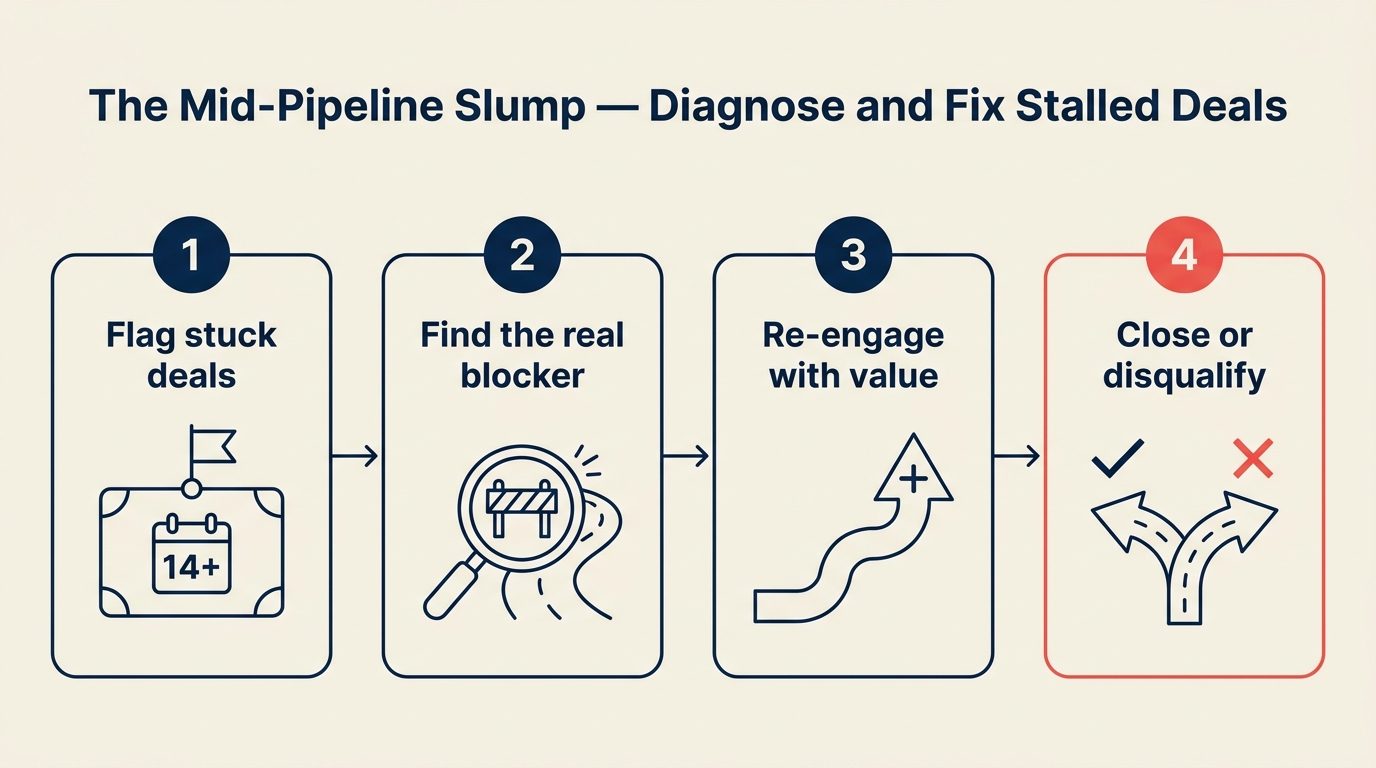
Langkah 1: Takrifkan "Terhenti"
Sebelum anda boleh membaiki tawaran yang terhenti, anda memerlukan definisi objektif tentang apa maksud "terhenti." Jika tidak, setiap wakil jualan akan memberitahu anda bahawa tawaran yang senyap selama 60 hari mereka "sedang dalam proses."
Ambang batas standard: 14 hari tanpa tindakan yang dimulakan oleh pembeli.
Bukan dimulakan oleh wakil jualan. Dimulakan oleh pembeli. Penyelidikan pengurusan pipeline Gartner mengesyorkan bahawa organisasi jualan mentakrifkan ambang batas tidak aktif secara eksplisit dalam dasar CRM, berbanding menyerahkannya kepada pertimbangan wakil, untuk membolehkan audit pipeline yang objektif. Wakil jualan menghantar e-mel susulan tidak dianggap sebagai aktiviti tawaran. Prospek membalas e-mel tersebut dianggap. Prospek mengklik pautan dalam cadangan dianggap. Pembantu prospek yang mengesahkan jadual semula tidak dianggap.
Tindakan pembeli adalah isyaratnya. Jika pembeli tidak melakukan apa-apa dalam 14 hari, tawaran itu terhenti mengikut definisi, tanpa mengira apa yang wakil jualan percaya sedang berlaku secara dalaman.
Sesetengah pasukan menggunakan ambang batas yang lebih panjang (21-30 hari) untuk tawaran enterprise dengan kitaran semula jadi yang lebih panjang. Itu boleh diterima. Yang penting adalah ambang batas itu ditakrifkan, diterapkan secara konsisten, dan tidak diselaraskan berdasarkan tawaran individu berdasarkan optimisme wakil jualan.
Langkah 2: Empat Punca Utama Kemacetan Pertengahan Pipeline
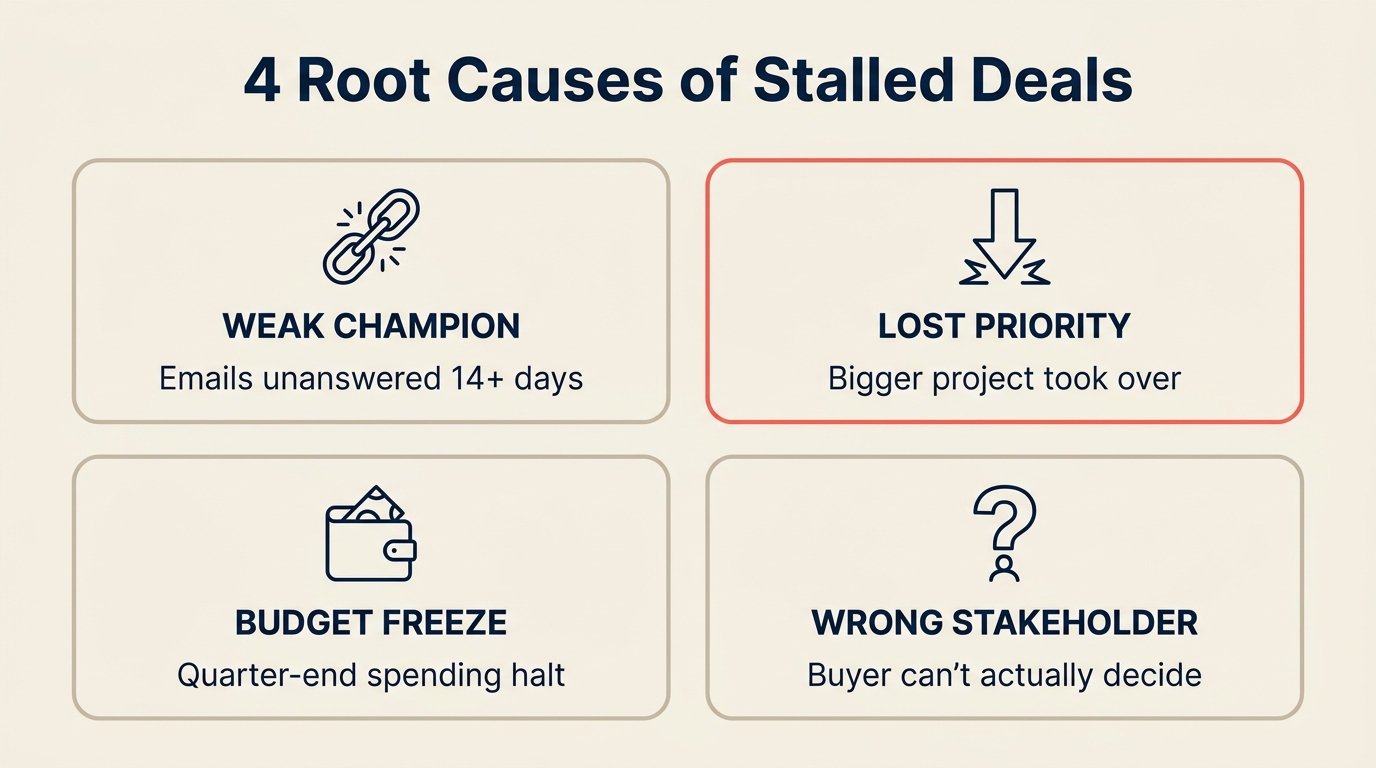
Setelah tawaran ditanda sebagai terhenti, tugas pengurus adalah mencari punca sebenar. Jangan andaikan ia sama untuk setiap tawaran.
Punca 1: Pembekuan atau pengagihan semula belanjawan. Situasi belanjawan prospek berubah selepas penilaian bermula. Penyusunan semula syarikat, suku hasil yang terlepas sasaran, pembekuan pengambilan pekerja, atau inisiatif dalaman bersaing menyerap belanjawan yang mereka rancang untuk gunakan.
Isyarat: Pembeli terlibat dan responsif sehingga tarikh tertentu, kemudian menjadi sunyi. Tiada bantahan khusus, hanya ketidakhadiran.
Punca 2: Politik dalaman. Pemegang kepentingan baru memasuki gambar yang bersikap skeptikal atau secara aktif menyekat. Atau champion kehilangan sokongan politik. Atau penaja eksekutif mengubah pendirian mereka. Ini adalah tepat-tepat risiko yang multi-threading cegah: jika anda mempunyai hubungan dengan berbilang pemegang kepentingan, seorang champion yang menjadi sunyi tidak membunuh tawaran.
Isyarat: Champion masih responsif tetapi kini samar atau mengelak. "Kami masih sedang memproses beberapa perkara dalaman." Tiada langkah seterusnya baru yang dipersetujui.
Punca 3: Champion kehilangan momentum. Keutamaan peribadi champion untuk pembelian ini berubah. Mereka masih di syarikat, masih dalam peranan, masih positif. Mereka cuma mempunyai 12 perkara lain yang bergerak ke hadapan pembelian ini.
Isyarat: Champion responsif apabila wakil jualan menghubungi tetapi tidak lagi memulakan. Mesyuarat terus ditangguhkan. "Boleh kita jadualkan semula?" adalah mesej yang paling biasa.
Punca 4: Langkah seterusnya yang salah dipersetujui. Mesyuarat terakhir berakhir dengan langkah seterusnya yang pembeli tidak benar-benar memiliki atau tidak benar-benar mahu lakukan. "Hantarkan cadangan kepada saya" yang belum mereka buka. "Kami akan semak secara dalaman" tanpa jadual atau pemilik yang ditentukan.
Isyarat: Wakil jualan melakukan apa yang sepatutnya (menghantar cadangan, menulis susulan) dan mendapat kesunyian. Langkah seterusnya adalah cara mudah bagi pembeli untuk mengakhiri mesyuarat.
Langkah 3: Perbualan Diagnostik, Lima Soalan
Sebelum memutuskan intervensi apa untuk dijalankan, pengurus perlu memahami punca sebenar. Tanya wakil jualan lima soalan ini tentang mana-mana tawaran yang terhenti:
1. "Bilakah pembeli terakhir mengambil tindakan, bukan anda, mereka?" Ini menetapkan tarikh stall sebenar berbanding tarikh hubungan terakhir yang direkodkan CRM. Kebanyakan wakil jualan akan menyedari bahawa stall sebenar bermula lebih awal daripada yang mereka sangkakan.
2. "Apakah topik tiga perbualan terakhir?" Membantu mengenal pasti sama ada terdapat pergerakan bererti atau sekadar basa-basi dan penjadualan semula. Jika tiga panggilan terakhir adalah perbualan "semak khabar," tawaran itu telah tersangkut lebih lama daripada yang wakil jualan akui.
3. "Apakah langkah seterusnya yang pembeli setuju, dan bila mereka sepatutnya melakukannya?" Jika wakil jualan tidak dapat menjawab ini dengan tindakan khusus dan tarikh khusus, tidak ada langkah seterusnya yang nyata. "Mereka sedang menyemak secara dalaman" bukan langkah seterusnya.
4. "Apa yang berubah untuk perniagaan pembeli sejak anda terakhir bercakap?" Memaksa wakil jualan untuk memikirkan dunia pembeli berbanding proses jualan mereka sendiri. Perubahan belanjawan, penyusunan semula, pengumuman persaingan, perubahan eksekutif: mana-mana ini boleh menjelaskan stall.
5. "Apa kes jujur untuk tawaran ini ditutup dalam 30 hari ke depan?" Bukan apa yang wakil jualan harapkan. Apa kes berasaskan bukti. Jika mereka tidak boleh membuatnya, tawaran itu mungkin sudah mati.
Soalan-soalan ini tidak memerlukan mesyuarat yang panjang. Ia boleh berlaku dalam segmen semakan pipeline 10 minit. Tetapi ia sepatutnya berlaku sebelum sebarang strategi pengaktifan semula diputuskan.
Langkah 4: Strategi Pengaktifan Semula Mengikut Punca
Nasihat generik "susulan lebih banyak" gagal kerana ia menganggap semua stall adalah sama. Intervensi perlu sepadan dengan punca.
Untuk pembekuan belanjawan: Jangan tolak cadangan asal. Sebaliknya, cadangkan versi yang lebih kecil skopnya: komitmen yang lebih kecil yang boleh dibiayai di bawah kategori belanjawan yang berbeza, atau pilot yang boleh bermula tanpa kelulusan belanjawan penuh. "Saya faham belanjawan suku ini ketat. Adakah masuk akal untuk mulakan dengan [skop yang lebih kecil] dan kembangkan pada S3?" Jika mereka tidak bersedia untuk terlibat dengan versi yang lebih kecil, tawaran itu mungkin sudah mati.
Untuk politik dalaman: Strateginya adalah jangkauan eksekutif, tetapi ia perlu melalui champion, bukan mengelak mereka. Tanya champion secara langsung: "Saya mahu memastikan kebimbangan [pemegang kepentingan baru] ditangani secara langsung. Bolehkah anda membantu saya menyediakan panggilan 30 minit dengan mereka?" Jika champion tidak mahu memudahkan itu, minta mereka memberitahu anda secara jujur sama ada tawaran itu masih hidup.
Menurut Harvard Business Review mengenai pengaktifan semula jualan yang berkesan, melibatkan semula tawaran yang terhenti jauh lebih berkesan apabila dibingkai di sekitar keadaan perniagaan yang berkembang dan isyarat urgensi baru berbanding kadens susulan yang mengulangi mesej yang sama.
Untuk champion yang kehilangan momentum: Perkenalkan semula urgensi yang berlabuh kepada hasil pembeli, bukan tarikh penutupan penjual. "Anda menyebut pada bulan Mac bahawa [kesakitan khusus] menelan kos pasukan anda [hasil khusus]. Adakah situasi itu berubah?" Jika kesakitan masih nyata, itulah kaitannya. Jika kesakitan telah diselesaikan atau diubah keutamaannya, itu adalah maklumat penting.
Untuk langkah seterusnya yang salah: Tinggalkan langkah seterusnya yang mati sepenuhnya. Jangan tindak lanjuti cadangan yang belum mereka baca. Sebaliknya, minta mesyuarat khusus dengan agenda yang jelas: "Saya ingin mendapatkan 20 minit untuk membincangkan dua soalan yang paling sering saya dengar pada peringkat ini. Bolehkah kita jadualkan untuk minggu depan?" Ini juga masa yang baik untuk memperkenalkan pelan tindakan bersama jika anda belum melakukannya. MAP mendedahkan sama ada pembeli mempunyai sebarang langkah seterusnya yang nyata atau hanya mengakhiri perbualan dengan sopan.
Langkah 5: Keputusan Pemotongan
Sesetengah tawaran perlu dipindahkan keluar dari pipeline aktif. Ini bukan kegagalan. Ini adalah kebersihan pipeline. Tawaran yang mati yang kekal dalam pipeline selama-lamanya menjadikan setiap metrik dan setiap ramalan kurang tepat.
Kriteria untuk memindahkan tawaran ke Omit:
- Tiada hubungan yang dimulakan oleh pembeli dalam 30+ hari walaupun dengan jangkauan wakil jualan
- Tiga atau lebih percubaan pengaktifan semula tanpa respons
- Champion mengesahkan secara dalaman keputusan telah ditangguhkan selama-lamanya
- Pembekuan belanjawan tanpa jadual untuk disambung semula
- Pemegang kepentingan utama berlepas tanpa pengganti dalaman yang dikenal pasti
Cara melakukannya tanpa menjatuhkan semangat wakil jualan:
"Memindahkan ini ke Omit bukan menutup tawaran. Ini adalah menyaiz semula pipeline dengan betul. Kita boleh membuka semula ia pada saat mereka terlibat semula, dan kita akan mempunyai data yang lebih baik tentang di mana liputan sebenar kita berdiri."
Jangan bingkaikan sebagai penilaian prestasi. Bingkaikan sebagai peningkatan ramalan. Wakil jualan tidak kehilangan kredit untuk kerja yang telah mereka lakukan pada tawaran itu; mereka mendapat semula masa untuk dihabiskan pada tawaran yang benar-benar boleh ditutup.
Satu pengecualian: Sesetengah tawaran mempunyai tarikh pengaktifan semula yang diketahui: "mereka memberitahu kita untuk kembali pada S3." Tawaran tersebut sepatutnya dipindahkan ke tempoh akan datang dalam ramalan, bukan ke Omit. Tandakan tarikh terlibat semula dan tetapkan peringatan.
Langkah 6: Semakan Corak
Jika 40% tawaran anda terhenti pada peringkat yang sama, masalahnya bukan tawaran-tawaran itu. Masalahnya adalah reka bentuk peringkat.
Setiap suku, lihat di mana stall berkelompok:
- Jika tawaran terhenti selepas demo pertama: Demo anda tidak mencipta urgensi atau kejelasan yang cukup. Atau penemuan sebelum demo tidak mendedahkan cukup kesakitan yang nyata.
- Jika tawaran terhenti selepas penghantaran cadangan: Cadangan anda tidak cukup disesuaikan, atau anda tidak mendapatkan penjajaran verbal mengenai terma utama sebelum menghantar.
- Jika tawaran terhenti dalam rundingan: Anda mungkin memperkenalkan kerumitan komersial yang champion tidak dilengkapi untuk ditangani secara dalaman.
Corak peringkat adalah perbualan pengurus dan operasi, bukan perbualan pembinaan wakil jualan. Jika peringkat itu sendiri mencipta stall, mengubah tingkah laku wakil individu tidak akan membaikinya. Definisi peringkat atau proses antara peringkat perlu berubah.
Kesilapan Biasa
Membiarkan wakil jualan "menjaga" tawaran mati selama beberapa suku. Tawaran yang tidak bergerak dalam 60 hari dan telah menerima empat susulan tanpa balasan bukan tawaran pipeline. Ia adalah kenalan untuk penjagaan pada masa hadapan. Pindahkan, dan bebaskan wakil jualan.
Laporan McKinsey mengenai produktiviti jualan B2B mendapati bahawa pasukan jualan yang menghabiskan lebih daripada 30% masa pipeline aktif pada tawaran yang terhenti mempunyai pencapaian kuota median 18 mata peratusan lebih rendah berbanding pasukan yang memotong tawaran tersebut awal dan mengalihkan usaha kepada pipeline yang layak.
Menambah lebih banyak sentuhan susulan tanpa mengubah proposisi nilai. Jika e-mel keempat mendapat respons tidak aktif yang sama seperti tiga yang pertama, e-mel kelima tidak akan berkesan. Ubah sudut pandang, bukan hanya masa.
Menganggap semua stall adalah sama. Tawaran pembekuan belanjawan dan tawaran langkah seterusnya yang salah memerlukan intervensi yang berbeza. Menjalankan urutan pengaktifan semula yang direka untuk satu pada yang lain membazir masa dan kadangkala memburukkan keadaan.
Matriks Diagnostik Stall
| Punca | Isyarat utama | Intervensi yang disyorkan |
|---|---|---|
| Pembekuan belanjawan | Menjadi sunyi pada tarikh tertentu; tiada bantahan diberikan | Kurangkan skop atau cadangkan pilot |
| Politik dalaman | Champion samar atau mengelak; nama baru muncul | Jangkauan eksekutif melalui champion |
| Champion kehilangan momentum | Responsif tetapi tidak memulakan; terus menjadualkan semula | Perbualan penjangkaran semula kesakitan |
| Langkah seterusnya yang salah | Wakil jualan melaksanakan langkah seterusnya, pembeli senyap | Tinggalkan langkah seterusnya yang lapuk; tempah mesyuarat berdasarkan agenda |
| Tidak diketahui | Pelbagai isyarat bercampur | Jalankan diagnostik 5 soalan sebelum memutuskan |
Apa yang Perlu Dilakukan Seterusnya
Jalankan diagnostik pada 10 tawaran tertua dalam pipeline aktif anda minggu ini.
Bagi setiap satu: kenal pasti tarikh stall (tindakan terakhir pembeli), tanya wakil jualan lima soalan diagnostik, dan tetapkan kategori punca. Kemudian putuskan: strategi pengaktifan semula atau pemotongan?
Jika lebih daripada 3 daripada 10 termasuk dalam kategori "potong," anda mempunyai masalah kebersihan pipeline yang menjejaskan setiap perbualan ramalan yang anda ada. Membaikinya dahulu menjadikan semua yang lain lebih tepat. Panduan budaya kebersihan pipeline merangkumi cara menjadikan ini tingkah laku pasukan berbanding masalah yang dikawal pengurus sahaja, kerana kebersihan yang bergantung kepada penguatkuasaan semata-mata merosot apabila pengurus berhenti melihat.
Ketahui Lebih Lanjut

Head of Enterprise Solutions
On this page
- Kos Kemerosotan Pertengahan Pipeline
- Langkah 1: Takrifkan "Terhenti"
- Langkah 2: Empat Punca Utama Kemacetan Pertengahan Pipeline
- Langkah 3: Perbualan Diagnostik, Lima Soalan
- Langkah 4: Strategi Pengaktifan Semula Mengikut Punca
- Langkah 5: Keputusan Pemotongan
- Langkah 6: Semakan Corak
- Kesilapan Biasa
- Matriks Diagnostik Stall
- Apa yang Perlu Dilakukan Seterusnya