Bahasa Indonesia
Gaya Kepemimpinan Marty Cagan: Tim Produk Diberdayakan, Discovery, dan Framework SVPG
Turn this article into takeaways for your work.


Each assistant summarizes the article only for you and suggests best practices for your work.
Marty Cagan menghabiskan 20 tahun di dalam perusahaan seperti HP, Netscape, dan eBay membangun produk. Kemudian pada 2001 dia mendirikan Silicon Valley Product Group dan menghabiskan dua dekade berikutnya memberitahu perusahaan bahwa hampir semua yang mereka lakukan — roadmap penuh fitur, product owner mengubah requirement menjadi ticket, siklus perencanaan kuartalan yang memperlakukan produk seperti proyek — salah.
Dia tidak sopan tentang hal itu.
Fakta Kunci
- Pendiri: Silicon Valley Product Group (SVPG), didirikan 2001 — firma coaching produk paling berpengaruh industri.
- Latar belakang operator: 20+ tahun sebelum SVPG, termasuk VP of Products di eBay (1999-2001) dan peran produk senior di Hewlett-Packard (HP), Netscape, dan AOL.
- Buku signature: "INSPIRED: How to Create Tech Products Customers Love" (2008, direvisi 2017 — luas disebut alkitab product management industri), "EMPOWERED: Ordinary People, Extraordinary Products" (2020, co-authored bersama Chris Jones), dan "TRANSFORMED: Moving to the Product Operating Model" (2024).
- Jangkauan coaching: SVPG telah menasihati kepemimpinan produk di Netflix, Adobe, Uber, dan ratusan perusahaan teknologi growth-stage dan enterprise.
- Kosakata inti: Mempopulerkan istilah "empowered product teams," "feature factory," "product trio," dan "dual-track agile" — sekarang bahasa default manajemen produk modern.
Doktrin Tim Produk Diberdayakan
Doktrin Tim Produk Diberdayakan (juga disebut Cagan INSPIRED Model) memegang bahwa perusahaan produk berkelanjutan dibangun di sekitar tim cross-functional dari product manager, designer, dan engineer yang diberi masalah pelanggan sulit untuk diselesaikan daripada daftar fitur untuk dikirim. Pemberdayaan memerlukan dua kondisi: talent kaliber senior pada setiap tim dan kepemimpinan eksekutif yang mengukur outcome, bukan output. Tanpa keduanya, model merendah menjadi feature factory mengenakan kosakata produk modern.
"INSPIRED" adalah buku produk paling direkomendasikan di Silicon Valley bukan karena lembut tetapi karena menamai failure mode dengan jelas. Cagan memanggil kebanyakan organisasi produk enterprise "feature factories" — tim yang mengirim apa yang diberitahu, mengukur velocity, dan tidak pernah bertanya apakah output menyelesaikan masalah nyata. Diagnosis itu tidak nyaman karena akurat untuk mayoritas tim produk beroperasi hari ini.
Jika Anda menjalankan perusahaan di mana engineering mengirim apa yang roadmap katakan dan tidak ada yang bertanya apakah itu hal yang tepat untuk dibangun, framework Cagan adalah intervensi langsung yang Anda butuhkan.
Rincian Gaya Kepemimpinan
| Gaya | Bobot | Cara Ditampilkan |
|---|---|---|
| Kritikus Produk Level-Sistem | 55% | Kontribusi utama Cagan adalah diagnostik. Dia menghabiskan 20 tahun sebagai operator di waterfall, early agile, dan transisi ke manajemen produk modern — 8 tahun di HP, kira-kira 4 di Netscape dan AOL selama browser wars, dan 5 tahun sebagai VP Product di eBay selama puncak dot-com dan sesudahnya. Pengalaman itu memberinya pola library failure mode organisasi yang kebanyakan framework produk abaikan. Bukunya dan penulisan SVPG tidak pitch metodologi. Mereka mengidentifikasi alasan struktural mengapa kebanyakan organisasi produk menghasilkan outcome mediocre dan apa alternatif benar-benar membutuhkan. |
| Praktisi Coach | 45% | Cagan dan mitra SVPG-nya — termasuk Jon Moore, Pete Schlampp, dan lainnya — melatih organisasi produk growth-stage dan enterprise secara langsung. Ini bukan akademis. SVPG bekerja hands-on dengan perusahaan untuk mendiagnosis gap, melatih product manager, dan membantu CEO memahami apa yang "empowered product teams" benar-benar butuhkan dari mereka. Konteks coaching adalah di mana framework Cagan diuji melawan resistansi organisasi nyata, dan tulisannya mencerminkan itu. Dia tidak mendeskripsikan keadaan ideal; dia mendeskripsikan pekerjaan spesifik yang dibutuhkan untuk pindah dari di mana kebanyakan perusahaan berada ke di mana mereka perlu berada. |
Pembagian itu penting karena menjelaskan mengapa framework Cagan secara bersamaan paling dikutip dan paling sering disalahgunakan dalam manajemen produk. Pemikiran sistem jelas. Coaching yang dibutuhkan untuk menginstalasinya sulit. Perusahaan membaca "INSPIRED," setuju dengan diagnosis, dan kemudian coba eksekusi tim diberdayakan tanpa melakukan pekerjaan underlying tentang talent, trust, dan alignment eksekutif. Hasil mengkonfirmasi poin Cagan tentang feature factory tanpa benar-benar melarikan diri dari mereka.
Ciri-Ciri Kepemimpinan Utama
| Ciri | Rating | Apa artinya dalam praktik |
|---|---|---|
| Tidak kompromi pada prinsip tim diberdayakan | Luar Biasa | Cagan konsisten menolak melunakkan framework-nya untuk membuatnya lebih dapat diterima bagi organisasi yang tidak siap. Ketika coaching SVPG mengungkapkan bahwa PM perusahaan pada dasarnya adalah project manager dan engineer tidak memiliki ruang untuk menyelesaikan masalah, dia menamakannya dengan jelas daripada memposisikan improvement inkremental sebagai kesuksesan. Untuk perusahaan di mana kualitas produk langsung mendorong valuasi atau posisi kompetitif, ketidaksopanan itu persis yang dibutuhkan dari coach. |
| Kredibilitas praktisi mendalam | Sangat Tinggi | Wewenang Cagan datang dari telah melakukan pekerjaan, bukan telah mempelajarinya. Dia adalah VP Product di eBay selama 5 tahun, menjalankan produk di salah satu platform marketplace paling kompleks era internet awal. Dia di Netscape selama browser war dengan Internet Explorer — salah satu lingkungan produk kompetitif tertinggi-stakes dalam sejarah tech. Ketika dia mendeskripsikan bagaimana product-market fit bekerja dalam perusahaan pertumbuhan tinggi, dia menggambar dari pengalaman langsung, yang memberi coaching-nya spesifisitas yang framework akademis tidak bisa cocokkan. |
| Kemampuan mendiagnosis failure mode organisasi | Tinggi | Keterampilan paling berguna Cagan adalah mengidentifikasi root cause underperformance produk — apakah itu weak PM talent, kurangnya discovery capacity, roadmap theater dikenakan oleh sales, atau executive distrust dari product judgment. Kebanyakan organisasi tidak bisa self-diagnose karena gejala terlihat seperti execution problems ketika mereka benar-benar struktural. Bukunya berfungsi sebagai diagnostic manual. Konsep "feature factory" saja layak membaca karena memberi Anda satu istilah untuk failure mode yang kebanyakan organisasi produk hidup. Penelitian Harvard Business Review tentang autonomy tim produk memperkuat argumen struktural yang sama dari sisi akademis. |
| Kesediaan menantang kepemimpinan dan proses | Tinggi | Cagan tidak hanya mengkritik tim produk. Dia eksplisit bahwa kebanyakan product failure adalah leadership failure: eksekutif yang mendikte solusi, organisasi sales yang memiliki roadmap, dan CEO yang belum membangun hubungan kepercayaan dengan produk yang diperlukan tim diberdayakan. Buku "EMPOWERED" (2020, co-authored bersama Chris Jones) sebagian besar ditujukan ke heads of product dan CPO — bukan PM — karena Cagan percaya akuntabilitas untuk budaya produk duduk pada level kepemimpinan. Marc Benioff adalah salah satu dari sedikit CEO enterprise yang secara publik operasionalisasi ini — membangun budaya produk Salesforce di sekitar tim diberdayakan dan V2MOM alignment pada waktu yang sama Cagan sedang mengembangkan kosakata untuk itu. |
3 Keputusan yang Mendefinisikan Marty Cagan sebagai Pemimpin
1. Mendirikan SVPG pada 2001 Daripada Melanjutkan sebagai Operator
Cagan meninggalkan eBay pada 2001 dan mendirikan Silicon Valley Product Group daripada mengambil peran VP Product lain. Itu adalah taruhan dengan tesis di belakangnya: perusahaan tidak membutuhkan lebih banyak product leader yang akan mereplikasi pola yang sama dari dalam. Mereka membutuhkan model coaching eksternal yang dibangun oleh praktisi yang bisa melihat failure mode yang tim internal tidak bisa.
Timing itu signifikan. 2001 adalah post-dot-com crash. Generasi pertama perusahaan produk internet telah meledak. Generasi kedua — Google, Amazon, early Facebook — baru saja mulai. Cagan telah menonton product development pada skala melalui browser war, merger AOL-Netscape, dan membangun marketplace eBay. Dia memiliki pandangan spesifik apa yang memisahkan organisasi produk yang bekerja dari yang tidak.
SVPG dimulai sebagai platform penulisan dan berbicara. Cagan menerbitkan pemikiran manajemen produk di blog SVPG tahun sebelum "INSPIRED" adalah buku. Penulisan itu membangun audience PM yang lapar akan guidance berbasis praktisi yang bukan course theory sertifikasi. Ketika "INSPIRED" keluar pada 2008, itu memiliki readership pre-built.
Model firma coaching membiarkan Cagan tetap dekat dengan masalah organisasi nyata tanpa berada di dalam satu organisasi. Setelah 25 tahun, SVPG telah menasihati ratusan perusahaan. Itu adalah breadth eksposur yang tidak ada peran operator tunggal bisa sediakan, dan itu adalah mengapa pattern recognition Cagan tentang product failure lebih dapat diandalkan daripada kebanyakan.
2. Menulis "INSPIRED" — Dua Edisi, Audience Berbeda
Edisi pertama dari "INSPIRED" keluar pada 2008. Ini adalah practical guide untuk product management ditujukan kepada PM yang tidak memiliki template untuk bagaimana pekerjaan mereka seharusnya benar-benar beroperasi. Pada 2008, hampir tidak ada penulisan praktisi serius tentang product management. Cagan mengisi celah.
Edisi kedua pada 2017 adalah buku berbeda. Ini tidak hanya diperbarui — itu diframing ulang. Pada 2017, Cagan telah melatih cukup perusahaan post-product-market-fit untuk memahami bahwa failure mode telah bergeser. Masalah bukan bahwa PM tidak tahu dasar. Masalah adalah kebanyakan organisasi produk telah mengadopsi kosakata manajemen produk modern (agile, sprint, roadmap, user stories) tanpa mengubah budaya underlying. Mereka masih feature factories dengan process theater lebih baik.
Edisi kedua memperkenalkan empowered product teams secara eksplisit, mendefinisikan product trio (PM + designer + engineer bekerja sebagai tim discovery co-equal), dan membuat model dual-track agile sentral. Dual-track agile menjalankan discovery — mengetahui apa yang dibangun dan apakah itu bekerja — secara paralel dengan delivery, daripada memperlakukan mereka sebagai fase sekuensial. Distinsi menghilangkan single biggest failure mode yang Cagan amati: roadmap penuh fitur yang tidak pernah divalidasi sebagai solusi untuk masalah nyata.
"INSPIRED" digunakan sebagai curriculum di Google, Microsoft, dan ratusan perusahaan growth-stage. Jangkauan-nya melampaui basis coaching langsung SVPG adalah alasan kosakata Cagan — feature factory, empowered teams, product trio — menjadi bahasa dominan manajemen produk serius.
3. Mengembangkan Tesis Tim Produk Diberdayakan
Konsep product trio sangat sederhana: PM, designer, dan engineer bekerja bersama pada discovery, bukan sekuensial. PM tidak menyerahkan requirement ke design, yang menyerahkan spec ke engineering. Ketiga terlibat dalam memahami masalah dan membentuk solusi dari awal.
Ini secara langsung berkonflik dengan cara kebanyakan implementasi agile dan scrum benar-benar bekerja. Dalam praktik, kebanyakan organisasi "agile" memiliki PM menulis user stories, designer menghasilkan mockup, dan engineer mengimplementasikan. PM adalah perantara yang memfilter input pelanggan melalui proses prioritisasi dan menghasilkan backlog. Pekerjaan engineer adalah mengeksekusi backlog itu dengan kualitas.
Argumen Cagan adalah bahwa model ini menghasilkan persis insentif yang salah: PM mengoptimalkan untuk throughput (membersihkan backlog), designer mengoptimalkan untuk kualitas visual fitur individual, dan engineer mengoptimalkan untuk eksekusi teknis. Tidak ada yang bertanggung jawab apakah produk menyelesaikan masalah yang tepat.
Model product trio menempatkan akuntabilitas gabungan untuk outcome pada semua tiga peran. Ini membutuhkan engineer yang tertarik pada masalah, bukan hanya implementasi. Ini membutuhkan designer yang bisa engage dengan batasan bisnis, bukan hanya user experience. Dan itu membutuhkan PM yang bisa memimpin melalui influence daripada authority.
Itu adalah perubahan organisasi sulit. Ini membutuhkan hiring untuk skill berbeda daripada kebanyakan perusahaan saat ini hiring untuk, dan itu membutuhkan mengubah bagaimana tiga peran dievaluasi. Cagan mengakui ini, itulah mengapa "EMPOWERED" (2020) fokus pada layer kepemimpinan: Anda tidak bisa menginstall product trio dari bottom-up.
Apa yang Marty Cagan Lakukan dalam Peran Anda
Jika Anda adalah CEO, pertanyaan paling langsung Cagan untuk Anda adalah tentang trust. Apakah Anda memberikan tim product leadership Anda wewenang genuine atas apa yang dibangun, atau apakah Anda review roadmap dan mengubahnya berdasarkan gut instinct atau customer call terakhir? Kebanyakan CEO percaya mereka memberikan tim produk otonomi sambil benar-benar melakukan kontrol roadmap signifikan. Poin Cagan adalah bahwa Anda bisa memiliki satu atau yang lain: Anda bisa manage roadmap, atau Anda bisa hold product leadership akuntabel untuk outcome. Mencoba melakukan keduanya menciptakan feature factory dengan mission statement tentang pemberdayaan.
Jika Anda adalah COO, pertanyaan operasional adalah tentang discovery capacity. Apakah organisasi produk Anda memiliki proses terstruktur untuk memvalidasi asumsi sebelum commit sumber daya engineering? Kebanyakan perusahaan tidak. Mereka pindah dari idea ke sprint planning tanpa langkah terukur di antara. Dual-track agile berarti menjalankan discovery terus-menerus, bukan dalam batch research sprint. Jika siklus produk Anda terlihat seperti: tulis requirement, design, build, release, ukur disappointment — Anda kehilangan discovery track dan model dual-track Cagan adalah fix spesifik.
Jika Anda adalah product leader, diagnostik Cagan paling penting untuk dijalankan adalah ini: berapa persen engineer Anda dapat memberitahu Anda, tanpa melihat ticket, masalah pelanggan apa yang mereka selesaikan dengan pekerjaan saat ini mereka? Jika lebih sedikit dari 80% dapat menjawab pertanyaan itu, Anda menjalankan feature factory. Fix bukan program komunikasi. Ini adalah restruktur bagaimana discovery terjadi — mendapatkan engineer ke dalam percakapan pelanggan, melibatkan mereka dalam problem framing sebelum design solusi mulai, dan mengukur tim pada outcome daripada throughput.
Jika Anda dalam penjualan atau pemasaran, framework Cagan menciptakan tegangan spesifik yang Anda butuhkan untuk memahami. Tim produk diberdayakan seharusnya membuat bet berdasarkan product judgment, bukan sales commitment. Itu secara langsung berkonflik dengan praktik umum menjual fitur yang belum dibangun, atau membiarkan pelanggan terbesar mendikte roadmap. Cagan tidak mengatakan abaikan input sales — dia mengatakan organisasi produk perlu mengevaluasi input itu terhadap basis pelanggan lebih luas dan membuat product bet, bukan janji. Jika tim sales Anda memiliki roadmap produk, Anda membangun professional services business, bukan product company.
Bagaimana Rework Mendukung Model Operasi Tim Diberdayakan
Diagnosis Cagan adalah bahwa feature factory persisten karena permukaan operasi mereka — roadmap, ticket, Jira board — reward throughput, bukan outcome. Pindah ke tim produk diberdayakan memerlukan menggeser artefak hari-hari yang tim benar-benar bekerja dalam. Itu adalah di mana platform Work Operations Rework cocok: discovery board yang track asumsi dan eksperimen bersama delivery ticket, outcome-based team dashboard yang ikat engineering work ke masalah pelanggan itu menyelesaikan, dan ruang cross-functional di mana PM, designer, dan engineer berbagi single source of truth daripada menyerahkan artefak lintas-tool.
Untuk product leader menginstall model Cagan, shift budaya paling sulit adalah membuat discovery terlihat. Kebanyakan organisasi tidak memiliki tempat untuk track "di sini apa yang kami asumsikan, di sini kami bagaimana kami menguji, di sini apa yang kami pelajari." Rework memberi product trio ruang kerja bersama itu — terstruktur cukup untuk membuat discovery praktik first-class, fleksibel cukup untuk menghindari mengubahnya ke proses stage-gate lain. Tool tidak menginstall pemberdayaan. Tetapi itu menghilangkan alasan bahwa operating system memaksa perilaku feature-factory.
Kutipan Terkenal dan Pelajaran Melampaui Ruang Rapat
Cagan spesifik tentang apa yang bukan product manager. Dia berdebat terhadap deskripsi "CEO of the product" karena itu mengaburkan pekerjaan actual: "Pekerjaan product manager adalah bekerja secara erat dengan tim engineering untuk discover dan deliver produk yang kedua-duanya valued oleh pelanggan dan viable untuk bisnis." Itu adalah akuntabilitas sangat berbeda dari strategi ownership. Artikulasi penuh distinsi ini dikembangkan dalam arsip artikel SVPG, di mana Cagan telah menerbitkan ratusan esai fokus-praktisi sejak 2001.
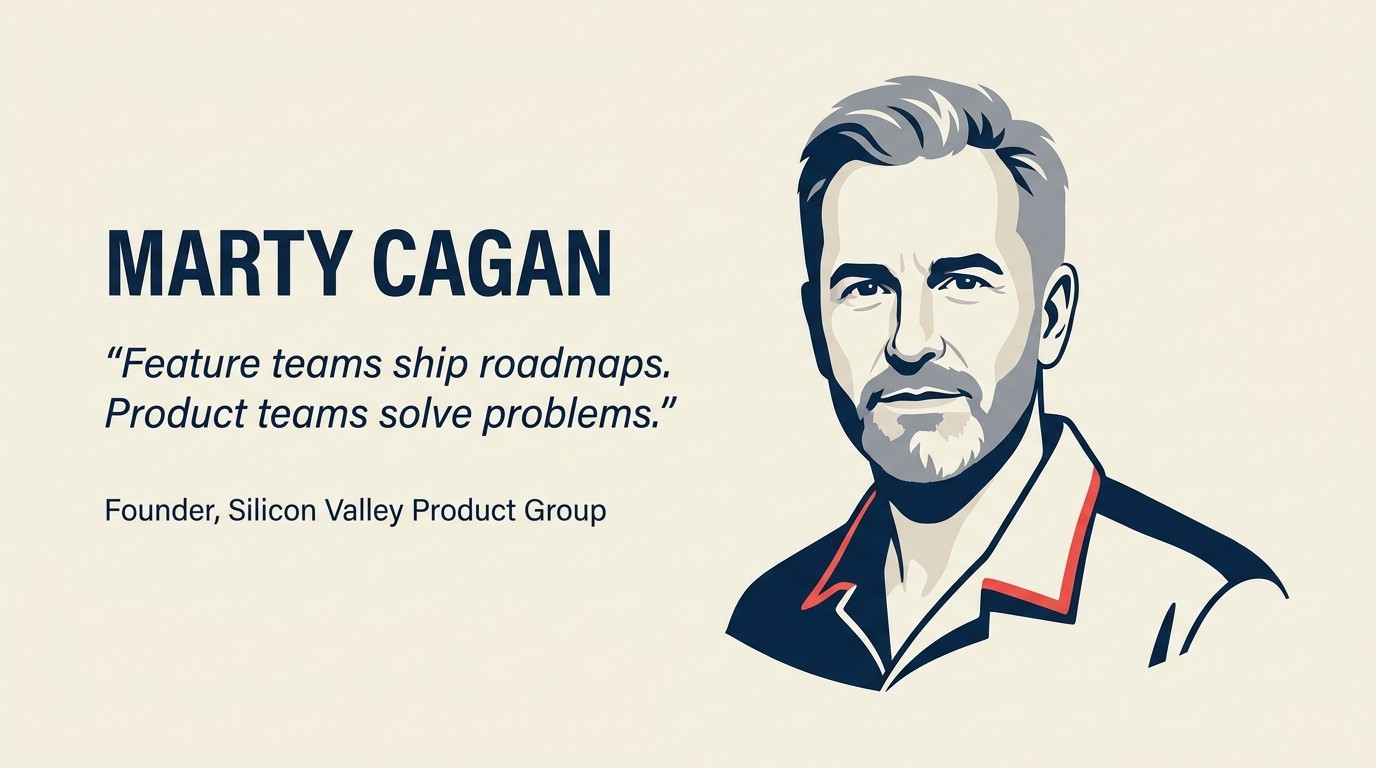
Distinsi-nya antara "feature teams" dan "product teams" layak memiliki di dinding: feature teams diberi solusi untuk dibangun; product teams diberi masalah untuk diselesaikan. Kebanyakan organisasi memanggil tim mereka product teams dan mengoperasikan mereka sebagai feature teams. Kesenjangan antara keduanya adalah kesenjangan antara organisasi produk yang menciptakan competitive advantage dan satu yang mengeksekusi terhadap daftar.
Pengamatan paling tidak nyaman-nya adalah bahwa kebanyakan perusahaan melakukan produk "dalam nama saja." Mereka memiliki PM dengan gelar product manager yang menghabiskan waktu mereka menulis ticket dan mengelola delivery. Mereka memiliki ceremonial agile dan review roadmap kuartalan. Dan mereka memiliki kegagalan berkelanjutan untuk menciptakan produk yang pelanggan benar-benar inginkan. Poin Cagan adalah bahwa kosakata manajemen produk modern telah menyebar jauh lebih cepat daripada kemampuan underlying itu mendeskripsikan.
Di Mana Gaya Ini Rusak
Model tim produk diberdayakan Cagan mengasumsikan Anda memiliki strong, senior product manager yang bisa beroperasi dengan otonomi genuine dan membuat bet berkualitas-tinggi. Kebanyakan perusahaan early-stage dan mid-stage tidak memiliki basis talent itu. Saran framework itu benar — tetapi itu bisa menciptakan paralysis ketika starting point realistis adalah tim tiga junior PM yang tidak pernah menjalankan discovery.
Model ini juga membutuhkan executive trust dalam product judgment yang membutuhkan tahun untuk dibangun. Dalam organisasi di mana sales atau pelanggan enterprise mendorong roadmap secara langsung, prinsip tim diberdayakan menciptakan konflik politis yang framework mengidentifikasi tetapi tidak sepenuhnya resolve. Cagan mengakui bahwa menginstall model-nya dari bottom-up hampir tidak mungkin. Tetapi "dapatkan buy-in eksekutif dulu" tidak selalu advice actionable.
Dan Cagan tidak lagi beroperasi. Framework-nya stress-tested di HP, Netscape, dan eBay, yang pre-mobile, pre-cloud enterprise. Dinamika spesifik modern B2B SaaS, bisnis marketplace, atau produk mobile konsumen memperkenalkan wrinkle yang pekerjaan-nya cover imperfectly. Shreyas Doshi menyediakan extension paling berguna di sini — framework LNO-nya dan distinsi product-thinker dibangun dari pengalaman Stripe dan Twitter yang post-date operator tahun Cagan. Dan Steve Jobs tetap proof historis paling jelas bahwa tesis inti Cagan memegang: keputusan produk paling consequential datang dari pemimpin yang menolak untuk memisahkan product intuition dari organizational authority.
Untuk bacaan terkait tentang product leadership dan praktik discovery, lihat Gaya Kepemimpinan Teresa Torres, Gaya Kepemimpinan Shreyas Doshi, dan Membangun Tim Produk Berperforma Tinggi.

On this page
- Fakta Kunci
- Doktrin Tim Produk Diberdayakan
- Rincian Gaya Kepemimpinan
- Ciri-Ciri Kepemimpinan Utama
- 3 Keputusan yang Mendefinisikan Marty Cagan sebagai Pemimpin
- 1. Mendirikan SVPG pada 2001 Daripada Melanjutkan sebagai Operator
- 2. Menulis "INSPIRED" — Dua Edisi, Audience Berbeda
- 3. Mengembangkan Tesis Tim Produk Diberdayakan
- Apa yang Marty Cagan Lakukan dalam Peran Anda
- Bagaimana Rework Mendukung Model Operasi Tim Diberdayakan
- Kutipan Terkenal dan Pelajaran Melampaui Ruang Rapat
- Di Mana Gaya Ini Rusak