Bahasa Indonesia
Gaya Kepemimpinan Akio Toyoda: Warisan, Krisis, dan Posisi Hybrid
Turn this article into takeaways for your work.


Each assistant summarizes the article only for you and suggests best practices for your work.
Fakta Kunci: Akio Toyoda sekilas
- Peran: Presiden Toyota Motor Corporation (2009–2023), Ketua (2023–sekarang)
- Warisan: Cucu pendiri Toyota Kiichiro Toyoda; bergabung dengan perusahaan pada 1984
- Uji krisis: Memimpin respons terhadap penarikan ulang akselerasi tanpa disengaja 2009–2011 yang mencakup 10M+ kendaraan; bersaksi secara pribadi di hadapan Kongres AS pada Februari 2010
- Panggilan contrarian: Secara publik membela strategi hybrid dan hidrogen terhadap tekanan industri EV penuh dari 2019 hingga 2023
- Transisi: Naik ke Ketua pada April 2023, menyerahkan peran presiden kepada Koji Sato sambil mempertahankan pengawasan TPS dan R&D jangka panjang
- Nilai perusahaan: Kapitalisasi pasar Toyota tumbuh dari kira-kira $130B di awal masa jabatannya menjadi sekitar $280B pada saat dia bertransisi ke ketua
Pada 2021, ketika setiap pabrikan mobil utama mengumumkan komitmen EV penuh dan kapitalisasi pasar Tesla melebihi Toyota untuk pertama kalinya, Akio Toyoda berdiri di depan reporter dan mengatakan industri salah. Bukan secara diplomatis. Dia menyebut dorongan semua-EV masalah "mayoritas senyap" — bahwa pabrikan, media, dan pembuat kebijakan bergerak lebih cepat daripada infrastruktur, pelanggan, dan planet dapat mengikuti. Di Jepang, di mana sebagian besar listrik masih berasal dari bahan bakar fosil, armada semua-EV akan menghasilkan emisi lebih dari hybrid. Matematikanya tidak rumit.
Tidak ada yang ingin mendengarnya. Toyoda baru saja menghabiskan dua tahun menonton Toyota terpukul di pers karena tertinggal dalam EV sementara Ford, GM, dan Volkswagen mengumumkan komitmen baterai besar. Stoknya berkinerja buruk. Analis menyebutnya ketinggalan zaman. Dan dia mempertahankan garis bagaimanapun juga, menggandakan hybrid dan hidrogen sambil secara metodis membangun arsitektur EV yang akan datang ke pasar sesuai jadwal Toyota, bukan Wall Street.
Apakah dia benar atau salah tergantung tahun mana yang Anda tanyakan. Tetapi kesediaannya untuk membela posisi contrarian di bawah tekanan publik berkelanjutan, sambil mengelola salah satu organisasi manufaktur paling kompleks di bumi, menjadikannya salah satu kasus kepemimpinan yang lebih instruktif dalam sejarah perusahaan baru-baru ini.
Rincian Gaya Kepemimpinan
| Gaya | Bobot | Cara Ditampilkan |
|---|---|---|
| Pelayan | 55% | Menghabiskan 27 tahun dalam operasi Toyota sebelum menjadi CEO pada 2009. Secara teratur mengunjungi lantai pabrik dan jaringan dealer. Selama krisis penarikan ulang 2009-2011, terbang ke Washington DC secara pribadi untuk kesaksian Kongres dan membungkuk secara publik — tampilan akuntabilitas korporat yang jarang. Melindungi Sistem Produksi Toyota (TPS) pekerja dan prinsip terhadap tekanan untuk memotong sudut untuk biaya. |
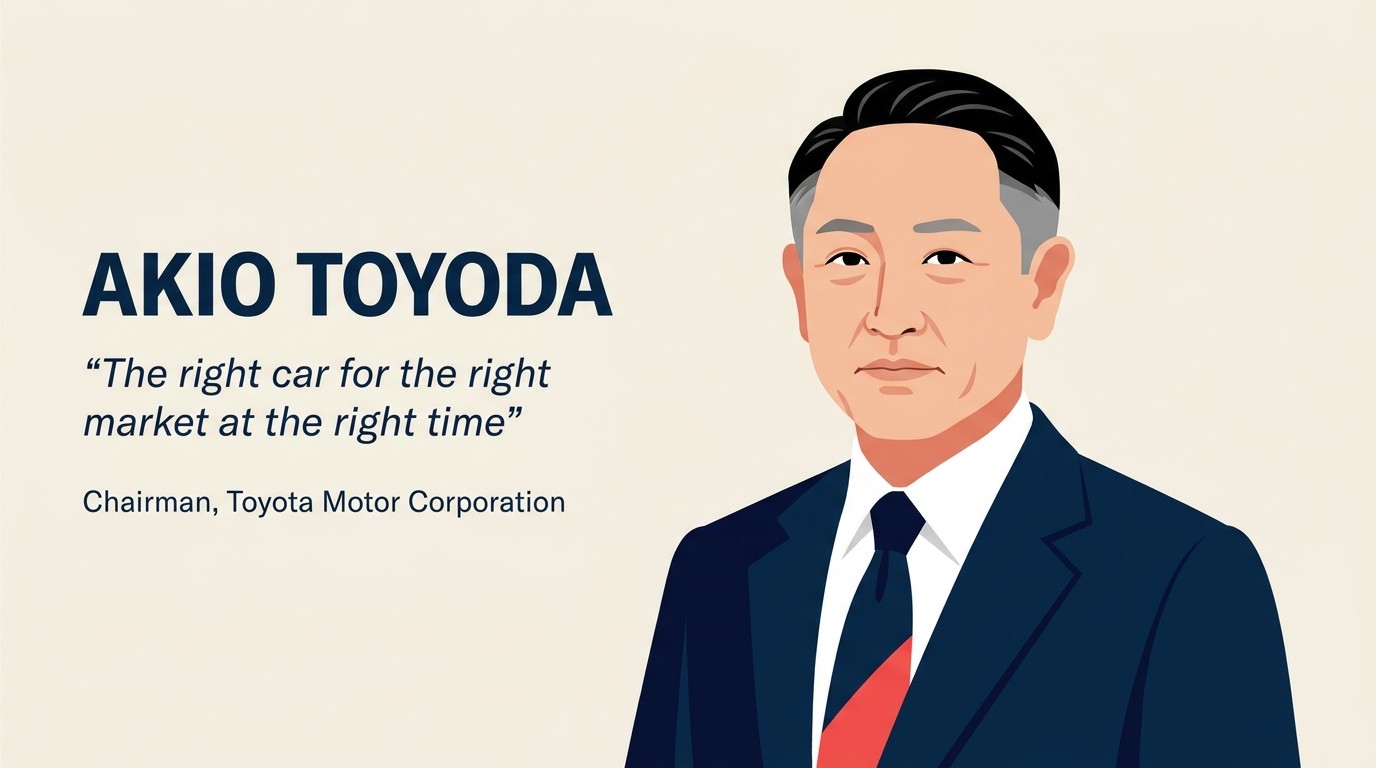
| Strategis | 45% | Mempertahankan pandangan multi-tahun tentang elektrifikasi yang berbeda dari konsensus industri. Menginvestasikan dalam R&D baterai solid-state dan sel bahan bakar hidrogen ketika pabrikan mobil lain menolak keduanya sebagai terlalu lambat. Membela tesis "mobil yang tepat untuk pasar yang tepat pada waktu yang tepat" secara publik dan konsisten, bahkan ketika itu merugikan dia dalam perbandingan kuartalan. |
Pembagian itu penting. Toyoda bukan terutama seorang pemotong biaya atau visioner yang karismatik. Dia memimpin dari bawah ke atas — kredibilitas miliknya di dalam Toyota datang dari mengetahui operasinya — dan menggunakan kredibilitas itu untuk membela taruhan strategis jangka panjang yang memerlukan menolak tekanan institusional yang sangat besar. Ini adalah garis keturunan yang layak untuk dilacak: filosofi CEO operator Jack Welch membentuk cara generasi sebelumnya berpikir tentang menjalankan organisasi industri besar, dan Toyoda menyerap ethos itu sambil mendorong kembali terhadap insting pemotongan bakat Welch yang lebih agresif.
Ciri-Ciri Kepemimpinan Utama
| Ciri | Rating | Apa artinya dalam praktik |
|---|---|---|
| Ketenangan Krisis | Luar Biasa | Mengambil alih sebagai CEO Toyota pada Januari 2009 — bulan perusahaan memposting kerugian operasi pertamanya dalam 71 tahun. Pada awal 2010, penarikan ulang akselerasi tanpa disengaja mengkonsumsi 9 juta kendaraan dan menghasilkan sidang Kongres. Toyoda bersaksi di Washington, mengakui kesalahan tanpa mengalihkan, dan berkomitmen untuk komisi keselamatan independen. Perusahaan memulihkan pangsa pasar AS-nya dalam dua tahun. |
| Kesetiaan Institusional | Sangat Tinggi | Bisa saja menjauhkan dirinya dari TPS dan manufaktur warisan untuk memposisikan Toyota sebagai perusahaan teknologi. Tidak. Dia secara konsisten mengutip TPS sebagai keunggulan kompetitif utama Toyota, merekrut kepemimpinan operasi dengan praktisi TPS, dan mendorong kembali terhadap saran untuk mengirimkan proses manufaktur yang sistem tergantung. |
| Keyakinan Contrarian | Tinggi | Dari 2019 hingga 2023, narasi EV sangat mengalahkan. Toyota secara publik dikritik oleh kelompok lingkungan, investor institusional, dan media teknologi karena posisi hybridnya. Toyoda mempertahankannya. Pada 2023, kendaraan hybrid dan plug-in hybrid Toyota mewakili lebih dari 30% dari bauran penjualan globalnya, dan celah infrastruktur pengisian yang dikutip Toyoda terbukti nyata di berbagai pasar. |
| Kerendahan Hati di Bawah Tekanan | Tinggi | Membungkuk secara publik di hadapan komite Kongres bukanlah naluri Barat. Juga tidak secara hukum diperlukan. Toyoda melakukannya karena dia memahami bahwa hubungan jangka panjang Toyota dengan pelanggan dan regulator Amerika tergantung pada akuntabilitas asli, bukan manajemen PR. Dia menyerap menyalahkan yang bisa telah didistribusikan ke insinyur, pemasok, atau kepemimpinan sebelumnya. |
Doktrin Posisi Hybrid
Doktrin operasi Toyoda dapat dirangkum dalam satu baris: membela taruhan horison panjang dengan data, bukan kebanggaan, dan kecepatan transformasi pada kecepatan infrastruktur yang benar-benar dapat diserap. Doktrin Posisi Hybrid memperlakukan strategi yang menolak konsensus sebagai sah hanya ketika penelitian pelanggan, rantai pasokan, dan fisika mendukung pandangan contrarian — jika tidak, hanya keras kepala yang mengenakan setelan CEO.
3 Keputusan Yang Mendefinisikan Akio Toyoda sebagai Pemimpin
1. Kesaksian Kongres 2010
Pada Februari 2010, Toyota telah menarik ulang kira-kira 8-9 juta kendaraan secara global untuk masalah akselerasi tanpa disengaja yang terkait dengan masalah mat lantai dan pedal akselerator — krisis yang sekarang terdokumentasi sebagai penarikan ulang kendaraan Toyota 2009–2011. Penyebabnya diperdebatkan. Sidang Kongres bukan penonton yang ramah — anggota secara publik bermusuhan, beberapa memanggil referensi kriminal.
Toyoda terbang ke Washington dan bersaksi secara pribadi. Dia tidak mengirim pengacara. Dia tidak mendelegasikan ke CEO Amerika. Dia mengakui bahwa "Toyota telah tumbuh terlalu cepat" dan sistem kualitas tidak sesuai dengan ekspansi. Akio Toyoda adalah presiden Toyota pertama yang bersaksi di hadapan Kongres AS. Dia mengumumkan komite penasihat kualitas independen. Dia membungkuk.
Apa keputusan ini mengungkapkan tentang kepemimpinannya: dia memahami bahwa institusi bertahan krisis melalui akuntabilitas, bukan pertahanan. Pangsa pasar Toyota di AS menurun tajam pada 2010 tetapi pulih dalam 18 bulan. Pesaing yang mencoba situasi penarikan ulang serupa dan mengelolanya dengan PR daripada kepemilikan (dan ada beberapa) membutuhkan waktu lebih lama untuk pulih dan meninggalkan kerusakan lebih abadi dengan regulator.
Untuk Anda: ketika perusahaan Anda membuat kesalahan asli yang mempengaruhi pelanggan, impulsnya adalah untuk meminimalkannya. Jawaban Toyoda adalah memaksimalkan respons. Tim Cook telah menavigasi ketegangan serupa di Apple — presisi operasional Cook di bawah pengawasan publik menawarkan paralel modern untuk bagaimana CEO non-pendiri mendapatkan kepercayaan institusional melalui akuntabilitas daripada karisma. Koreksi berlebihan — komite independen, kesaksian pribadi, pengakuan publik — membangun kembali kepercayaan lebih cepat daripada strategi pengendalian kerusakan apa pun.
2. Membela Strategi EV Hybrid-First (2019-2023)
Pada 2019, lini EV Toyota minimal menurut standar industri. Tesla telah mendefinisikan kategori EV premium. Seri Volkswagen ID datang. Ford mengumumkan investasi EV $22 miliar. Toyota menjual Prius dan segelintir plug-in hybrid. Analis, kelompok lingkungan, dan beberapa investor institusional utama secara publik mendorong Toyota untuk berkomitmen pada jadwal transisi EV penuh.
Posisi publik Toyoda: jalur semua-listrik adalah satu opsi, bukan satu-satunya. Toyota akan membangun EV untuk pasar yang memiliki infrastruktur dan permintaan pelanggan. Untuk pasar — yang termasuk sebagian besar Asia Tenggara, bagian besar Amerika Selatan, dan segmen pedesaan secara global — itu akan menawarkan hybrid dan plug-in hybrid. Hidrogen tetap di atas meja untuk kendaraan komersial.
Ini tidak populer. Stok Toyota berkinerja buruk Tesla dan BYD secara signifikan melalui 2021-2022. Toyoda secara pribadi dikritik di pers bisnis sebagai pembela teknologi lama.
Pada akhir 2023, transisi EV berjalan secara material lebih lambat di sebagian besar pasar daripada proyeksi 2021 yang disarankan. Celah infrastruktur pengisian nyata. Nilai penjualan kembali EV yang digunakan menurun. Penjualan hybrid Toyota mencapai rekor tertinggi. Vonis tidak final — adopsi EV terus berlanjut — tetapi tesis hybrid-first lebih dapat dipertahankan pada 2024 daripada terlihat pada 2021.
3. Mundur sebagai Presiden pada 2023 Sementara Tetap Ketua
Pada April 2023, Toyoda mundur sebagai presiden Toyota, menyerahkan peran kepada Koji Sato, seorang eksekutif berusia 53 tahun yang telah memimpin merek Lexus. Toyoda menjadi ketua.
Langkah itu signifikan karena dua alasan. Pertama, itu mengakui bahwa Toyota membutuhkan CEO yang dapat mempercepat program EV tanpa bagasi hybrid Toyoda dalam narasi pers. Kedua, tetap sebagai ketua memungkinkan Toyoda untuk melindungi TPS dan arah strategis jangka panjang tanpa tekanan sehari-hari dari pengelolaan ekspektasi pendapatan kuartalan.
Ini adalah keputusan yang lebih sulit daripada terlihat. Sebagian besar pendiri dan CEO berpengalaman lama yang bertransisi ke peran ketua baik menjadi tidak relevan segera atau menciptakan struktur kekuatan paralel informal yang membingungkan CEO baru. Versi Toyoda sengaja: dia telah mengidentifikasi area spesifik di mana kehadirannya membantu (filosofi manufaktur, hubungan pemasok, taruhan R&D jangka panjang) dan area di mana wajah segar membantu lebih (narasi EV, hubungan investor, kemitraan perangkat lunak). Dia membagi peran daripada menyimpannya.
Apa Yang Akan Dilakukan Akio Toyoda di Peran Anda
Jika Anda adalah CEO menghadapi masalah narasi — di mana positioning perusahaan Anda benar-benar tidak sesuai dengan mana pasar mengatakan itu akan pergi — pelajaran paling dapat ditransfer Toyoda adalah ini: pastikan posisi contrarian Anda didasarkan pada data, bukan kebanggaan. Dia mempertahankan garis hybrid karena penelitian pelanggan Toyota, analisis infrastruktur, dan proyeksi biaya baterai mendukungnya. Dia tidak contrarian untuk kesenangannya sendiri. Jika perusahaan Anda berenang melawan tren pasar, tanyakan pada diri sendiri apakah Anda memiliki bukti nyata atau apakah Anda membela keputusan sebelumnya karena meninggalkannya terasa seperti mengakui kegagalan.
Jika Anda adalah COO, pelajaran TPS dapat langsung diterapkan pada skala apa pun. Sistem Produksi Toyota bukan terutama metodologi manufaktur; ini adalah filosofi tentang peningkatan berkelanjutan dan pengurangan pemborosan yang bekerja dalam operasi perangkat lunak, logistik, dan layanan. Perlindungan Toyoda terhadap TPS di bawah tekanan biaya adalah sinyal: prinsip operasi inti Anda hanya bernilai sesuatu jika Anda mempertahankannya ketika memotongnya akan lebih mudah. Praktek operasi inti mana yang Anda benar-benar bersedia pertahankan ketika seseorang dengan spreadsheet berpendapat sebaliknya?
Jika Anda adalah pemimpin produk, framing "produk yang tepat untuk pasar yang tepat pada waktu yang tepat" layak dipertahankan. Argumen Toyoda adalah bahwa pasar berbeda membutuhkan solusi berbeda — bukan satu jawaban global yang bekerja di mana-mana dengan cara yang sama. Jika roadmap produk Anda dibangun di sekitar satu persona pelanggan atau satu geografi, Anda melakukan apa yang Toyoda berpendapat melawan. Mensegmentasi roadmap Anda menurut kematangan pasar, infrastruktur, dan konteks pelanggan bukan hedge. Ini adalah presisi.
Jika Anda adalah pemimpin penjualan atau pemasaran, respons penarikan ulang berisi pelajaran langsung. Ketika pelanggan memiliki pengalaman benar-benar buruk dengan produk Anda, jalur tercepat ke pemulihan bukan playbook pengendalian kerusakan Anda. Ini adalah akuntabilitas pribadi, tindakan korektif spesifik, dan mekanisme yang mencegah berulang. Komite keselamatan independen Toyota adalah mekanisme itu. Apa punya Anda? Apa yang akan menjadi setara Anda dengan terbang ke Washington dan bersaksi secara pribadi untuk basis pelanggan Anda?
Pandangan Rework: Ketenangan Krisis dan Taruhan Horison Panjang di Skala SMB
Playbook Toyoda memiliki dua bagian yang dapat dicuri pemimpin SMB secara langsung: menyerap krisis melalui kepemilikan terlihat daripada PR, dan membela taruhan horison panjang ketika sinyal jangka pendek pasar tidak setuju. Keduanya memerlukan kemampuan dasar yang sama — mengetahui, secara real-time, apa yang benar-benar terjadi di seluruh operasi. Anda tidak dapat memiliki krisis kualitas yang tidak Anda lihat datang, dan Anda tidak dapat mempertahankan garis strategis contrarian jika metrik mingguan Anda membantahnya.
Itulah di mana platform operasi Rework mendapatkan upahnya dalam skala SMB. Visibilitas lintas tim di seluruh penjualan, dukungan, dan pengiriman berarti lonjakan dalam eskalasi pelanggan muncul di jam, bukan kuartal. Pipeline bersama dan dashboard operasi kerja memberi Anda jenis kesadaran tingkat lantai yang dibangun Toyoda dengan berjalan pabrik — diskalakan ke tim 50 orang. Ketika Anda perlu membela taruhan contrarian kepada dewan Anda, argumen mendarat lebih baik ketika data operasi sudah ada di ruangan.
Kutipan Terkenal dan Pelajaran Melampaui Ruang Rapat
"Saya ingin meminta Anda semua untuk mempertimbangkan jenis masyarakat mobil apa yang ingin kami miliki di masa depan." Toyoda mengatakan ini pada konferensi industri otomotif 2021, mendorong kembali terhadap asumsi bahwa "EV secepat mungkin" adalah satu-satunya jawaban yang dapat dipertahankan. Framing adalah karakteristik: dia tidak mengatakan EV salah. Dia bertanya apakah industri menanyakan pertanyaan yang benar.
Baris lain yang sering dikutip: "Kecepatan sejati bukan satu di mana kami berlari secepat mungkin. Ini adalah kecepatan yang memungkinkan kami mempertahankan kualitas dan keberlanjutan." Drucker membingkai versi ini puluhan tahun sebelumnya — disiplin manajemen Drucker di sekitar kualitas dan efektivitas adalah leluhur filosofis dari pemikiran TPS, yang secara konsisten dikutip Toyoda sebagai bintang utara operasi. Ini adalah pemikiran TPS diterapkan pada strategi perusahaan. Dalam manufaktur, throughput tercepat yang mungkin yang menciptakan cacat lebih lambat secara total daripada kecepatan deliberat yang menghasilkan cacat nol. Toyoda menerapkan logika yang sama untuk adopsi EV: bergerak pada tingkat yang infrastruktur, angkatan kerja, dan rantai pasokan benar-benar dapat dukung akan menghasilkan hasil lebih baik daripada berlomba untuk pengumuman.
Bagian yang tidak pas dengan narasi bersih: posisi hybrid Toyoda sebagian benar dan sebagian fungsi dari aset yang ada Toyota terkonsentrasi. Perusahaan memiliki 30 tahun keahlian manufaktur hybrid dan hubungan rantai pasokan yang akan telah disusutkan di bawah pivot keras ke EV murni. Apakah pertahanan hybrid sepenuhnya bermakna, atau apakah beberapa dari itu melindungi biaya tenggelam? Mungkin keduanya. Kompleksitas itu tidak membuatnya pemimpin yang lebih buruk. Itu membuatnya studi kasus yang lebih jujur.
Di Mana Gaya Ini Rusak
Model pelayan dan TPS Toyoda memiliki batas nyata. Kesetiaan institusional yang sama yang melestarikan budaya manufaktur Toyota memperlambat kemampuan perangkat lunak dan kendaraan yang terhubung. Sementara Tesla membangun pembaruan over-the-air ke model operasinya pada 2013, Toyota masih memperlakukan perangkat lunak sebagai subset rekayasa perangkat keras satu dekade kemudian. Budaya yang membuat TPS bekerja — hati-hati, berorientasi konsensus, berulang — tidak menghasilkan perangkat lunak pada kecepatan perusahaan teknologi.
Pengambilan keputusan berorientasi konsensusnya juga menciptakan masalah lag. Pengumuman platform EV Toyota datang bertahun-tahun setelah pesaing, sebagian karena Toyoda memerlukan keselarasan internal sebelum berkomitmen secara publik. Di pasar yang bergerak cepat, biaya waktu konsensus dapat melebihi manfaat kualitas. Pekerjaan pertama penerusnya adalah persis ini: melestarikan apa yang disiplin TPS menghasilkan sambil membangun budaya operasi paralel yang dapat mengirim perangkat lunak pada jam yang berbeda.
Pertanyaan yang Sering Diajukan tentang Kepemimpinan Akio Toyoda
Siapa itu Akio Toyoda?
Akio Toyoda adalah cucu pendiri Toyota Kiichiro Toyoda dan melayani sebagai presiden Toyota Motor Corporation dari 2009 hingga 2023. Dia menjadi ketua pada April 2023, menyerahkan peran presiden kepada Koji Sato sambil mempertahankan pengawasan filosofi manufaktur dan arah strategis jangka panjang.
Bagaimana Toyoda menangani krisis penarikan ulang Toyota 2010?
Toyoda terbang ke Washington secara pribadi dan bersaksi di hadapan Kongres AS pada Februari 2010 — presiden Toyota pertama untuk melakukannya. Dia mengakui bahwa Toyota telah tumbuh terlalu cepat, mengumumkan komite penasihat kualitas independen, dan membungkuk secara publik. Pangsa pasar AS Toyota pulih dalam kira-kira 18 bulan.
Mengapa Akio Toyoda membela mobil hybrid terhadap strategi EV penuh?
Toyoda berpendapat bahwa jalur semua-EV mengasumsikan infrastruktur pengisian, kapasitas grid, dan rantai pasokan baterai yang belum ada di sebagian besar pasar. Di Jepang dan banyak Asia Tenggara, di mana grid masih sangat bergantung pada bahan bakar fosil, dia menunjukkan bahwa hybrid menghasilkan emisi siklus hidup lebih rendah dari EV. Pada akhir 2023, adopsi EV lebih lambat dari yang diproyeksikan dan penjualan hybrid rekor membuat tesis lebih dapat dipertahankan.
Apa yang dimaksud Akio Toyoda dengan 'mobil yang tepat untuk pasar yang tepat'?
Frasa adalah singkat untuk pandangan Toyoda bahwa pasar berbeda membutuhkan drivetrain berbeda berdasarkan infrastruktur, permintaan pelanggan, dan komposisi grid. Pasar matang dengan jaringan pengisian padat dapat menyerap EV dengan cepat; pasar dengan infrastruktur lebih lemah mendapat manfaat dari hybrid dan plug-in hybrid sebagai jembatan. Satu jawaban global, dia berpendapat, adalah kesalahan strategis yang menyamar sebagai kesederhanaan.
Apa yang dapat dipelajari CEO modern dari Akio Toyoda?
Tiga hal: kepemilikan krisis mengalahkan PR krisis, strategi contrarian hanya bekerja ketika didukung data daripada kebanggaan, dan disiplin Sistem Produksi Toyota — peningkatan berkelanjutan, pengurangan pemborosan, menghormati operator — menerjemahkan langsung ke operasi perangkat lunak, logistik, dan layanan. Transisinya ke ketua juga memodelkan handoff yang disiplin yang menghindari jebakan CEO bayangan.
Apa kesalahan kepemimpinan terbesar Akio Toyoda?
Kritik paling umum adalah bahwa budaya berorientasi konsensusnya memperlambat kemampuan perangkat lunak dan kendaraan yang terhubung Toyota. Sementara Tesla mengirim pembaruan over-the-air mulai 2013, Toyota memperlakukan perangkat lunak sebagai subset rekayasa perangkat keras untuk banyak dekade berikutnya. Beberapa pertahanan hybridnya juga melindungi investasi rantai pasokan yang ada, bukan hanya prinsip — kompleksitas yang telah diakui lebih daripada kritikus kadang-kadang dikreditkan.
Pelajari Lebih Lanjut
- Kepemimpinan Krisis: Bagaimana Memimpin Ketika Semuanya Salah
- Sistem Produksi Toyota: Apa Kaizen Sebenarnya Berarti untuk Non-Pabrikan
- Strategi Contrarian: Kapan Mempertahankan Posisi Pasar Tidak Setuju

Co-Founder, Rework.com
On this page
- Rincian Gaya Kepemimpinan
- Ciri-Ciri Kepemimpinan Utama
- Doktrin Posisi Hybrid
- 3 Keputusan Yang Mendefinisikan Akio Toyoda sebagai Pemimpin
- 1. Kesaksian Kongres 2010
- 2. Membela Strategi EV Hybrid-First (2019-2023)
- 3. Mundur sebagai Presiden pada 2023 Sementara Tetap Ketua
- Apa Yang Akan Dilakukan Akio Toyoda di Peran Anda
- Pandangan Rework: Ketenangan Krisis dan Taruhan Horison Panjang di Skala SMB
- Kutipan Terkenal dan Pelajaran Melampaui Ruang Rapat
- Di Mana Gaya Ini Rusak
- Pelajari Lebih Lanjut