Bahasa Indonesia
Gaya Kepemimpinan Ginni Rometty: Transformasi di Bawah Tekanan dan Keterbatasan Reinvensi yang Lambat
Turn this article into takeaways for your work.


Each assistant summarizes the article only for you and suggests best practices for your work.
Fakta Kunci Sekilas
- Lahir: 1957, Chicago, Illinois
- CEO wanita pertama IBM: Januari 2012 – April 2020 (masa jabatan 8 tahun, perusahaan berusia 100 tahun)
- Pendidikan: Northwestern University, BS Ilmu Komputer dan Teknik Elektrik (1979)
- Taruhan penentu: Komersialisasi Watson AI (2013); Akuisisi Red Hat (34 miliar dolar, 2019 — terbesar IBM sepanjang masa)
- Doktrin perekrutan: Pekerjaan "New Collar" — keterampilan daripada gelar empat tahun
- Inisiatif pendidikan: P-TECH (Pathways in Technology Early College High School), diluncurkan dengan NYC DOE tahun 2011, kini di 28 negara
- Memoir: Good Power: Leading Positive Change in Our Lives, Work, and World (2023)
- Digantikan oleh: Arvind Krishna, April 2020
Doktrin New Collar
Doktrin New Collar adalah kerangka kerja perekrutan Rometty yang mengevaluasi kandidat berdasarkan keterampilan yang ditunjukkan, magang, dan kredensial community college daripada gelar empat tahun. Dipopulerkan selama masa jabatannya di IBM dan dioperasionalisasikan melalui model sekolah P-TECH, argumennya bahwa ekonomi AI dan cloud membutuhkan tingkat menengah pekerja teknis — analis keamanan siber, operator cloud, pelatih AI — yang tidak dihasilkan oleh pipeline tradisional college-to-corporate. Pada akhir masa jabatannya, 15% dari perekrutan US IBM tidak memiliki gelar empat tahun.
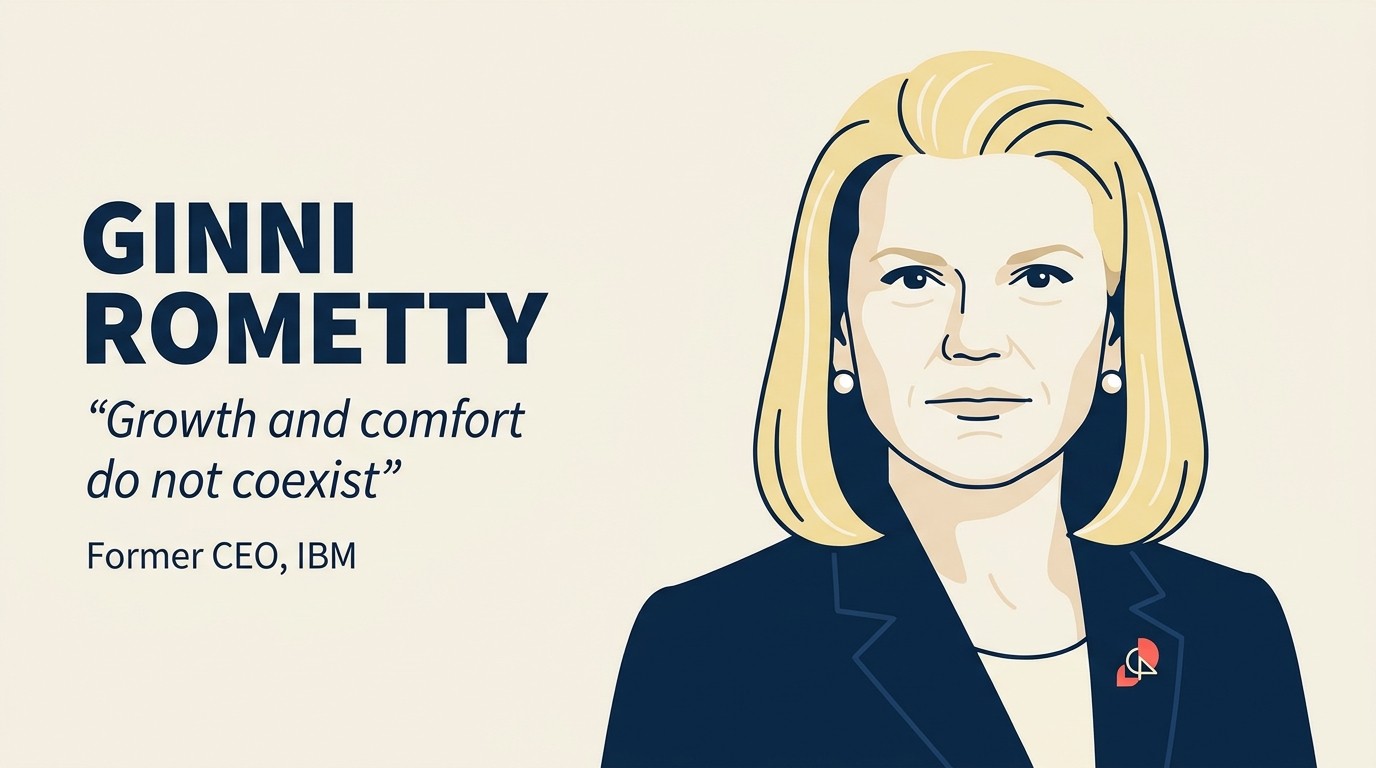
Virginia "Ginni" Rometty bergabung dengan IBM sebagai systems engineer di Detroit tahun 1981, langsung setelah lulus dari Northwestern University dengan gelar ilmu komputer dan teknik elektrik. Dia naik melalui global services dan sales, akhirnya menjalankan penjualan global, pemasaran, dan strategi IBM sebelum ditunjuk sebagai CEO pada Januari 2012, wanita pertama yang memimpin perusahaan dalam sejarah 100 tahunnya. Latar belakang lengkapnya terdokumentasi dalam entri Wikipedia-nya.
Dia mewarisi model bisnis yang sudah ditinggalkan pasar. Pendapatan hardware dan layanan legacy IBM sedang menurun. Dia bertaruh pada Watson AI dan cloud sebelum sebagian besar kompetitor membuat keputusan itu. Perbandingan dengan Satya Nadella tidak dapat dihindari: keduanya mewarisi raksasa perangkat lunak legacy dan membuat taruhan AI dan cloud fundamental pada waktu yang kurang lebih bersamaan, namun kecepatan transformasi Microsoft jauh melampaui IBM. Brand Watson diluncurkan secara komersial pada 2013. Namun pendapatan IBM turun dari 104,5 miliar dolar pada 2012 menjadi 79,6 miliar dolar pada 2017, periode 22 kuartal berturut-turut penurunan year-on-year.
Pada Oktober 2018, dia mengumumkan akuisisi Red Hat seharga 34 miliar dolar, terbesar dalam sejarah IBM, untuk mempercepat hybrid cloud. Dia menyerahkan peran CEO kepada Arvind Krishna pada April 2020.
Bacaan jujur tentang masa jabatannya adalah seorang pemimpin yang dengan tepat mengidentifikasi destinasi dan tidak bisa sampai di sana cukup cepat. Itu bukanlah hal kecil untuk dipahami, karena menggambarkan situasi yang banyak eksekutif hadapi.
Perincian Gaya Kepemimpinan
| Gaya | Bobot | Bagaimana tampilan |
|---|---|---|
| Pemimpin Transformasi yang Deliberat | 65% | Rometty beroperasi dengan keyakinan horizon panjang. Dia mengartikulasikan kerangka kerja "Strategic Imperatives" (cloud, analytics, mobile, social, security) pada 2013 dan tidak meninggalkannya saat pendapatan terus menurun. Pada 2017, imperatives itu telah berkembang dari 22% menjadi 46% pendapatan IBM. Dia membuat taruhan fundamental (Watson, Red Hat) yang tidak dirancang untuk menunjukkan hasil dalam satu siklus earnings. Itu membutuhkan jenis keberanian eksekutif tertentu yang sebagian besar board tidak akan terima. |
| Jangkar Hubungan Klien | 35% | Rometty membangun karirnya di organisasi layanan dan penjualan IBM, dan itu terlihat dalam bagaimana dia mengelola klien enterprise terbesar IBM. Dia percaya bahwa infrastruktur hubungan seratus tahun IBM, kepercayaan yang ditempatkan oleh CIO enterprise dan pemimpin teknologi Fortune 500 pada IBM, adalah aset kompetitif genuine, bahkan saat kompetitor cloud-native membangun lebih cepat. Keterlibatan pribadinya dengan klien akun besar tetap menjadi prioritas sepanjang masa jabatannya. |
Pembagian 65/35 menangkap tegangan pusat dalam kepemimpinannya. Insting pemimpin transformasi memerlukan mengganggu hubungan klien yang sama yang insting jangkar sedang lindungi. Klien IBM tidak berpindah ke cloud secepat pasar, yang berarti Rometty mengelola dua horizon waktu secara bersamaan: pivoting jangka panjang dan ekonomi hubungan klien jangka pendek.
Sifat Kepemimpinan Kunci
| Sifat | Rating | Apa artinya dalam praktik |
|---|---|---|
| Taruhan strategis horizon panjang | Sangat Tinggi | Platform komersial Watson, diluncurkan pada 2013, adalah taruhan genuine awal pada AI sebelum sebagian besar perusahaan teknologi berkomitmen padanya secara publik. Akuisisi Red Hat pada 2018 dirancang di sekitar tesis hybrid cloud yang hanya menjadi pandangan konsensus industri beberapa tahun kemudian. Rometty membuat kedua panggilan itu sebelum pasar memberinya kredit untuk itu, yang merupakan keberanian atau biaya tergantung kapan Anda mengukurnya. Dalam kasus IBM, mungkin keduanya. |
| Kepusatan klien dibangun selama 30 tahun | Tinggi | Dia menghabiskan karir di IBM memahami bagaimana enterprise besar membeli teknologi: lambat, dengan hati-hati institusional yang besar, melalui hubungan yang dibangun selama bertahun-tahun. Pemahaman itu memberi pesan transformasi IBM kredibilitas dengan klien yang ada bahkan saat portfolio produk masih mengejar visi. Keterbatasannya adalah bahwa infrastruktur hubungan ini menciptakan drag institusional: kecepatan transformasi IBM sebagian dibatasi oleh kecepatan klien terbesarnya bersedia bergerak. |
| Toleransi untuk nyeri jangka pendek berkelanjutan | Tinggi | Dua puluh dua kuartal penurunan pendapatan adalah waktu yang lama untuk mempertahankan keyakinan strategis terhadap tekanan analis, penurunan harga saham, dan pengawasan board. Rometty mempertahankannya. Itu adalah sifat nyata. Pertanyaan yang dipaksakan kegagalan adalah apakah toleransi berkelanjutan untuk nyeri adalah kebajikan atau sinyal tertunda bahwa strategi perlu beradaptasi lebih cepat. Keduanya bisa benar. |
| Resiliensi pribadi dalam peran CEO yang diperdebatkan | Kuat | Dia mempertahankan posisi CEO selama delapan tahun dengan saham yang jatuh, skeptisisme analis yang persisten, dan tesis transformasi yang benar secara arah namun lambat dalam eksekusi. Pengalamannya sebagai operator-inheritor yang harus membenarkan setiap kuartal ke pasar yang skeptis bergema dengan Tim Cook awal tenure Apple, meskipun Cook mewarisi mesin pertumbuhan daripada yang sedang menurun. Dan garis keturunan CEO legacy yang dia duduki — CEO yang membentuk budaya melalui masa jabatan panjang di bisnis legacy — berjalan langsung melalui Jack Welch, yang transformasi GE menetapkan benchmark yang masa jabatan Rometty tidak terelakkan diukur. Dalam Good Power, memoir 2023 nya, dia reflektif tentang apa yang akan dia lakukan berbeda. Jenis retrospeksi jujur itu, bukan defensif, bukan revisionist, adalah kualitas kepemimpinan tersendiri. |
3 Keputusan yang Mendefinisikan Rometty
1. Komersialisasi Watson sebagai Brand AI IBM (2013)
Sistem Watson IBM telah mengalahkan juara manusia di Jeopardy! pada Februari 2011, di bawah Sam Palmisano. Saat Rometty mengambil alih, dia membuat komersialisasi Watson menjadi gerakan sentral. Dia membuat divisi Watson, membangun platform komersial, dan menempatkan branding Watson di pusat pemasaran IBM selama beberapa tahun berikutnya.
Taruhan itu secara arah benar. AI akan menjadi salah satu kategori teknologi enterprise paling penting dari dekade berikutnya, dan IBM memiliki early lead genuine dalam natural language processing dan reasoning systems yang mendasari Watson.
Namun eksekusinya mahal dan tidak merata. Watson Health, dibuat pada 2015, mengakuisisi Merge Healthcare, Explorys, dan Phytel, kemudian menandatangani partnership profil tinggi dengan Memorial Sloan-Kettering dan kontrak $62 juta dengan MD Anderson. Kedua partnership medis itu gagal secara publik. MD Anderson membatalkan kontrak pada 2017 setelah melaporkan cost overruns dan unmet expectations. Watson Health akhirnya dihentikan oleh Arvind Krishna.
Kisah Watson menunjukkan pemimpin yang memahami arah strategis dan melebih-lebihkan kecepatan sistem AI bisa dibuat production-ready di environment klinis dan enterprise kompleks. Komitmen brand begitu besar sehingga saat implementasi individual gagal, damage reputasi diamplifikasi. Kesediaan Rometty membuat taruhan publik besar pada AI adalah panggilan yang benar. Eksekusi Watson Health spesifik adalah pelajaran $1 miliar+ write-off dalam gap antara kemampuan AI dalam demonstrasi terkontrol dan reliabilitas AI dalam deployment enterprise real-world.
Untuk pemimpin hari ini: saat Anda membuat taruhan strategis besar pada teknologi emerging, komitmen branding publik dan realitas produk perlu tetap terkalibrasi satu sama lain. Mendahului reliabilitas produk aktual Anda bisa biaya Anda kredibilitas yang Anda butuhkan untuk mempertahankan taruhan jangka panjang.
2. Tidak Mengakuisisi Cloud Assets pada Kecepatan Kompetitor (2013-2017)
Ini adalah keputusan yang paling sulit untuk dievaluasi secara adil, karena didefinisikan oleh apa yang Rometty tidak lakukan daripada apa yang dia lakukan.
AWS tumbuh 47% pada 2016. Azure scaling dengan cepat. Google Cloud berinvestasi secara agresif. Pendapatan cloud IBM, sementara tumbuh, tidak tumbuh pada kecepatan yang menutup gap dengan hyperscalers. Analis dan investor mendorong Rometty untuk mengakuisisi aset cloud-native, berinvestasi lebih agresif dalam infrastruktur, atau membuat konsesi harga yang diperlukan untuk berkompetisi dengan pricing AWS.
Dia memilih positioning berbeda: IBM akan berkompetisi pada hybrid cloud dan enterprise AI, bukan pada infrastruktur mentah. Logikanya adalah klien enterprise IBM tidak ingin meletakkan semuanya di public cloud, dan bahwa infrastruktur keamanan dan compliance IBM memberikannya posisi defensible di industri regulasi.
Logika itu tidak salah. Itu hanya tidak cukup benar, cukup cepat. AWS dan Azure membangun kemampuan compliance dan security enterprise mereka sendiri. Peluang hybrid cloud yang IBM positioning untuk terjadi materialisasi, namun Microsoft Azure menangkap sebagian besar dengan kombinasi hubungan enterprise (dari Office365 dan Active Directory) dan investasi infrastruktur yang IBM tidak bisa match.
Pelajaran kepemimpinan tidak nyaman: strategi yang benar, dieksekusi pada kecepatan di bawah velocity pasar, masih bisa gagal. Transformasi deliberate adalah pendekatan legitimate. Namun deliberateness harus dikalibrasi terhadap kecepatan konteks kompetitif bergerak, bukan hanya terhadap kapasitas perubahan internal.
3. Mengakuisisi Red Hat seharga 34 Miliar Dolar (Oktober 2018)
Akuisisi Red Hat diumumkan pada 28 Oktober 2018, dan saat itu itu adalah akuisisi terbesar IBM dalam 107 tahun sejarah korporat. Red Hat adalah perusahaan software open-source enterprise terkemuka, best known untuk Red Hat Enterprise Linux, OpenShift (platform Kubernetes-nya), dan Ansible (automation).
Logika strategis jelas: open-source dan container-based hybrid cloud menjadi standar enterprise, dan Red Hat memberikan IBM posisi credible dalam stack itu. OpenShift secara khusus menjadi distribusi Kubernetes preferred untuk enterprise yang membutuhkan support dan compliance guarantees.
Itu ditutup pada Juli 2019 seharga 34 miliar dolar. Arvind Krishna, eksekutif IBM yang telah mengawasi akuisisi, menggantikan Rometty sebagai CEO sembilan bulan kemudian. Krishna menjalankan strategi post-separation IBM sekitar taruhan Red Hat Rometty buat, spinning off layanan infrastruktur managed legacy IBM sebagai Kyndryl pada 2021.
Akuisisi Red Hat adalah vindication paling jelas Rometty. Itu adalah aset strategis paling berharga IBM di periode post-2020, dan tesis hybrid cloud yang embodied adalah kini sentral untuk identitas IBM. Namun itu tiba pada akhir masa jabatannya daripada awalnya. Pertanyaan yang tetap tidak terjawab adalah apakah gerakan Red Hat-setara awal, atau beberapa yang lebih kecil, akan mencegah penurunan pendapatan dan mengubah trajectory masa jabatannya.
Untuk eksekutif: taruhan transformatif yang dibuat di tahun ketujuh transformasi lebih baik daripada tidak membuatnya, namun nilai yang diciptakan mengalir ke successor. Jika Anda menjalankan transformasi multi-year dan Anda belum membuat gerakan definitional belum, tanyakan diri Anda jujur apakah Anda menunggu momen yang tepat atau menghindari disruption organisasi yang gerakan butuh.
Apa yang Rometty Lakukan dalam Peran Anda
Jika Anda CEO menjalankan transformasi legacy, kerangka kerja Strategic Imperatives memiliki aplikabilitas langsung. Rometty mengelompokkan taruhan pertumbuhan IBM ke dalam satu kategori, melacaknya sebagai persentase pendapatan, dan mengkomunikasikan trend kepada investor secara konsisten. Ini memberi stakeholder cara untuk melacak progres transformasi bahkan sementara pendapatan total menurun. Jika Anda menjalankan transformasi di mana pendapatan legacy menurun dan bisnis baru tumbuh, memisahkan dua sinyal itu dalam reporting dan komunikasi membiarkan Anda menceritakan story yang lebih jujur dan lebih legible.
Jika Anda COO membangun organisasi layanan, kepusatan klien Rometty memiliki pelajaran nyata tentang aset hubungan. Hubungan klien enterprise IBM adalah moats kompetitif genuine. Namun moats hanya melindungi Anda jika hal yang Anda pertahankan masih berharga. Saat industri atau kategori produk Anda shift, tanyakan yang mana dari hubungan klien Anda adalah aset dan yang mana menjadi constraint. Klien enterprise yang tetap paling lama dengan vendor di kategori yang transitioning kadang adalah yang membuat vendor dari bergerak cukup cepat.
Jika Anda memimpin product team launching di kategori teknologi emerging, kisah Watson Health memiliki pelajaran sulit. Gap antara "teknologi ini works di environment terkontrol" dan "teknologi ini reliable cukup untuk enterprise production" lebih besar daripada terlihat. Saat Rometty berkomitmen brand IBM pada Watson Health clinical AI promise, produk tidak siap untuk komitmen. Hasilnya adalah kegagalan publik di institusi profil tinggi yang set back kredibilitas seluruh kategori, bukan hanya IBM. Kapal proof of value sebelum Anda kapal brand commitment.
Jika Anda sales atau revenue leader mengelola enterprise accounts melalui product transition, masa jabatan Rometty mengilustrasikan tension antara melindungi pendapatan yang ada dan membangun yang baru. Kompensasi penjualan IBM dan struktur account management dikalibrasi untuk melindungi pendapatan layanan legacy lebih lama daripada pasar jamin. Jika struktur comp dan prioritas account Anda masih dioptimalkan untuk produk Anda transitioning away dari, mereka akan works melawan transformasi Anda terlepas dari apa CEO katakan di all-hands.
Menerapkan Playbook Rometty dengan Rework
Transformasi enterprise-legacy adalah di mana pelajaran Rometty hit terberat, dan itu adalah tahap yang exact di mana team operations secara quiet putuskan apakah pivot berhasil. Jika Anda menjalankan perusahaan mid-market masih carry pendapatan layanan legacy sementara berdiri di cloud atau AI motion, dua organisasi harus coexist tanpa struktur kompensasi, pipeline reviews, dan aturan account ownership mengkanibalisasi bisnis baru. CRM dan Sales Ops Rework (dari $12/user/month) membiarkan Anda menjalankan pipelines terpisah, struktur quota, dan reporting lines untuk legacy versus transformation revenue tanpa forking stack penjualan Anda di dua. Pada sisi perekrutan, Doktrin New Collar hanya bekerja jika Anda dapat melacak kandidat non-tradisional melalui apprenticeships, skill assessments, dan internal mobility daripada hanya filters gelar — Work Ops Rework (dari $6/user/month) menangani project tracking, learning paths, dan team structure yang membuat skills-based hiring operasionally nyata daripada press release. Penyesalan Rometty adalah bergerak terlalu lambat; tooling team yang baik adalah salah satu dari sedikit tempat di mana perusahaan transitioning dapat compress cycle time tanpa breaking hubungan klien dia habiskan karir untuk melindungi.
Kutipan Penting dan Pelajaran Beyond the Boardroom
Dalam "Good Power," Rometty merenungkan power sebagai sesuatu yang Anda gunakan dalam service orang lain daripada untuk advance Anda sendiri. "Good power tentang membangun," dia menulis, "bukan tentang having." Framing itu worth examining. Dia menjalankan IBM selama delapan tahun melalui periode ketika definisi eksternal sukses (pertumbuhan pendapatan, harga saham) pointing di arah salah. Definisi internalnya tentang apa yang dia bangun, IBM yang diposisikan dengan AI dan hybrid cloud di centernya, sustained dirinya melalui tekanan itu.
Dia juga berbicara jujur tentang kecepatan transformasi IBM. "Kami harus bergerak lebih cepat. Saya tahu itu sekarang. Namun Anda tidak selalu tahu seberapa cepat Anda harus bergerak sampai Anda bisa lihat di mana pasar landed." Jenis retrospeksi jujur itu, bukan defensif, bukan mencoba reframe kegagalan sebagai sukses, secara genuine langka di CEO memoirs.
Pada AI ethics, dia early untuk advocate apa IBM panggil "responsible AI": explainability, bias auditing, dan human oversight. Sebagai salah satu dari sedikit wanita memimpin Fortune 50 perusahaan teknologi, posisinya alongside Sheryl Sandberg dalam generasi eksekutif teknologi wanita itu bentuk bagaimana industri pikirkan tentang kepemimpinan wanita pada scale. Ini positioned IBM dalam percakapan AI governance sebelum itu jadi mainstream. Kerja Cornell University AI ethics nya post-IBM reflects keyakinan genuine tentang governance sistem dia habiskan tahun-tahun CEO coba bangun.
Di Mana Gaya Ini Pecah
Pendekatan transformasi deliberate Rometty adalah appropriate untuk perusahaan dengan kompleksitas institusional IBM. Namun cloud computing bukan peluang moving-slow. AWS dan Azure sedang compress window available untuk catch up setiap kuartal, dan pace Rometty dikalibrasi ke kapasitas perubahan internal IBM daripada ke kecepatan pasar.
Dua puluh dua kuartal berturut-turut penurunan pendapatan memiliki biaya manusia nyata. Morale di dalam IBM menderita. Reputasi perusahaan sebagai pemimpin inovasi, dibangun selama puluhan tahun, eroded selama masa jabatannya dengan cara yang akuisisi Red Hat tidak bisa fully repair. Kegagalan Watson Health spesifik publik damage kredibilitas IBM di pasar AI yang sedang coba lead.
Break yang lebih dalam dalam gaya-nya: pemimpin transformasi yang toleransi sustained short-term pain butuh faster internal feedback loops daripada Rometty bangun. Saat kegagalan Watson Health clinical AI menjadi apparent pada 2016, course-correction taker terlalu lama. Pemimpin yang bet pada horizon panjang masih butuh short-cycle signals untuk tahu jika eksekusi on track.
Pertanyaan yang Sering Diajukan tentang Kepemimpinan Ginni Rometty
Siapa Ginni Rometty?
Virginia "Ginni" Rometty (lahir 1957) adalah mantan CEO IBM, wanita pertama memimpin perusahaan dalam sejarah 100 tahunnya. Dia bergabung IBM sebagai systems engineer pada 1981 setelah lulus dari Northwestern University dengan gelar ilmu komputer dan teknik elektrik, naik melalui global services dan penjualan, dan melayani sebagai CEO dari Januari 2012 hingga April 2020.
Bagaimana Rometty mentransformasi IBM?
Dia membangun transformasinya sekitar kerangka kerja "Strategic Imperatives" (cloud, analytics, mobile, social, security), mengkomersialisasi Watson sebagai brand AI IBM mulai 2013, dan reposition IBM sekitar hybrid cloud. Gerakan penentu adalah akuisisi Red Hat seharga 34 miliar dolar yang diumumkan pada Oktober 2018 — akuisisi terbesar IBM dalam sejarah 107 tahunnya. Strategic Imperatives tumbuh dari 22% menjadi 46% pendapatan selama masa jabatannya.
Apa framework pekerjaan 'new collar'?
"New collar" adalah istilah Rometty untuk pekerjaan teknis yang tidak memerlukan gelar college empat tahun — analis keamanan siber, operator cloud, pelatih AI, dan peran serupa. Dia operasionalisasi melalui praktik perekrutan IBM dan model P-TECH (Pathways in Technology Early College High School), yang dia bantu luncurkan dengan NYC pada 2011 dan sejak itu expand ke 28 negara. Pada akhir masa jabatannya, kasar 15% perekrutan US IBM tidak memiliki gelar empat tahun.
Mengapa IBM mengakuisisi Red Hat?
Red Hat memberikan IBM posisi credible dalam open-source dan container-based hybrid cloud, anchored oleh Red Hat Enterprise Linux dan OpenShift (platform Kubernetes-nya). Tesis strategis adalah enterprise tidak ingin letakkan semuanya di public cloud, dan bahwa standar hybrid cloud dibangun pada Kubernetes akan dominant industri regulasi. Deal tutup pada Juli 2019 seharga 34 miliar dolar dan menjadi foundation identitas IBM post-2020 di bawah Arvind Krishna.
Apa tentang 'Good Power'?
Good Power: Leading Positive Change in Our Lives, Work, and World (2023) adalah memoir Rometty, di mana dia reframe power sebagai sesuatu digunakan dalam service orang lain daripada untuk advance pribadi. "Good power tentang membangun, bukan about having," dia tulis. Buku ini notably reflektif tentang apa yang akan dia lakukan berbeda di IBM — termasuk pace transformasi — daripada defensif tentang hasil mixed masa jabatan.
Apa yang bisa CEO pelajari dari Ginni Rometty?
Tiga hal. Pertama, arah strategis yang benar dieksekusi di bawah velocity pasar masih bisa gagal — deliberateness harus dikalibrasi terhadap pace kompetitif, bukan kapasitas perubahan internal. Kedua, komitmen brand ke teknologi emerging (seperti Watson Health) butuh tetap dikalibrasi ke reliabilitas produk; mendahului produk Anda kost Anda kredibilitas. Ketiga, taruhan transformatif dibuat di tahun ketujuh transformasi ciptakan nilai untuk successor Anda, bukan Anda — jika Anda belum buat gerakan definitional belum, tanya apakah Anda menunggu momen tepat atau menghindari disruption yang gerakan butuh.
Pelajari Lebih Lanjut
- Gaya Kepemimpinan Satya Nadella: Bagaimana Growth Mindset dan Empati Transformasi Microsoft
- Gaya Kepemimpinan Indra Nooyi: Bagaimana CEO PepsiCo Membangun Strategi Purpose-Driven di Fortune 50 Scale
- Gaya Kepemimpinan Christine Lagarde: Kredibilitas Institusional dan Memimpin Melalui Krisis Systemic
- Gaya Kepemimpinan Jacinda Ardern: Pemerintahan Empatik dan Apa yang "Kindness" Sebenarnya Kost
- Gaya Kepemimpinan Julie Sweet: Scale, Reinvensi, dan Memimpin 750,000 Orang Melalui Era AI

On this page
- Doktrin New Collar
- Perincian Gaya Kepemimpinan
- Sifat Kepemimpinan Kunci
- 3 Keputusan yang Mendefinisikan Rometty
- 1. Komersialisasi Watson sebagai Brand AI IBM (2013)
- 2. Tidak Mengakuisisi Cloud Assets pada Kecepatan Kompetitor (2013-2017)
- 3. Mengakuisisi Red Hat seharga 34 Miliar Dolar (Oktober 2018)
- Apa yang Rometty Lakukan dalam Peran Anda
- Menerapkan Playbook Rometty dengan Rework
- Kutipan Penting dan Pelajaran Beyond the Boardroom
- Di Mana Gaya Ini Pecah
- Pelajari Lebih Lanjut