Descrição de Cargo de Art Director (2026): Habilidades da Era da IA, Responsabilidades e Guia de Contratação
Turn this article into takeaways for your work.


Each assistant summarizes the article only for you and suggests best practices for your work.
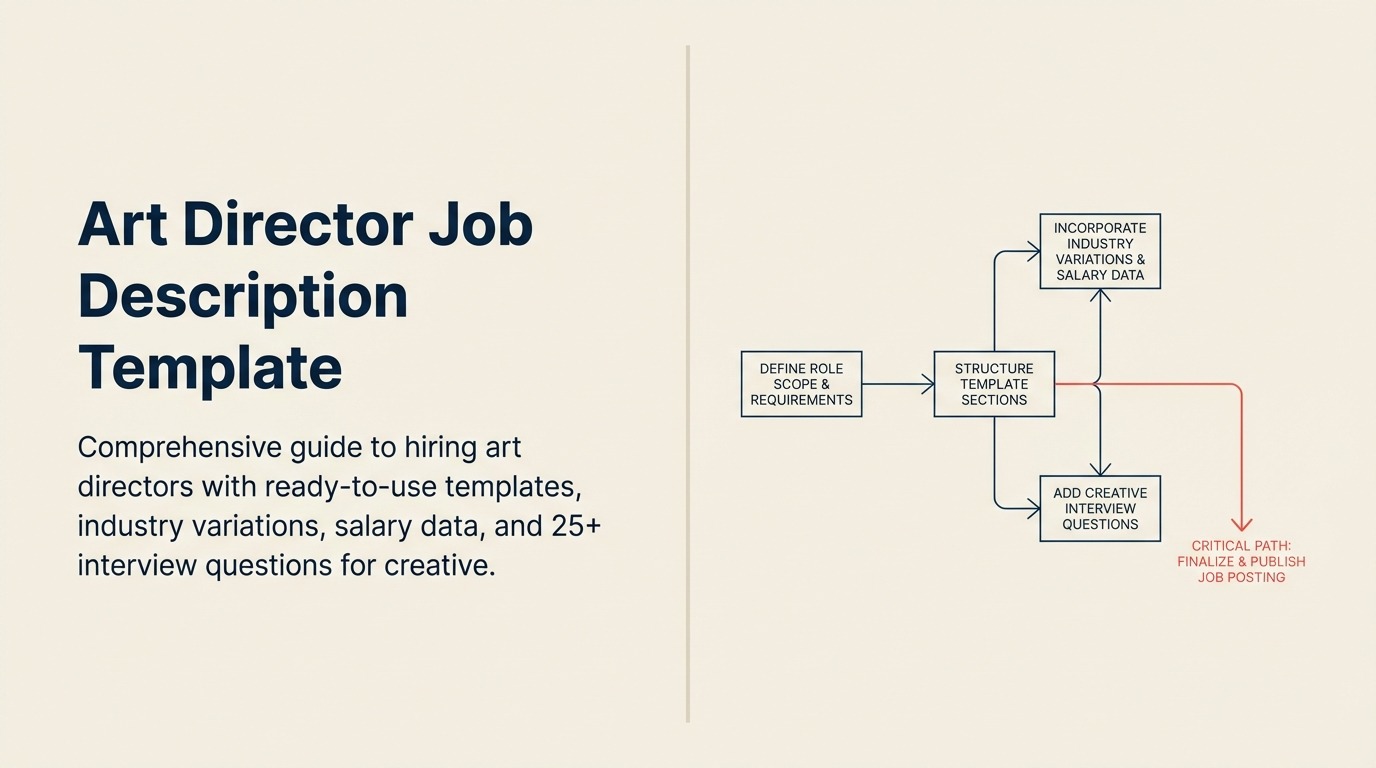
O Que Você Vai Encontrar Neste Guia
- Modelo de descrição de cargo pronto para uso para a função de Art Director
- 8 variações específicas por setor com requisitos únicos
- Mais de 20 perguntas de entrevista com critérios de avaliação
- Dados salariais para as principais regiões metropolitanas com insights sobre remuneração
- Detalhamento por nível de experiência, de Intermediário a Liderança
- Expectativas de liderança e gestão de equipes criativas
- Framework de avaliação de portfólio para direção visual
- Estratégia de sourcing para talentos de liderança criativa
Visão Geral do Cargo de Art Director
Em 30 Segundos
- Propósito Central: Liderar a visão criativa e direcionar a estratégia de design visual em todos os pontos de contato de marca e marketing
- Principais Entregas: Campanhas criativas, direção de design, liderança de equipe, consistência de marca, storytelling visual
- Habilidades Essenciais: Liderança criativa, expertise em design visual, gestão de equipe, pensamento estratégico, desenvolvimento conceitual
- Plano de Carreira: Designer Sênior → Art Director → Creative Director → Executive Creative Director
- Demanda de Mercado: Forte crescimento (12% ao ano), com ênfase em experiência em campanhas multicanal
- Disponibilidade Remota: 45% das posições oferecem opções remotas ou híbridas
Por Que Este Cargo Importa em 2026
Os Art Directors evoluíram de funções tradicionais em publicidade para se tornarem líderes visuais estratégicos que orquestram experiências criativas em pontos de contato digitais e físicos. No cenário de mídia fragmentado de hoje, os Art Directors precisam garantir um storytelling visual coeso, adaptando conceitos criativos para tudo, de vídeos no TikTok a campanhas de outdoor.
O que a IA realmente muda é o ritmo e a escala da exploração criativa. A iteração de conceitos que antes levava dias agora pode acontecer em horas. A produção de assets que exigia equipes grandes pode ser feita com uma equipe menor e mais estratégica. Isso desloca o valor do Art Director exatamente para o que a IA não consegue replicar: os julgamentos sobre quais ideias valem a pena perseguir, o instinto para o que ressoa com um público específico e a liderança que mantém uma equipe criativa coesa e motivada.
Os Art Directors modernos são estrategistas criativos que equilibram visão artística com objetivos de negócio, liderando equipes diversas para criar campanhas que se destacam em meio ao ruído e geram resultados mensuráveis. Aqueles que tratam a IA como um acelerador de produção, mantendo seu próprio gosto e pensamento estratégico no centro, são os que têm a maior demanda em 2026.
Painel de Estatísticas Rápidas
| Métrica | Dado |
|---|---|
| Tempo Médio de Contratação | 50-70 dias |
| Nível de Demanda | Alto (8,0/10) |
| Disponibilidade Remota | 45% oferecem remoto/híbrido |
| Crescimento de Carreira | 12% de crescimento anual |
| Crescimento do Mercado em 2026 | +15% no ano |
| Tamanho Médio da Equipe | 4-12 criativos |
| Experiência em Gestão | 3+ anos exigidos |
| Distribuição de Gênero | 52% Mulheres, 48% Homens |
Habilidades e Ferramentas de IA para Art Director em 2026
A IA entrou na stack de produção criativa, e os Art Directors que sabem direcioná-la superam os que não sabem. A demanda por líderes criativos fluentes em IA está crescendo cerca de 144% ao ano, e as funções que exigem essas habilidades atraem um prêmio salarial significativo em todo o setor.

Ferramentas generativas de imagem e conceito: Midjourney e Adobe Firefly já são padrão para exploração rápida de conceitos e criação de mood boards. Os Art Directors usam essas ferramentas para esboçar direções visuais antes de comprometer recursos com a produção completa. A habilidade não está em gerar a imagem, mas em saber qual direção vale a pena seguir.
Vídeo e pré-visualização: Runway ML e Sora permitem pré-visualização em nível de storyboard a baixo custo. Os Art Directors podem mostrar aos stakeholders um conceito de movimento ainda bruto antes que um único quadro de produção real seja financiado, acelerando significativamente os ciclos de aprovação.
Fluência em prompts para o workflow criativo: Escrever prompts eficazes para geração de imagem e vídeo é uma habilidade artesanal. Os melhores Art Directors constroem bibliotecas de prompts reutilizáveis para a linguagem visual da marca, garantindo que os resultados permaneçam alinhados à marca entre membros da equipe e agências.
Verificação de consistência de marca assistida por IA: Ferramentas emergentes já conseguem comparar novos criativos com as diretrizes de marca automaticamente, sinalizando desvios de cor, tipografia e tom antes da revisão humana. Os Art Directors que integram essas ferramentas ao processo de QA reduzem os ciclos de revisão.
IA para cor, tipografia e layout: Ferramentas como o Adobe Sensei e diversos geradores de paleta com IA ajudam em explorações rápidas. Os Art Directors as usam para inspiração e velocidade, aplicando depois o próprio julgamento para finalizar.
Construção de workflows de IA para a equipe: Espera-se que Art Directors seniores desenhem workflows de produção repetíveis assistidos por IA, e não apenas usem as ferramentas. Isso inclui orientar a equipe sobre técnicas de prompt e definir padrões para quando o resultado da IA é aceitável ou quando precisa de refinamento humano significativo.
Agentes de IA para trabalho de produção: Agentes de redimensionamento e reformatação de assets cuidam da adaptação multiplataforma (a mesma imagem principal reformatada para web, social e impresso) sem duplicação manual. Agentes de análise visual competitiva revelam o que marcas rivais estão produzindo em escala. Os Art Directors que configuram esses agentes liberam suas equipes para focar no trabalho de conceito original.
Trabalhando ao Lado de Agentes de IA
Os agentes de IA na produção criativa hoje lidam com uma parcela real do que antes exigia horas humanas. Entender onde fica a linha de transição faz parte do trabalho do Art Director.

O que o agente cuida: Redimensionar e reformatar assets aprovados para diferentes canais e especificações. Executar verificações de consistência de marca em relação aos parâmetros do guia de estilo. Coletar e categorizar referências visuais da concorrência. Gerar variações de conceito ainda brutas a partir de uma direção já aprovada pelo Art Director. Redigir metadados de assets e tags para sistemas DAM.
O que cabe ao Art Director: O brief criativo em si. A decisão sobre qual direção é estrategicamente sólida. A aprovação final de tudo que sai do departamento. A cultura da equipe, mentoria e desenvolvimento profissional. Os relacionamentos com stakeholders e as apresentações executivas. A camada de bom gosto que determina se o resultado da IA está realmente alinhado à marca ou apenas tecnicamente correto.
A linha de transição: Os resultados da IA são insumos para o processo do Art Director, não produtos finais dele. Um render do Midjourney vira um ponto de partida para a conversa em uma revisão criativa, não um asset finalizado. O Art Director decide quando algo atingiu o padrão esperado. Essa responsabilidade pelo julgamento final é exatamente o que torna a função mais valiosa, e não menos, à medida que a produção com IA acelera.
Fluência em IA por Nível de Experiência
| Nível | Expectativa em Relação à IA |
|---|---|
| Art Director de Nível Intermediário | Usa ferramentas de IA (Firefly, Midjourney, Runway) diariamente para iteração de conceitos e apresentações. Constrói e mantém uma biblioteca de prompts para a marca. |
| Art Director Sênior | Desenha workflows de produção assistidos por IA para a equipe. Define padrões de qualidade e uso aceitável para os resultados da IA. Integra agentes de consistência de marca aos ciclos de revisão. |
| Creative Director / Líder | Avalia e seleciona ferramentas de IA para o departamento. Estabelece a governança de IA para a segurança da marca. Orienta a liderança sobre onde a IA está mudando a alocação de recursos criativos. |
Modelo Principal de Descrição de Cargo
Sobre o Cargo
Estamos buscando um Art Director visionário para liderar nossa equipe criativa e moldar a direção visual da nossa marca em todos os canais. Você será responsável por conceituar e dirigir campanhas criativas que ressoem com nosso público-alvo, mantendo a consistência da marca e impulsionando os objetivos de negócio. Essa função combina trabalho criativo prático com liderança estratégica, exigindo alguém capaz de inspirar equipes enquanto entrega soluções criativas excepcionais e direciona ferramentas de IA ao lado do talento humano.

Como nosso Art Director, você trabalhará de perto com as equipes de marketing, marca e produto para garantir que todas as comunicações visuais estejam alinhadas com a estratégia de marca e os objetivos de negócio. Você liderará pelo exemplo, orientando designers juniores enquanto colabora com stakeholders seniores para traduzir ideias complexas em narrativas visuais envolventes que impulsionam engajamento e conversão.
Principais Responsabilidades
- Liderar a concepção criativa e a direção visual de campanhas de marketing multicanal em pontos de contato digitais, sociais, impressos e experienciais
- Gerenciar e orientar uma equipe de 4 a 8 designers, oferecendo direcionamento criativo, desenvolvimento profissional e feedback de desempenho
- Colaborar com as equipes de estratégia de marketing para traduzir objetivos de negócio em briefs criativos e conceitos visuais convincentes
- Garantir a consistência de marca e a qualidade visual em todos os resultados criativos, ao mesmo tempo em que expande limites e explora abordagens inovadoras
- Direcionar ferramentas de geração de imagem e vídeo com IA para acelerar a exploração de conceitos e a pré-visualização para stakeholders
- Apresentar conceitos criativos e estratégias de campanha à liderança executiva e aos principais stakeholders, articulando o raciocínio criativo e o impacto nos negócios
- Fazer parceria com agências externas, freelancers e fornecedores para ampliar as capacidades criativas e garantir alinhamento com os padrões de marca
- Estabelecer e manter processos criativos, design systems, workflows de produção assistidos por IA e padrões de qualidade que viabilizem a eficiência da equipe e a excelência criativa
- Manter-se atualizado com tendências de design, novas ferramentas de IA criativa e as melhores práticas do setor, preservando a autenticidade da marca
- Liderar revisões criativas e oferecer feedback construtivo para elevar os resultados da equipe e o crescimento profissional
- Impulsionar a inovação na execução criativa, explorando novos formatos, tecnologias assistidas por IA e abordagens de storytelling
Requisitos
- Bacharelado em Design Gráfico, Publicidade, Comunicação Visual ou experiência profissional equivalente
- 5 a 8 anos de experiência criativa, com 2 ou mais anos em funções de liderança ou criativas seniores
- Portfólio sólido demonstrando direção criativa em múltiplos canais e mídias
- Domínio avançado do Adobe Creative Suite, Figma e outras ferramentas de design padrão do setor
- Experiência prática com ferramentas de IA criativa (Adobe Firefly, Midjourney ou Runway ML)
- Experiência comprovada na gestão de equipes criativas e no desenvolvimento de talentos juniores
- Excelentes habilidades de apresentação e capacidade de articular a visão criativa para diferentes stakeholders
- Compreensão de estratégia de marca, objetivos de marketing e psicologia do consumidor
- Experiência no desenvolvimento de campanhas, do conceito à execução e mensuração
Qualificações Desejáveis
- Experiência com motion graphics, direção de vídeo ou design 3D
- Conhecimento de princípios de web design e noções básicas de HTML/CSS
- Experiência em agência de publicidade ou departamento criativo interno
- Conhecimento de plataformas de redes sociais e tendências de marketing digital
- Experiência com design systems e workflows de design colaborativos
- Histórico de construção de bibliotecas de prompts de IA reutilizáveis para consistência de marca
O Que Oferecemos
- Salário competitivo com base em experiência e localização, com um adicional para candidatos com forte fluência em ferramentas generativas de IA
- Potencial de bônus por desempenho com base no sucesso das campanhas e no desempenho da equipe
- Plano de saúde, odontológico e oftalmológico completo, com cobertura premium
- Previdência privada (401k) com contrapartida da empresa de até 6%
- Modelo de trabalho híbrido flexível, com um espaço criativo moderno
- Orçamento anual para desenvolvimento profissional em conferências, cursos e workshops
- Programa de sabático criativo após 3 anos
- Stock options ou participação acionária
- Ferramentas e tecnologia criativa de ponta, incluindo suítes de IA criativa
- Cultura colaborativa com autonomia criativa
Variações de Contexto
Ambiente Corporativo: Foco na gestão da marca em pontos de contato corporativos, incluindo comunicações com investidores, campanhas internas e materiais de marketing B2B. Enfatize a gestão de stakeholders e a colaboração multifuncional com as equipes de produto, vendas e executivas.
Ambiente de Agência: Destaque a gestão de portfólio multicliente, o envolvimento em pitches de novos negócios e a capacidade de alternar entre diferentes vozes de marca e desafios criativos. Fortes habilidades de apresentação para clientes e uma gestão rígida de prazos são fundamentais.
Ambiente de Startup: Enfatize versatilidade e envolvimento prático na construção da identidade de marca e dos processos criativos desde o início. Capacidade de acumular várias funções, adaptar-se rapidamente a mudanças de prioridade e usar ferramentas de IA para render acima do tamanho da equipe, ao mesmo tempo em que constrói sistemas criativos escaláveis.
Considerações por Setor
| Setor | Principais Requisitos | Considerações Específicas |
|---|---|---|
| Tecnologia/SaaS | Conhecimento de UI/UX, experiência em marketing de produto, comunicação de conceitos técnicos | Equilibrar inovação com experiência do usuário, jornadas de compra B2B complexas |
| Saúde | Conhecimento de compliance regulatório, comunicação sensível ao paciente, padrões de acessibilidade | Conformidade com a HIPAA, precisão médica, populações de pacientes diversas |
| Serviços Financeiros | Equilíbrio estético conservador, consciência de compliance, habilidades de visualização de dados | Construção de confiança por meio do design, restrições regulatórias sobre a comunicação |
| Varejo/E-commerce | Direção de fotografia lifestyle, desenvolvimento de campanhas sazonais, experiência omnichannel | Otimização da vitrine de produtos, adaptação a tendências sazonais |
| Entretenimento/Mídia | Expertise em marketing de conteúdo, compreensão de segmentação de público, criação de conteúdo viral | Ciclos rápidos de criação de conteúdo, métricas de engajamento de público |
| Organizações sem Fins Lucrativos | Storytelling baseado em causas, comunicação com doadores, soluções com consciência orçamentária | Ressonância emocional, recursos limitados, coordenação de voluntários |
Guia de Remuneração
Informações Salariais
As médias nacionais variam conforme localização, setor e porte da empresa. Art Directors fluentes em IA, especialmente aqueles capazes de desenhar workflows generativos para suas equipes, obtêm um prêmio salarial significativo em relação a candidatos que trabalham apenas com ferramentas tradicionais.

Principais Regiões Metropolitanas
| Região Metropolitana | Faixa Salarial | Fator de Custo de Vida |
|---|---|---|
| San Francisco, CA | $110,000-$150,000 | 1.35x |
| New York, NY | $105,000-$145,000 | 1.30x |
| Los Angeles, CA | $95,000-$135,000 | 1.18x |
| Seattle, WA | $90,000-$130,000 | 1.20x |
| Chicago, IL | $85,000-$120,000 | 1.00x |
| Austin, TX | $80,000-$115,000 | 1.03x |
| Atlanta, GA | $75,000-$110,000 | 0.95x |
| Denver, CO | $80,000-$118,000 | 1.05x |
Fatores que Afetam a Remuneração
- Experiência em agência vs. interna (agência costuma ter um prêmio de 10-20%)
- Especialização no setor (tecnologia e finanças costumam ser os mais altos)
- Tamanho da equipe e responsabilidade orçamentária
- Força do portfólio e reconhecimento por prêmios
- Proficiência em ferramentas de IA e experiência na construção de workflows generativos
Perguntas de Entrevista
O processo de entrevista mais forte testa o julgamento criativo, o raciocínio sobre o portfólio, o impacto nos negócios, a liderança, a colaboração e a direção de IA.

Perguntas Técnicas/Funcionais
1. Me conte sobre o seu processo criativo, do brief à execução final.
- O que observar: Abordagem estruturada, integração de pesquisa, colaboração com stakeholders
- Avaliação: Um processo forte indica uma liderança criativa confiável
2. Como você mantém a consistência criativa em uma equipe grande?
- O que observar: Pensamento sistêmico, documentação, abordagens de treinamento
- Avaliação: Essencial para escalar operações criativas
3. Descreva uma vez em que você precisou equilibrar visão criativa com restrições de negócio.
- O que observar: Pensamento estratégico, habilidades de conciliação, compreensão de negócios
- Avaliação: Crítico para o sucesso do relacionamento com stakeholders
4. Como você aborda sessões de briefing criativo e feedback?
- O que observar: Habilidades de comunicação, frameworks de feedback, desenvolvimento de equipe
- Avaliação: Indica capacidade de liderança e mentoria
5. Fale sobre uma campanha que você dirigiu que gerou resultados mensuráveis.
- O que observar: Consciência de impacto nos negócios, compreensão de métricas, conexão estratégica
- Avaliação: Mostra um pensamento criativo orientado a resultados
6. Como você se mantém atualizado com as tendências de design preservando a autenticidade da marca?
- O que observar: Consciência de tendências, zelo pela marca, adaptação estratégica
- Avaliação: Equilíbrio entre inovação e consistência
7. Descreva sua experiência trabalhando com parceiros criativos externos.
- O que observar: Gestão de fornecedores, controle de qualidade, habilidades colaborativas
- Avaliação: Importante para a otimização de recursos
8. Como você tem usado ferramentas de IA no seu processo criativo, e onde você traça o limite do que a IA não deve decidir?
- O que observar: Experiência prática concreta, clareza de pensamento sobre julgamento vs. automação
- Avaliação: Mostra prontidão para a liderança criativa aumentada por IA
9. Como você aborda o desenvolvimento de conceitos criativos para públicos diferentes?
- O que observar: Compreensão de público, pensamento estratégico, aplicação de pesquisa
- Avaliação: Mostra consciência de mercado e abordagem estratégica
Perguntas Comportamentais
10. Me conte sobre uma vez em que você precisou dar um feedback difícil a um membro da equipe.
- O que observar: Habilidades de liderança, empatia, foco em desenvolvimento profissional
- Foco STAR: Como o feedback foi entregue e o resultado alcançado
11. Descreva a gestão de um projeto com opiniões criativas conflitantes.
- O que observar: Resolução de conflitos, tomada de decisão, gestão de stakeholders
- Foco STAR: Processo para chegar a um consenso e manter os relacionamentos
12. Compartilhe uma experiência em que você precisou defender uma decisão criativa.
- O que observar: Convicção, articulação, apresentação profissional
- Foco STAR: Como você construiu apoio para a visão criativa
13. Quando você precisou mudar rapidamente a direção criativa?
- O que observar: Adaptabilidade, liderança de equipe durante mudanças, orientação para soluções
- Foco STAR: Velocidade e qualidade do ajuste estratégico
14. Me conte sobre o desenvolvimento da carreira de um designer júnior.
- O que observar: Capacidade de mentoria, paciência, abordagem estruturada de desenvolvimento
- Foco STAR: Crescimento específico alcançado através da sua orientação
15. Descreva uma vez em que uma campanha não teve o desempenho esperado.
- O que observar: Responsabilização, mentalidade de aprendizado, pensamento analítico
- Foco STAR: O que foi aprendido e como a abordagem mudou
Perguntas de Aderência Cultural
16. Que tipo de ambiente criativo traz à tona sua melhor liderança?
- O que observar: Autoconhecimento, preferências de cultura de equipe, estilo de gestão
- Avaliação: Aderência à cultura organizacional e à dinâmica da equipe
17. Como você equilibra liberdade criativa com objetivos de negócio?
- O que observar: Pensamento estratégico, visão de negócios, defesa da causa criativa
- Avaliação: Alinhamento com o equilíbrio entre criatividade e negócios da empresa
18. Descreva a estrutura e a dinâmica ideais para uma equipe criativa.
- O que observar: Filosofia de construção de equipe, preferências de colaboração, consciência de diversidade
- Avaliação: Aderência à equipe atual e aos planos de crescimento
19. Como você lida com divergências criativas com a liderança sênior?
- O que observar: Comunicação profissional, habilidades de influência, respeito pela hierarquia
- Avaliação: Capacidade de navegar na política organizacional com profissionalismo
20. Que papel os dados desempenham na sua tomada de decisão criativa?
- O que observar: Mentalidade analítica, mensuração de desempenho, aplicação estratégica
- Avaliação: Aderência a uma cultura organizacional orientada por dados
21. Como você fomenta a inovação enquanto atende às demandas de produção?
- O que observar: Otimização de processos, equilíbrio na exploração criativa, motivação da equipe
- Avaliação: Capacidade de manter a qualidade criativa sob pressão
Dicas de Contratação
Guia Rápido de Sourcing
- LinkedIn: Direcione-se a profissionais criativos com experiência de liderança, use filtros avançados para funções de gestão
- Behance: Revise portfólios que mostrem trabalho de campanha e direção criativa
- Redes do setor criativo: AIGA, Art Directors Club, meetups criativos locais
- Redes de ex-alunos de agências: Muitos Art Directors vêm de experiências em publicidade
Framework de Avaliação de Portfólio
- Pensamento Estratégico (30%): Evidências de desenvolvimento de conceito e resolução criativa de problemas
- Excelência Visual (25%): Qualidade da execução do design e julgamento estético
- Evidências de Liderança (20%): Projetos em equipe, coordenação de campanhas, direção criativa
- Impacto nos Negócios (15%): Resultados, métricas, depoimentos de clientes quando disponíveis
- Versatilidade (10%): Variedade de mídias, setores e desafios criativos
Sinais de Alerta a Evitar
- O portfólio mostra apenas trabalho individual, sem evidências de liderança de equipe
- Incapacidade de articular o raciocínio estratégico por trás das decisões criativas
- Falta de crescimento nas responsabilidades ou na complexidade criativa ao longo do tempo
- Habilidades de comunicação fracas ou incapacidade de apresentar ideias com clareza
- Nenhuma evidência de colaboração ou experiência de trabalho multifuncional
- Nenhuma consciência sobre ferramentas de IA criativa, tratando-as como irrelevantes em vez de uma camada de produção a ser direcionada
Perguntas Frequentes sobre Contratação de Art Director
Qual é a diferença entre um Art Director e um Creative Director?
Os Art Directors se concentram na execução visual e na liderança da equipe de design, enquanto os Creative Directors oferecem uma visão criativa estratégica mais ampla, abrangendo múltiplas disciplinas, incluindo copy, estratégia e a direção geral da marca. Os Art Directors geralmente reportam-se aos Creative Directors e gerenciam o processo de design visual.
Quão importante é a experiência em agência para funções de Art Director?
A experiência em agência é valiosa, mas não essencial. Cerca de 60% dos Art Directors têm experiência em agência, o que proporciona um portfólio diversificado e habilidades de gestão de projetos em ritmo acelerado. A experiência interna oferece conhecimento profundo da marca e habilidades de relacionamento com stakeholders. O fundamental é demonstrar liderança criativa, independente do contexto.
Qual tamanho e formato de portfólio funciona melhor para candidatos a Art Director?
No máximo 8 a 12 projetos, com 4 a 6 estudos de caso completos mostrando a direção criativa do conceito à execução. Inclua trabalhos de campanha, projetos em equipe e o raciocínio estratégico. Portfólios digitais funcionam melhor, mas esteja preparado para apresentar o trabalho pessoalmente, com um storytelling claro sobre seu papel em cada projeto.
Os Art Directors devem colocar a mão na massa no design ou focar apenas na direção?
Os melhores Art Directors equilibram as duas coisas. Eles devem ser capazes de fazer design na prática quando necessário, mas focar principalmente na direção criativa, na liderança de equipe e no pensamento estratégico. Cerca de 70% do tempo deve ser dedicado à direção e à colaboração, e 30% ao trabalho criativo prático. As ferramentas de IA deslocam parte desse tempo prático da produção para a exploração criativa e a direção das ferramentas.
Como avaliar habilidades de liderança criativa em entrevistas?
Peça exemplos específicos de gestão de equipe, mentoria criativa e liderança de projetos. Solicite referências de ex-membros da equipe. Procure evidências de iniciativas de desenvolvimento profissional e crescimento da equipe. O portfólio deve mostrar projetos colaborativos e um escopo crescente de responsabilidade.
Quais habilidades técnicas são essenciais para Art Directors em 2026?
Um forte domínio do Adobe Creative Suite e do Figma é essencial. Experiência prática com ferramentas de IA criativa (Firefly, Midjourney ou Runway ML) já é esperada nesse nível. Compreensão dos princípios de design digital, noções básicas de motion graphics e familiaridade com conceitos de web design completam o conjunto de habilidades. Mais importante do que qualquer ferramenta isolada é a capacidade de guiar equipes e se adaptar a novas tecnologias à medida que surgem.
Quanto tempo leva, em média, para contratar um Art Director?
Em média, de 50 a 70 dias, devido à revisão detalhada do portfólio e às entrevistas com stakeholders. Funções de liderança criativa exigem uma avaliação cuidadosa de aderência cultural, estilo de liderança e capacidade de pensamento estratégico. Reserve tempo extra para posições de nível sênior e mercados competitivos.
Quais fatores de remuneração têm o maior impacto para Art Directors?
Setor (tecnologia e finanças são os mais altos), localização (as principais regiões metropolitanas têm um prêmio de 20-35%), tamanho da equipe gerenciada, responsabilidade orçamentária e reconhecimento do portfólio. A experiência em agência costuma render um prêmio salarial. Uma forte proficiência em ferramentas de IA, especialmente na construção de workflows generativos para uma equipe, surgiu como um diferencial nas negociações salariais.
Perguntas Frequentes para Candidatos
No que meu portfólio de Art Director deve focar?
Foque na direção criativa e no trabalho de campanha, em vez de peças de design individuais. Mostre de 4 a 6 estudos de caso completos, com explicação clara do seu papel, do pensamento estratégico, da colaboração em equipe e dos resultados de negócio. Inclua exemplos de antes/depois e explique seu raciocínio criativo para cada projeto.
Como faço a transição de Designer Sênior para Art Director?
Busque oportunidades de liderar projetos, orientar designers juniores e apresentar para stakeholders. Voluntarie-se para iniciativas multifuncionais e planejamento estratégico. Construa um portfólio que mostre pensamento de campanha, não apenas execução. Considere movimentos laterais que ofereçam mais responsabilidade de liderança, mesmo que o salário seja semelhante.
Qual é a progressão de carreira típica para Art Directors?
Designer Sênior (3-5 anos) → Art Director (5-8 anos) → Art Director Sênior (8-12 anos) → Creative Director (10+ anos) → Executive Creative Director (15+ anos). Alguns migram para funções de Brand Director ou Chief Creative Officer, dependendo dos interesses e da estrutura da empresa.
Quão importantes são prêmios e reconhecimentos para a carreira de Art Director?
Prêmios podem diferenciar candidatos, mas não são essenciais. Priorize o impacto nos negócios e a liderança de equipe em relação ao reconhecimento do setor. Ainda assim, prêmios podem acelerar a progressão de carreira e as negociações salariais, especialmente em mercados competitivos ou na transição entre setores.
Devo me especializar em setores ou mídias específicas?
Generalistas têm oportunidades mais amplas, mas especialistas costumam obter remuneração mais alta. Considere se especializar após 5 a 7 anos, quando já tiver identificado os setores ou mídias preferidos. Tecnologia, saúde e marcas de luxo geralmente oferecem os pacotes mais fortes para Art Directors especializados.
Como demonstrar habilidades de liderança se eu nunca gerenciei subordinados diretos?
Mostre liderança de projetos, colaboração multifuncional, experiência em apresentações para clientes e mentoria de pares. Voluntarie-se para funções de liderança em organizações profissionais. Documente qualquer iniciativa de ensino, treinamento ou compartilhamento de conhecimento. Enfatize influência e orientação, mesmo sem autoridade formal de gestão.
Qual é a melhor forma de se preparar para entrevistas de Art Director?
Pesquise a fundo o trabalho criativo da empresa e prepare um feedback bem pensado. Pratique a apresentação do seu portfólio com um storytelling claro sobre seu papel e impacto. Prepare exemplos específicos de liderança, gestão de equipe e pensamento estratégico. Leve perguntas sobre desafios criativos e a dinâmica da equipe.
Como as oportunidades de trabalho remoto se comparam para Art Directors?
Cerca de 45% das funções de Art Director oferecem opções remotas ou híbridas, um percentual menor do que em funções de contribuidor individual devido às exigências de liderança de equipe. Art Directors remotos precisam de fortes habilidades de colaboração digital e processos criativos bem estabelecidos. A remuneração costuma ser ajustada por localização em posições remotas.
Este guia completo traz tudo o que você precisa para contratar Art Directors excepcionais em 2026. Para mais recursos sobre liderança criativa e insights de contratação, explore nossa biblioteca completa de recursos de contratação.
On this page
- Visão Geral do Cargo de Art Director
- Em 30 Segundos
- Por Que Este Cargo Importa em 2026
- Painel de Estatísticas Rápidas
- Habilidades e Ferramentas de IA para Art Director em 2026
- Trabalhando ao Lado de Agentes de IA
- Fluência em IA por Nível de Experiência
- Modelo Principal de Descrição de Cargo
- Variações de Contexto
- Considerações por Setor
- Guia de Remuneração
- Perguntas de Entrevista
- Perguntas Técnicas/Funcionais
- Perguntas Comportamentais
- Perguntas de Aderência Cultural
- Dicas de Contratação