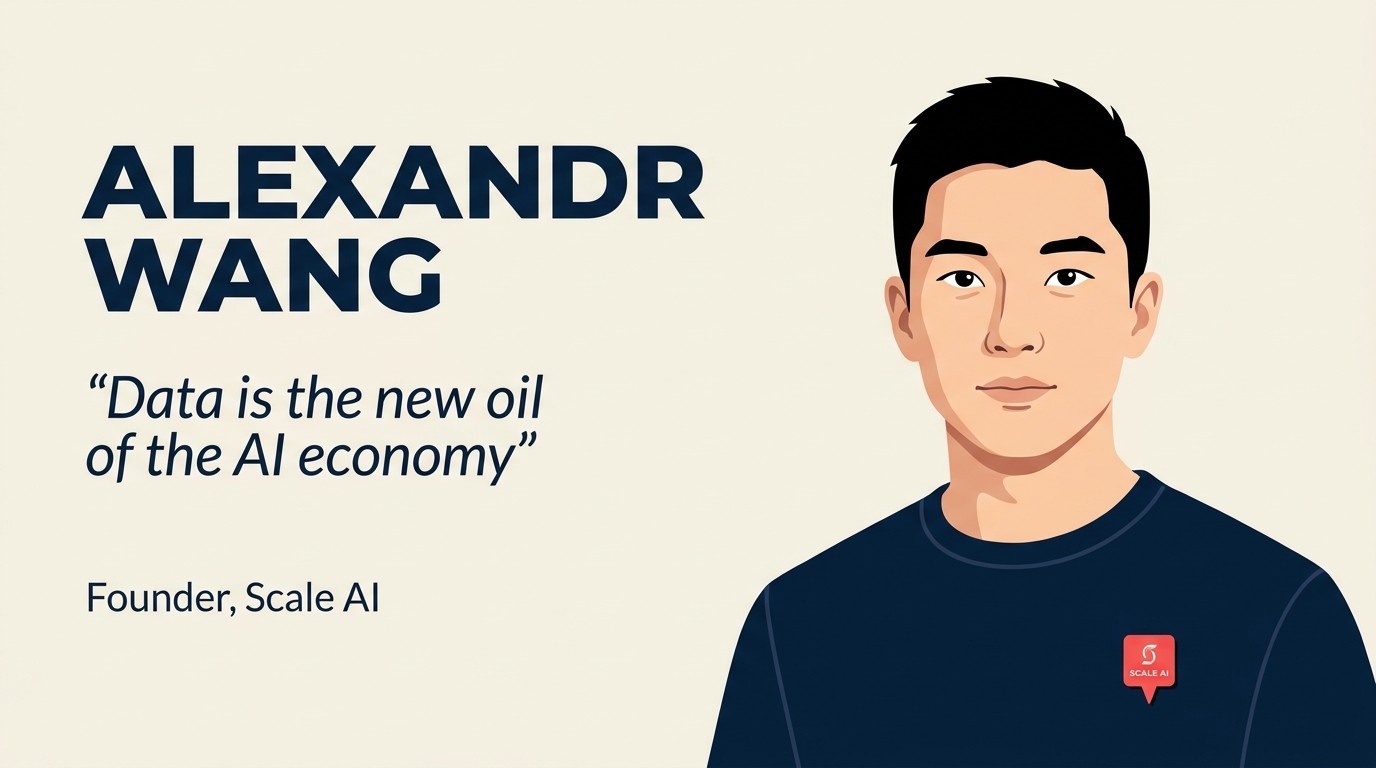
Gaya Kepimpinan Alexandr Wang: Scale AI, Pelabelan Data Berkelajuan Tinggi, dan Pertaruhan Kontrak Kerajaan yang Menjadikannya Bilionair pada Usia 25
Turn this article into takeaways for your work.


Each assistant summarizes the article only for you and suggests best practices for your work.
Alexandr Wang berhenti dari MIT pada usia 19 tahun. Beliau tidak berhenti untuk membina rangkaian sosial atau aplikasi pengguna. Beliau berhenti untuk menyelesaikan masalah pelabelan data — halangan yang tidak glamor dan memerlukan banyak tenaga buruh yang menjadi kebergantungan setiap sistem AI, tetapi tidak ada sesiapa di Silicon Valley yang mahu membincangkannya.
Scale AI, syarikat yang beliau asaskan bersama Lucy Guo pada 2016, membina pasaran data beranotasi yang menjadi kebergantungan hulu bagi kenderaan autonomi, latihan LLM, dan akhirnya Jabatan Pertahanan Amerika Syarikat. Menjelang 2022, Wang bernilai anggaran $2 bilion, menjadikannya bilionair termuda hasil sendiri dalam sejarah menurut Forbes. Pada Mei 2024, Scale AI mengumpul dana pada penilaian $13.8 bilion. Meta melabur $14.3 bilion untuk kepentingan 49% kemudian pada tahun itu — menjadikan Mark Zuckerberg sebagai salah satu pemegang kepentingan paling berpengaruh Scale AI — dan Wang menyertai Meta Superintelligence Labs. Sam Altman di OpenAI dan Dario Amodei di Anthropic adalah antara pelanggan data berlabel terbesar Scale AI, yang bermakna perniagaan infrastruktur Wang secara serentak telah melayani pesaing dalam perlumbaan model sempadan. Dan Demis Hassabis di Google DeepMind mengejar tesis yang setanding tentang pemilikan lapisan penyelidikan saintifik — Wang dan Hassabis sama-sama bertaruh bahawa infrastruktur di bawah produk yang kelihatan adalah tempat nilai berkekalan terkumpul.
Apa yang menjadikan kisahnya relevan kepada pengendali bukan kekayaannya. Ia adalah corak keputusan: beliau berulang kali memilih yang boleh dipertahankan berbanding yang modis, yang tidak glamor berbanding yang viral, dan kontrak kerajaan berbanding rupa pengguna yang kelihatan keren pada masa rakan sebayanya melakukan sebaliknya. Ibu bapanya adalah ahli fizik nuklear. Beliau membesar di Los Alamos, New Mexico, memenangi pelbagai olimpiad matematik dan pengaturcaraan, kemudian mendaftar ke MIT sebelum memutuskan bahawa masalah AI paling penting tidak diselesaikan di makmal. Jika anda membina sesuatu yang memerlukan parit pertahanan berbanding kesan rangkaian, tesisnya layak dikaji.
Alexandr Wang — Fakta Utama
| Dilahirkan | 1997, Los Alamos, New Mexico (ibu bapa adalah ahli fizik nuklear) |
| Pendidikan | MIT (berhenti pada usia 19 untuk membina Scale AI) |
| Syarikat diasaskan | Scale AI, diasaskan bersama Lucy Guo pada 2016 |
| Jawatan puncak | CEO, Scale AI (2016–2025) |
| Pencapaian terkenal | Bilionair termuda hasil sendiri dalam sejarah (2022, usia ~25, Forbes) |
| Pencapaian penilaian | Scale AI mencapai penilaian $13.8B (Mei 2024); Meta melabur $14.3B untuk kepentingan 49% |
| Peranan semasa | Meta Superintelligence Labs (menyertai 2025 melalui transaksi Meta–Scale) |
| Perniagaan teras | Infrastruktur pelabelan data yang menjanakan OpenAI, Anthropic, Google DeepMind, dan Jabatan Pertahanan AS |
| Pendirian ketara | Pro-kontrak kerajaan; testimoni Kongres mengenai persaingan AI AS-China |
| Langkah tanda tangan | Memilih infrastruktur data yang tidak glamor berbanding AI pengguna di lapisan model |
Doktrin Halaju Scale
Miliki lapisan kebergantungan sebelum pasaran memahami ia adalah kebergantungan — kemudian kendalikannya dengan standard kualiti yang cukup tinggi supaya pelanggan anda yang paling mencabar memaksa anda membina parit yang tidak dapat direplikasi oleh pasaran lain. Lapisan model akan menjadi komoditi; saluran data di bawahnya terus berkumpul nilai. Bertaruh pada infrastruktur yang tidak menarik yang diperlukan setiap pesaing, dan layani pelanggan yang standardnya paling menuntut.
Pecahan Gaya Kepimpinan
| Gaya | Berat | Bagaimana ia kelihatan |
|---|---|---|
| Pembina Infrastruktur Kontrarian | 65% | Pandangan utama Wang ialah lapisan kelihatan tindanan AI — model — akan menjadi komoditi lebih cepat daripada lapisan data di bawahnya. Sementara pelabur bersaing untuk membiayai model bahasa seterusnya, Wang sedang membina infrastruktur yang diperlukan oleh semua mereka untuk melatih model tersebut. Beliau mengambil kedudukan yang defensif secara struktur dalam rantai nilai AI: miliki halangan yang setiap pesaing bergantung, bukan lapisan produk di mana persaingan paling sengit. Itu memerlukan keyakinan berkekalan bahawa lapisan yang tidak menarik lebih penting daripada yang kelihatan lebih menarik. |
| Pengendali Berpandukan Misi | 35% | Tesis kontrak kerajaan bukan semata-mata komersial. Wang telah konsisten, secara terbuka dan dalam testimoni Kongres, bahawa daya saing AI AS berbanding China adalah kebimbangan keselamatan nasional yang nyata — dan bahawa keengganan budaya Silicon Valley terhadap kerja pertahanan adalah kesilapan strategik. Itu adalah pendirian nyata dengan akibat nyata, bukan tuntutan pemasaran. Ia menjadikannya kontroversi dalam sebahagian industrinya sendiri. Tetapi ia juga memberi Scale AI segmen pelanggan dan parit persaingan yang tidak ada sesiapa lain dalam infrastruktur AI yang mengejarnya. |
Pembahagian itu menjelaskan mengapa kedudukan Scale AI sangat sukar untuk direplikasi. Fokus infrastruktur adalah tesis perniagaan. Pendirian kontrak kerajaan adalah keyakinan. Dan gabungannya mewujudkan syarikat yang diposisikan secara defensif dalam rantai bekalan AI dan tertanam dalam institusi yang kebanyakan pesaing enggan terlibat.
Ciri-Ciri Kepimpinan Utama
| Ciri | Penilaian | Apa maksudnya dalam amalan |
|---|---|---|
| Keyakinan kontrarian pada peluang yang tidak glamor | Luar biasa | Pelabelan data bukan idea sesiapa tentang pitch permulaan yang menarik. Pada 2016, perbualan dalam AI adalah tentang seni bina rangkaian neural, garis masa AGI, dan makmal mana yang akan membina model tujuan umum pertama. Wang melihat perbualan itu dan mengenal pasti kebergantungan di bawahnya: tiada satu pun model tersebut berfungsi tanpa data latihan beranotasi berkualiti tinggi, dan tidak ada sesiapa yang membina infrastruktur untuk menghasilkannya dalam skala besar. Kesediaan untuk membina sesuatu yang kedengaran tidak menarik demi mengawal sesuatu yang penting secara struktur adalah teras ciri ini. |
| Kesabaran strategik dengan pertaruhan infrastruktur | Sangat Tinggi | Pelanggan awal Scale AI adalah syarikat kenderaan autonomi — Lyft, General Motors, Toyota — yang memerlukan data penderia berlabel untuk saluran latihan mereka. Itu adalah asas pelanggan yang sempit, tidak glamor, dan kompleks secara operasional. Wang menghabiskan bertahun-tahun membina kualiti data dan sistem operasi yang diperlukan untuk melayani pelanggan tersebut sebelum gelombang LLM menjadikan Scale AI relevan kepada pasaran yang lebih besar. Kesabaran untuk membina dengan mendalam dalam segmen sempit sebelum segmen itu menjadi penting adalah sejenis disiplin strategik yang khusus. |
| Kesediaan mengambil pendirian yang mengasingkan rakan berpengaruh | Sangat Tinggi | Pendirian pro-kontrak kerajaan Wang meletakkannya bertentangan langsung dengan bahagian penting konsensus budaya Silicon Valley, yang menganggap hubungan pertahanan sebagai kos reputasi dan dikompromikan secara etika. Beliau memberi testimoni di hadapan Kongres tentang AI dan keselamatan nasional dengan cara yang menjadikannya tokoh kontroversi dalam ekosistem yang sama tempat beliau mengumpul modal. Memegang pendirian itu secara terbuka dan konsisten, sambil juga memerlukan muhibah pelabur dan bakat dalam ekosistem yang sama, memerlukan toleransi risiko yang tulen melebihi kontrarianism permulaan biasa. |
| Disiplin operasi dalam perniagaan kualiti data | Tinggi | Pelabelan data adalah kompleks secara operasi dalam cara yang perniagaan perisian tidak. Anda menguruskan tenaga kerja tersebar, sistem kawalan kualiti, garis panduan anotasi khusus domain, dan keperluan pengendalian data sebelah pelanggan secara serentak. Wang membina infrastruktur operasi untuk menghantar data berlabel pada standard kualiti yang syarikat kenderaan autonomi dan, kemudian, pasukan latihan LLM akan membayar harga premium. Itu bukan keupayaan yang glamor, tetapi ia adalah keupayaan yang nyata — dan itulah sebabnya Scale AI dapat mempertahankan harga walaupun pesaing yang lebih murah memasuki pasaran. |
3 Keputusan Yang Mentakrifkan Alexandr Wang sebagai Pemimpin
Berhenti dari MIT untuk Membina Infrastruktur Pelabelan Data
Tesis teras Wang pada usia 19 ialah lapisan yang tidak menarik dalam tindanan AI lebih boleh dipertahankan daripada lapisan model. Rakan seangkatannya sedang membina model. Wang sedang membina perkara yang membolehkan model berfungsi.
Pelabelan data pada 2016 adalah industri yang manual dan berpecah-belah. Kebanyakan pasukan AI mengendalikannya secara dalaman dengan saluran kontraktor yang mahal untuk dibina dan tidak boleh dipercayai dari segi kualiti. Tidak ada platform dominan, tiada standard kualiti, dan tiada infrastruktur yang berskala merentasi keperluan anotasi berbeza untuk aplikasi AI yang berbeza. Wang mengenal pasti jurang itu dan membina untuknya sebelum pasaran memahami ia memerlukan penyelesaian.
Keputusan utama bukan sekadar keluar dari universiti — ia adalah pilihan masalah. Beliau boleh membina sesuatu dengan pitch pengguna yang lebih bersih. Pasaran pelabelan data bukan cerita yang menarik pada hari demo YC. Tetapi Wang telah mengira di mana rantai bekalan AI akan pecah, dan beliau membina untuk pecahan itu bukannya untuk naratif yang paling mudah dibiayai.
Tarikan awal dengan syarikat kenderaan autonomi mengesahkan tesis tersebut. Lyft, GM, dan Toyota memerlukan data penderia berlabel, suapan kamera, imbasan LIDAR, isyarat radar, dianotasi dengan tepat cukup untuk melatih model yang akan memandu kereta dengan selamat. Itu adalah kes penggunaan berisiko tinggi dan keperluan khusus tinggi di mana kegagalan kualiti data mempunyai akibat fizikal. Scale AI membina keteguhan operasi untuk memenuhi tahap itu, dan keteguhan itu menjadi asas bagi segala yang mengikutinya.
Mengambil Kontrak Kerajaan dan Tentera AS
Keputusan Wang untuk secara aktif mengejar kontrak Jabatan Pertahanan AS dan komuniti perisikan pada masa kebanyakan rakan sebayanya di Silicon Valley secara eksplisit mengelakkannya adalah keputusan paling menentukan dan paling kontroversi dalam kerjaya kepimpinannya setakat ini.
Konteks penting. Kontroversi Project Maven Google pada 2018, di mana protes pekerja memaksa syarikat menolak kontrak AI Pentagon, telah menjadikan kerja AI kerajaan berkos reputasi di Silicon Valley. Kebanyakan syarikat AI menghayati isyarat itu dan mengelak hubungan tentera. Wang mencapai kesimpulan yang bertentangan: bahawa keperluan kerajaan AS untuk keupayaan AI adalah nyata, bahawa risiko China membina AI tentera yang lebih baik sementara syarikat teknologi AS enggan mengambil bahagian adalah ancaman nyata, dan bahawa Scale AI berada dalam kedudukan baik untuk melayani segmen pelanggan itu tepat kerana persaingan telah memilih untuk tidak terlibat.
Beliau telah membuat hujah ini secara terbuka dan konsisten, termasuk dalam testimoni Kongres mengenai AI dan keselamatan nasional. Beliau berhujah bahawa keengganan budaya industri teknologi AS terhadap kerja pertahanan adalah kesilapan strategik yang melemahkan kedudukan persaingan Amerika. Itu adalah pendirian nyata, bukan persembahan — beliau memegangnya di bawah tekanan balas dari bekas rakan sekerja, pekerja, dan sebahagian komuniti pelabur.
Hasil perniagaan adalah signifikan. Kontrak kerajaan Scale AI memberi syarikat segmen pelanggan dengan belanjawan yang besar, tempoh kontrak panjang, dan keperluan kualiti data yang serius. Hubungan DoD juga mewujudkan kesan rangkaian: sebuah syarikat AI dengan pelepasan keselamatan kerajaan dan prestasi terbukti dalam konteks yang diklasifikasikan mempunyai rujukan pelanggan yang tidak dapat dipadankan oleh pesaing. Dan asas pelanggan kerajaan adalah kitaran balik terhadap pasaran AI komersial — ia tidak perlahan apabila pelaburan AI permulaan melambat.
Mengalihkan Scale AI dari Data Kenderaan Autonomi kepada Data Latihan LLM
Apabila ChatGPT dilancarkan pada November 2022, halangan data dalam AI beralih. Cabaran data latihan paling penting bukan lagi anotasi penderia untuk kenderaan pandu sendiri. Ia adalah RLHF, Reinforcement Learning from Human Feedback, untuk model bahasa besar. Itu bermakna pengkomentar manusia menilai output model, menilai kualiti, menanda respons berbahaya, dan membantu model belajar untuk selaras dengan keutamaan manusia.
Wang menyedari bahawa infrastruktur operasi yang Scale AI telah bina untuk pelabelan AV — pengurusan tenaga kerja tersebar, kawalan kualiti pada skala, garis panduan anotasi khusus domain — boleh digunakan secara langsung untuk halangan baru. Tetapi melaksanakan peralihan memerlukan melatih semula pengkomentar, membina semula alur kerja pelanggan, dan meyakinkan makmal model bahasa besar bahawa standard kualiti Scale AI sesuai untuk latihan LLM.
Scale AI melaksanakan peralihan itu lebih cepat daripada yang telah harga pasaran untuk peluang baru. Menjelang 2023, syarikat itu adalah pembekal data latihan utama bagi kebanyakan pembangun LLM utama, termasuk beberapa makmal yang sebelumnya membina saluran anotasi mereka secara dalaman. Peralihan berjaya kerana keupayaan asas — kecemerlangan operasi dalam alur kerja AI berasaskan manusia — benar-benar boleh dipindahkan, bukan sekadar analogi.
Pelajaran yang lebih mendalam adalah tentang membaca peralihan pasaran di lapisan infrastruktur. Kebanyakan pengendali menonton lapisan produk berubah dan cuba menyesuaikan produk mereka dengan sewajarnya. Wang menonton lapisan kebergantungan di bawah lapisan produk dan menggerakkan infrastrukturnya sebelum syarikat produk sepenuhnya menghargai peralihan itu.
Apa Yang Akan Alexandr Wang Lakukan dalam Peranan Anda
Jika anda seorang CEO, soalan paling berguna Wang adalah tentang lapisan kebergantungan dalam kategori anda. Apa yang produk anda atau produk pesaing anda bergantung padanya yang tidak dilayani dengan baik? Pertaruhan infrastruktur kurang bersaing daripada pertaruhan produk kerana pasaran lebih kecil dan naratif lebih sukar untuk dibiayai. Tetapi mereka juga lebih boleh dipertahankan setelah dibina. Sebelum anda bersaing untuk lapisan produk yang semua orang sedang membina, tanya sama ada terdapat lapisan kebergantungan di mana anda akan mempunyai medan untuk diri sendiri.
Jika anda seorang COO, pelajaran operasi adalah tentang membina infrastruktur kualiti data sebelum anda memerlukannya pada skala besar. Parit persaingan Scale AI bukan algoritma yang mengehalakan tugas anotasi — ia adalah sistem kawalan kualiti, program latihan pengkomentar, garis panduan khusus domain, dan alur kerja integrasi pelanggan yang dibina selama bertahun-tahun kes penggunaan berisiko tinggi. Itu bukan perkara yang boleh anda tingkatkan dalam semalaman. Jika perniagaan anda bergantung pada proses berasaskan manusia, masa untuk membina infrastruktur kualiti adalah sebelum volum tiba, bukan selepas.
Jika anda pemimpin produk, hujah pensusunan Wang juga berlaku untuk pembangunan produk. Beliau mengenal pasti halangan data latihan AI sebelum pasaran memahami ada halangan. Soalan peta jalan produk adalah: apa yang sistem AI pelanggan anda perlukan untuk berfungsi dalam dua tahun yang tidak dibina dengan baik hari ini? Masa infrastruktur berbeza daripada masa produk. Anda perlu berada awal di lapisan infrastruktur kerana kos penukaran adalah tinggi dan tetingkap persaingan tertutup setelah pembekal lalai muncul.
Jika anda berada dalam jualan atau pemasaran, pandangan Wang yang paling boleh diterapkan adalah tentang pemilihan pelanggan sebagai strategi. Beliau tidak mengejar pelanggan yang paling mudah — beliau mengejar pelanggan dengan keperluan kualiti tertinggi (syarikat kenderaan autonomi, DoD) kerana standard pelanggan tersebut akan memaksa Scale AI membina keteguhan operasi yang tidak dapat direplikasi oleh pesaing. Pelanggan anda yang paling sukar menjadikan anda lebih baik. Jika strategi pertumbuhan anda mengoptimumkan untuk laluan rintangan paling rendah, anda sedang membina syarikat yang hanya boleh melayani segmen itu.
Keselarian Rework: Intensiti Pengasas Bertemu Operasi Berasaskan Data
Kelebihan Wang bukan dek strategi — ia adalah tempo operasi harian yang beliau tuntut daripada tenaga kerja anotasi tersebar dan disiplin kualiti yang beliau bina ke dalam setiap alur kerja pelanggan. Itu adalah intensiti pengasas berkahwin dengan ops berasaskan data, dan itulah tepat kombinasi yang paling banyak pasukan B2B yang sedang berkembang tidak ada. Anda boleh mempunyai tesis yang tajam, tetapi jika data Pipeline anda tidak kemas, aktiviti wakil anda tidak kelihatan, dan operasi anda berjalan dengan tangkapan skrin yang ditampal ke dalam Slack, anda akan membakar tesis cuba melaksanakannya.
Rework dibina untuk pasukan yang mahukan disiplin gaya Wang tanpa membina infrastruktur dari awal. Rework CRM memberi pemimpin jualan Pipeline dan data aktiviti yang bersih yang membolehkan bimbingan — tiada meneka wakil mana yang tersekat, tiada pembersihan data hujung suku. Rework Work Ops membolehkan RevOps dan COO menyambungkan alur kerja antara pasukan (jualan, CS, sokongan, penghantaran) yang memastikan kualiti tinggi apabila bilangan pekerja bertambah. Intensiti pengasas hanya berskala jika sistem operasi di bawahnya berskala. Wang membina miliknya. Milik anda boleh dikonfigurasi dalam seminggu.
Petikan Penting dan Pelajaran di Luar Bilik Mesyuarat
Wang telah terus terang dalam testimoni Kongresnnya: "AI adalah salah satu teknologi paling berkuasa yang pernah dicipta manusia. Soalannya bukan sama ada Amerika Syarikat akan menggunakan AI, ia adalah sama ada AI Amerika akan menjadi yang terbaik di dunia atau sama ada ia akan menjadi AI China." Hujah awamnya tentang AI dan keselamatan nasional menggema kebimbangan yang Fortune telah dokumentasikan tentang pertaruhan geopolitik pembangunan AI sempadan. Itu adalah hujah khusus tentang persaingan geopolitik, bukan sekadar pitch kontraktor pertahanan. Beliau telah mempertaruhkan identiti awamnya pada cadangan bahawa syarikat teknologi AS seharusnya terlibat dengan AI kerajaan bukannya memilih untuk tidak terlibat.
Beliau juga telah terbuka tentang kritikan dari bekas rakan sekerja: "Saya rasa orang yang tidak akan bekerja dengan kerajaan sedang membuat kesilapan. Mereka sama ada keliru tentang apa yang kerajaan lakukan dengan alat-alat ini, atau mereka membuat pilihan budaya yang mendahulukan keselesaan peribadi mereka di hadapan kepentingan nasional." Sama ada anda bersetuju dengan pendirian itu atau tidak, ia adalah artikulasi nyata keyakinan tulen, yang dinyatakan dalam keadaan di mana laluan yang lebih mudah adalah kesunyian diplomatik.
Lengkung kerjaya yang patut diperhatikan: Wang mengasaskan Scale AI pada usia 19, menjadi bilionair termuda hasil sendiri dalam sejarah pada usia kira-kira 25, dan kemudian membuat keputusan yang kebanyakan bilionair tidak buat — beliau menyertai sebuah syarikat (Meta Superintelligence Labs) bukannya kekal sebagai pengasas bebas. Itu adalah isyarat tentang apa yang sebenarnya ingin beliau bina, iaitu pengaruh ke atas sistem AI paling berkemampuan, bukan kebebasan peribadi atau keluar yang bersih. Kepentingan Meta sebesar $14.3 bilion dalam Scale AI mengubah profil kebebasan syarikat dengan ketara, tetapi Wang nampaknya telah memutuskan bahawa kedekatan dengan sempadan lebih penting daripada autonomi.
Di Mana Gaya Ini Tidak Berkesan
Tesis infrastruktur-dan-kerajaan Wang berfungsi dalam dunia di mana persaingan geopolitik terus mempercepatkan pelaburan AI dan di mana kualiti data kekal sebagai kekangan yang mengikat prestasi model. Jika penjanaan data sintetik matang — kemungkinan nyata memandangkan kemajuan penyelidikan terkini — nilai saluran data berlabel manusia berkurangan dengan ketara. Kepekatan kontrak kerajaan beliau juga mewujudkan risiko pelanggan dan reputasi: perubahan dasar, kegagalan DoD yang berprofile tinggi, atau perubahan dalam persekitaran politik sekitar AI dan pertahanan boleh menjejaskan penilaian Scale AI dan akses bakat secara serentak. Dan kepentingan Meta bermakna Scale AI bukan lagi platform infrastruktur yang berkecuali — ia kini sebahagiannya merupakan aset strategik salah satu makmal AI terbesar di dunia, yang mengubah kira-kira berkecuali untuk bakal pelanggan yang bersaing dengan Meta. Pendirian kontrarian beliau telah betul setakat ini, tetapi risikonya tidak kecil dan beberapa daripadanya sedang meningkat.
Soalan Lazim tentang Kepimpinan Alexandr Wang
Siapakah Alexandr Wang?
Alexandr Wang adalah pengasas bersama Scale AI, dilahirkan pada 1997 di Los Alamos, New Mexico kepada dua ahli fizik nuklear. Beliau berhenti dari MIT pada usia 19 untuk memulakan Scale AI pada 2016 bersama Lucy Guo, dan menjelang 2022 Forbes telah menamakan beliau sebagai bilionair termuda hasil sendiri dalam sejarah. Pada 2025 beliau menyertai Meta Superintelligence Labs selepas Meta melabur $14.3B untuk kepentingan 49% dalam Scale AI.
Bagaimana Scale AI menjadi penting kepada industri AI?
Scale AI membina infrastruktur pelabelan data yang setiap model AI sempadan bergantung padanya. Pelanggan awal adalah syarikat kenderaan autonomi seperti Lyft, GM, dan Toyota yang memerlukan data penderia beranotasi. Selepas ChatGPT dilancarkan pada akhir 2022, Scale beralih kepada RLHF (Reinforcement Learning from Human Feedback) untuk model bahasa besar, dan menjelang 2023 adalah pembekal data latihan utama bagi OpenAI, Anthropic, Google, dan kebanyakan makmal utama lain — serta Jabatan Pertahanan AS.
Mengapa Wang meninggalkan Scale AI untuk Meta?
Pada 2025, Meta melabur $14.3 bilion untuk kepentingan 49% dalam Scale AI, dan Wang menyertai Meta Superintelligence Labs sebagai sebahagian daripada transaksi tersebut. Kebanyakan pengasas bilionair tidak menyertai syarikat yang lebih besar — langkah Wang memberi isyarat bahawa beliau menghargai kedekatan dengan pembangunan AI sempadan berbanding kebebasan, dan bahawa Meta melihat akses kepada saluran data Scale sebagai sesuatu yang menentukan secara strategik untuk peta jalan AI-nya.
Apakah falsafah kepimpinan Wang?
Falsafah Wang adalah untuk memiliki lapisan kebergantungan yang tidak glamor bukannya bersaing di lapisan produk yang kelihatan. Beliau bertaruh awal bahawa infrastruktur data akan berkumpul nilai sementara model itu sendiri menjadi komoditi, dan beliau secara aktif mengejar pelanggan dengan bar kualiti tertinggi (kenderaan autonomi, DoD) kerana standard mereka akan memaksa keteguhan operasi yang tidak dapat direplikasi oleh pesaing.
Apa yang boleh pengasas pelajari daripada Alexandr Wang?
Tiga pelajaran: pilih masalah yang boleh dipertahankan secara struktur bukannya yang menarik secara naratif, layani pelanggan yang standardnya memaksa anda membina parit, dan pegang pendirian kontroversi secara terbuka jika anda percaya ia betul. Pendirian pro-kontrak kerajaan Wang mengasingkan sebahagian Silicon Valley tetapi memberi Scale AI segmen pelanggan dengan belanjawan yang besar, tempoh kontrak panjang, dan tiada persaingan nyata.
Apakah kesilapan terbesar Wang?
Pertukaran yang paling diperdebatkan Wang adalah kepentingan Meta itu sendiri. Dengan menerima pelaburan $14.3B Meta dan menyertai Superintelligence Labs, Scale AI bukan lagi platform infrastruktur berkecuali — ia kini sebahagiannya merupakan aset strategik salah satu makmal AI terbesar. Itu mengubah kira-kira untuk pelanggan seperti OpenAI, Anthropic, dan Google yang bersaing dengan Meta. Sama ada terbukti sebagai kesilapan atau pengukuhan strategik bergantung pada bagaimana asas pelanggan AI bertindak balas dalam dua hingga tiga tahun akan datang.
Untuk bacaan berkaitan, lihat Gaya Kepimpinan Sam Altman, Gaya Kepimpinan Clement Delangue, Gaya Kepimpinan Jensen Huang, Gaya Kepimpinan Peter Thiel, dan Gaya Kepimpinan Marc Andreessen.
Co-Founder, Rework.com
On this page
- Alexandr Wang — Fakta Utama
- Doktrin Halaju Scale
- Pecahan Gaya Kepimpinan
- Ciri-Ciri Kepimpinan Utama
- 3 Keputusan Yang Mentakrifkan Alexandr Wang sebagai Pemimpin
- Berhenti dari MIT untuk Membina Infrastruktur Pelabelan Data
- Mengambil Kontrak Kerajaan dan Tentera AS
- Mengalihkan Scale AI dari Data Kenderaan Autonomi kepada Data Latihan LLM
- Apa Yang Akan Alexandr Wang Lakukan dalam Peranan Anda
- Keselarian Rework: Intensiti Pengasas Bertemu Operasi Berasaskan Data
- Petikan Penting dan Pelajaran di Luar Bilik Mesyuarat
- Di Mana Gaya Ini Tidak Berkesan