More in
AI at Work ニュース
OpenAIがChatGPT広告を中小企業に予算制限なく開放した
6月 6, 2026
AIは職場のあらゆる場所に浸透した:しかし「仕事を根本から変えた」と言える人は10人に1人だけ
6月 6, 2026
Vibe Codingの105億ドルの瞬間:AIが新規ソフトウェア開発の大半を担うようになった
6月 6, 2026
AIエージェントは今や従業員よりも多くのシステムアクセス権を持っている:しかしセキュリティ対策はほとんど追いついていない
6月 5, 2026
AIは自社開発すべきか、購入すべきか。巨大企業が何を買収したかを見れば答えが見えてくる
6月 5, 2026
Uberは予算超過を受け、従業員1人あたりのAI利用上限を1,500ドルに設定した
6月 5, 2026
TrumpのAI大統領令は規制緩和を志向:しかし御社のコンプライアンスリスクは変わっていない
6月 4, 2026
AIが220社のユニコーン企業を時価総額10億ドル未満に押し下げた:ChatGPT以前のスタートアップは転換点を迎えている
6月 4, 2026
トークン価格は今年67%下落した:それでもAI費用は増え続けている
6月 3, 2026
AIを活用する中小企業は売上増加と勤務時間短縮を同時に実現している
6月 3, 2026
「AI for Main Street Act」が中小企業オーナーにとって意味すること
Turn this article into takeaways for your work.


Each assistant summarizes the article only for you and suggests best practices for your work.
多くの中小企業オーナーが気づいていないことがあります。連邦政府による無償の AI コーチングは、思っている以上に身近なところまで来ています。
AI for Main Street Act は、2026年1月にほぼ全会一致の 395 対 14 という票差で米国下院を通過し、現在は上院中小企業・起業家精神委員会に付託されています。まだ法律ではありません。しかし、この法案が正式化しようとしている基盤インフラは、中小企業庁(SBA)を通じてすでに一部稼働しており、政治的な勢いは最近の中小企業関連法案の中でも最も強いものの一つです。
FedScoop によると、この法律は SBA が AI リテラシー、研修、実践的なガイダンスを既存のリソースパートナーネットワークに組み込むよう指示するものです。具体的には、Small Business Development Centers(SBDC)、SCORE のメンタリングチャプター、Women's Business Centers、Veterans Business Outreach Centers です。これらのプログラムを利用したことがあれば、同じシステムが今度は AI サポートへの入口になります。
賢い選択は、上院の通過を待つことではありません。すでに利用できるものに今すぐアクセスし、正式な展開が始まる前に準備を整えることです。
この法案が実際に行うこと
AI for Main Street Act の適用範囲は、見出しが示唆するよりも限定的で実務的です。新たな連邦 AI 機関や独自の助成プログラムを創設するものではありません。SBA が AI を SBDC や他のリソースパートナーが中小企業を支援する際の正式な一部にするよう指示するものです。
具体的には、SBDC が中小企業の AI 評価・導入を支援することが義務付けられます。業務の効率化、サイバーセキュリティの向上、データや知的財産の保護、障害への備えにおける AI 活用のガイダンスも含まれます。下院版は Mark Alford 議員(共和党・ミズーリ州)と Hillary Scholten 議員(民主党・ミシガン州)が提出しました。上院版(S.3586)は Todd Young 議員(共和党・インディアナ州)と Maria Cantwell 議員(民主党・ワシントン州)が提出し、Jon Husted 議員(共和党・オハイオ州)が共同提案者となっています。
Alford 議員は、この法案の目標を「家族経営のビジネスに、大企業と同じ競争・イノベーションの機会を与えること」と説明しています。これは雇用を奪ったり、トレンドを追いかけたりするためのものではありません。大企業が AI を大規模に展開し始めてから拡大し続けてきた能力格差を縮めることを目指しています。
Key Facts
- AI for Main Street Act は 2026年1月20日に下院を 395 対 14 で通過し、2026年1月下旬に上院中小企業・起業家精神委員会に付託されました。2026年6月時点で審議中です。(出典:Congress.gov、H.R. 5764)
- この法案は、参加 SBDC を通じて中小企業への一対一のコーチングと AI リソースをすでに提供している Google 支援の「AI U」イニシアチブを土台としています。(出典:FedScoop)
- 同時に審議されている AI WISE Act は、SBA が中小企業オーナー向けに AI に関する教育リソース、学習モジュール、ベストプラクティスガイダンスを作成するよう指示するものです。(出典:FedScoop)
AI for Main Street Act と並行して第二の法律も動いています。AI WISE Act です。Main Street Act が AI サポートを SBDC の業務に統合することに焦点を当てているのに対し、WISE Act は SBA が中小企業向けに AI に関する教育資料、体系的な学習モジュール、正式なベストプラクティスガイダンスを作成するよう指示するものです。両法案は下院をともに通過しました。
上院通過前の今すぐ利用できるもの
最も重要なことを理解してください。SBA ネットワークを通じた AI コーチングにアクセスするために、上院での投票を待つ必要はありません。
参加 SBDC を通じて運営されている Google 支援のプログラム「AI U」はすでに稼働しています。AI ツールの評価や導入を検討しているビジネスオーナーに向けて、一対一のコーチングセッション、体系的なリソース、実践的なガイダンスを提供しています。主要都市圏の SBDC の中には、正式な法的義務付けに先立って、数ヵ月前から AI に特化したプログラムを提供しているところもあります。
お近くの SBDC を見つけるには、sba.gov にアクセスしてリソースロケーターをご利用ください。SCORE チャプターも同様にアクセス可能で無償です。どちらのサービスも経験豊富なメンターが揃っており、LinkedIn でトレンドになっているものを指示するのではなく、あなたのビジネスタイプに実際に合う AI ツールを一緒に考えてくれます。
AI for Main Street Act が法律になれば、この能力を全国で標準化・拡大することになります。しかし基盤はすでに存在しています。今すぐ活用することで、システムに慣れ親しみ、法律が成立して SBA が正式な AI カリキュラムを展開し始めた後に参加してくるオーナーたちよりも一歩先を行くことができます。
ビジネスオーナーのための 2 トラックプラン
2つの並行するトラックがあります。
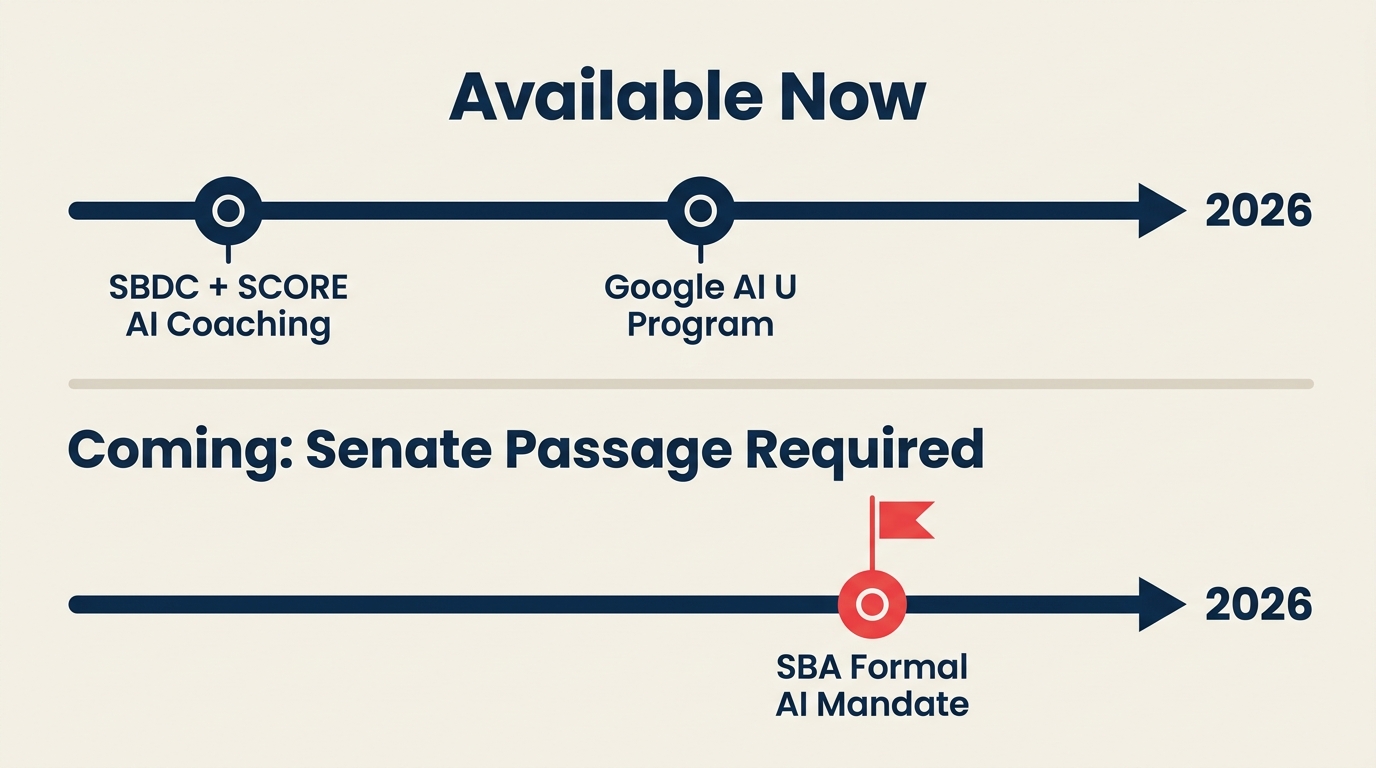
トラック 1:今すぐ利用可能。 SBDC と SCORE の AI コーチング、Google AI U プログラム、Women's Business Centers と Veterans Business Outreach Centers からの AI ガイダンス。申請不要、待ち時間なし。今週中にお近くの SBDC に電話してみましょう。
トラック 2:上院通過後に開始。 すべてのリソースパートナーに体系的な AI ガイダンス、標準化されたカリキュラム、場合によっては拡充されたプログラム予算の提供を義務付ける正式な SBA 義務付け。395 対 14 という超党派の下院での票差は強い支持を示していますが、上院のタイムラインは不透明です。
これを二者択一で考える必要はありません。インフラはすでに稼働しています。法律はそれをより全国的に一貫したものにするでしょう。しかし今すぐ恩恵を受け始めることができます。
中小企業にとって実際に効果をもたらす AI
どこから始めればよいかわからない場合は、他の中小企業オーナーが最も明確な時間と収益へのインパクトを報告している領域をご紹介します。
顧客コミュニケーションとフォローアップ。 AI 文章作成ツールは、問い合わせ、見積もり、フォローアップへの返信時間を、新たな人員採用なしに短縮します。毎週数十件のクライアント対応を行うサービス業にとって、最初に効果が現れる領域です。
記帳と請求書処理。 現代の会計プラットフォームに組み込まれた AI 機能は、パートタイムの経理担当者が必要だった水準の、請求書照合、経費分類、キャッシュフロー予測を処理します。
マーケティングコンテンツ。 SNS の投稿、メールマガジン、広告コピーの作成は AI を使えば速くなります。これを個人で行っているオーナーにとって、その時間を半分にできれば、クライアント対応に充てる時間が生まれます。
在庫と需要計画。 小売業や飲食業にとって、POS システムに接続した AI ツールは、勘に頼るよりも良い補充シグナルを提供し、実際の利益改善につながります。
QuickBooks 2026 中小企業 AI 影響データは、コアオペレーションに AI を導入した後のオーナーの実体験に実際の収益数値を裏付けています。早期導入者と非導入者の差はすでに数値として表れています。
現実的な注意点
AI for Main Street Act は連邦政府からの小切手ではありません。直接的な助成金プログラムを創設するものでもありません。この法案が行うのは、何十年もの歴史を持つ SBA プログラムの正式な一部として、体系的な AI 研修とガイダンスを位置づけることです。この法案が提供するのはキャッシュではなく、専門知識へのアクセスです。
395 対 14 という下院での投票結果があっても、上院での通過は保証されていません。委員会のタイムラインは予測しにくく、法案は修正または遅延される可能性があります。超党派の強い支持があっても、タイムラインは不透明です。
確かなのは、SBDC と SCORE のネットワークが今日存在しており、多くの地域ですでに AI サポートを提供しているということです。そこが、待たずに行動できる部分です。AI コストが低下しながら導入が加速するという広範なパターンもここに関係しています。2年前なら中小企業にとってコスト的に難しかったツールが、今では手が届く範囲になっています。
今月すべきこと
法律なしでできる具体的な4つのステップです。
1. SBDC を探してください。 sba.gov にアクセスし、「Find local assistance」をクリックして最寄りの Small Business Development Center を探してください。AI に特化したカウンセリングを提供しているか、AI U プログラムに参加しているかを具体的に確認してください。まだ提供していない場合は、SCORE でほぼ確実に何か提供しているはずです。
2. 今月中に1回セッションを受けてください。 大きな AI 戦略の問いを持ち込む必要はありません。具体的な問題を持って行きましょう。「週にX時間をYの作業に費やしています。同じような業種のビジネスはこれにどんな AI ツールを使っていますか?」具体的な質問には有益な答えが返ってきます。
3. 30日間テストするツールを1つ選んでください。 学んだことをもとに、1つのユースケースと1つのツールを特定してください。評価する前に1か月間フルで試してみましょう。中小企業向け AI ツールのほとんどには無料ティアがあります。予算をコミットするのではなく、実験を行うのです。
4. 2026年後半の SBA からの発表に注目してください。 上院が AI for Main Street Act を通過させた場合、SBA はガイダンス、拡充されたプログラム、潜在的に新しいリソース配分を公表するでしょう。すでにシステムに入っていれば、まだ参加していないオーナーよりも早くそれを知ることができます。
連邦政府が素早く動くことはほとんどありません。しかし 395 対 14 という超党派の下院での投票、既存の SBDC ネットワーク、すでに稼働している AI U コーチングプログラムが組み合わさって、確かなものが生まれています。コーチングインフラは今すぐ利用できます。正式な義務付けはあと数ヵ月先かもしれません。そして中小企業を本当に助けられる AI ツールは、これまでになく安価でアクセスしやすくなっています。待つ理由はありません。
よくあるご質問
AI for Main Street Act とは何ですか?
AI for Main Street Act(H.R. 5764)は、中小企業庁(SBA)が AI 研修、ガイダンス、アウトリーチを既存のリソースパートナーネットワーク(具体的には SBDC、SCORE、Women's Business Centers、Veterans Business Outreach Centers)に統合するよう指示する超党派の連邦法案です。2026年1月に米国下院を 395 対 14 で通過し、2026年6月時点で上院中小企業・起業家精神委員会で審議中です。
AI for Main Street Act はすでに法律になっていますか?
いいえ。2026年6月時点では、下院を通過しましたが上院では採決されていません。上院中小企業・起業家精神委員会で審議中であり、発効もなく法律として署名もされていません。上院版(S.3586)は Todd Young 議員と Maria Cantwell 議員が提出しました。上院での通過タイムラインは不透明です。
私の中小企業は今すぐ SBA から AI サポートを受けられますか?
AI for Main Street Act の通過を待つ必要はありません。SBA の SBDC ネットワークと SCORE メンタープログラムはすでにビジネスカウンセリングを提供しており、多くの地域で Google 支援の AI U イニシアチブを通じた AI に特化したガイダンスを提供しています。最寄りの SBDC または SCORE チャプターは sba.gov で見つけることができます。セッションは無償で、あなたの特定のビジネスタイプと規模に合った AI ツールについても相談できます。
関連情報
Co-Founder, Rework.com