More in
Berita AI, Pekerjaan & Keterampilan
Sektor Keuangan Terus Kehilangan Pekerjaan saat Ekonomi Merekrut: Peringatan bagi Pekerja Kantoran
Jun 6, 2026
Keterampilan AI Menjadi Rekrutmen Paling Sulit di Dunia. Anda Tidak Bisa Keluar Hanya dengan Merekrut
Jun 6, 2026
Apakah AI Benar-benar Membunuh Pekerjaan? Angka Perekrutan Mei Mengatakan Jangan Terburu-buru
Jun 5, 2026
Anda Menempatkan AI Agent di Bagan Organisasi. Akuntabilitas Diam-diam Melemah
Jun 5, 2026
Semua Menyalahkan AI atas Krisis Kerja Gen Z. The Fed Menunjuk pada Kerja Jarak Jauh
Jun 5, 2026
Dampak Bersih AI pada Pekerjaan Turun ke 11.000 per Bulan. Sektor Konstruksi Menyembunyikan Kebenaran
Jun 4, 2026
AI Disalahkan atas 40% PHK AS di Bulan Mei, Bulan Ketiga Berturut-turut
Jun 4, 2026
Empat Masa Depan Pekerjaan hingga 2030: Titik Evaluasi Pertengahan 2026 bagi CEO
Jun 3, 2026
Bisakah Program Magang AI Federal Menutup Kesenjangan Keterampilan Anda Lebih Murah daripada Merekrut?
Jun 3, 2026
Gaji AI Engineer Terbagi Menjadi Dua Pasar. Hanya yang Teratas yang Merupakan Gelembung
Jun 3, 2026
Bahasa Indonesia
Premi Upah AI Naik Dua Kali Lipat Menjadi 56% dalam 12 Bulan. Inilah Playbook Penataan Ulang Band Kompensasi CHRO untuk 2026
Turn this article into takeaways for your work.


Each assistant summarizes the article only for you and suggests best practices for your work.
Jika survei kompensasi terakhir Anda dilakukan sebelum data ini dirilis, rentang gaji Anda sudah tidak akurat.
Itu bukan hiperbola. Ini adalah masalah matematika. Dan masalah ini datang lebih cepat dari yang diperkirakan sebagian besar CHRO.
Apa yang Dikatakan Data Gaji Terbaru
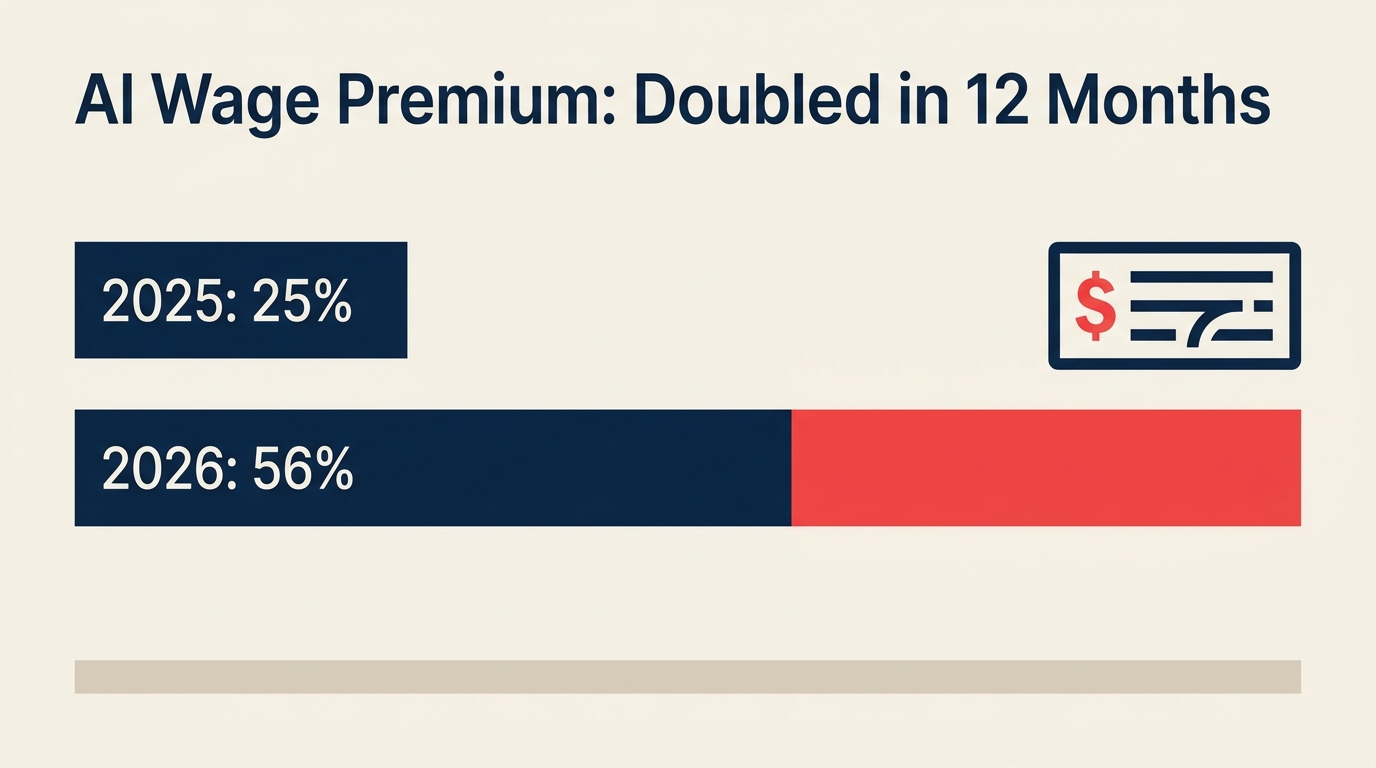
AI Jobs Barometer PwC menemukan bahwa pekerja dengan keterampilan kecerdasan buatan (AI) yang dapat dibuktikan kini memperoleh premi upah sekitar 56% dibandingkan rekan dalam peran yang sama yang tidak memiliki keterampilan tersebut. Setahun sebelumnya, premi yang sama berada di angka 25%. Angka itu tidak naik sedikit demi sedikit. Ia naik dua kali lipat.
Lonjakan itu penting karena terjadi lintas fungsi, bukan hanya di bidang rekayasa atau ilmu data. Laporan PwC melacak posting pekerjaan secara luas, yang berarti sinyalnya sudah merambah ke keuangan, pemasaran, operasional, dan HR itu sendiri. Analis keuangan dengan alur kerja AI yang terverifikasi dalam portofolionya dihargai berbeda dari yang tidak memilikinya, dan kesenjangan itu kini cukup besar untuk muncul dalam siklus perencanaan kompensasi.
Di sisi rekayasa murni, angkanya lebih tajam. Menurut Panduan Gaji AI Engineer 2026 dari Kore1, gaji pokok untuk insinyur AI di Amerika Serikat berkisar dari sekitar $145.000 hingga $310.000 tergantung pada senioritas dan spesialisasi. Insinyur ML senior di San Francisco dan New York mencapai paket kompensasi total di atas $400.000. Dan untuk gaji awal di bidang AI, ML, dan ilmu data, laporan gaji teknologi 2026 Dice menunjukkan kenaikan 4,1% secara tahunan, dibandingkan hanya 1,6% untuk peran teknologi secara keseluruhan. Selisih itu bukan gangguan statistik. Ini adalah sinyal pasar tentang di mana kelangkaan terkonsentrasi.
Key Facts
- Premi upah keterampilan AI mencapai 56% pada 2025/2026, naik dari 25% setahun sebelumnya (PwC AI Jobs Barometer)
- Peran AI dan ML mencatat pertumbuhan gaji awal 4,1% pada 2026 dibandingkan 1,6% untuk teknologi secara keseluruhan (Dice 2026)
- Hanya sekitar 16% tenaga kerja global yang menunjukkan kemahiran AI tinggi pada 2025, dengan PwC memproyeksikan angka itu mencapai sekitar 25% pada akhir 2026
Mengapa Premi Naik Dua Kali Lipat dalam 12 Bulan
Tiga hal bergabung untuk mendorong premi dari 25% menjadi 56% dalam satu tahun. Memahami masing-masing penting untuk memutuskan apa yang sebenarnya perlu diperbaiki oleh strategi kompensasi Anda.
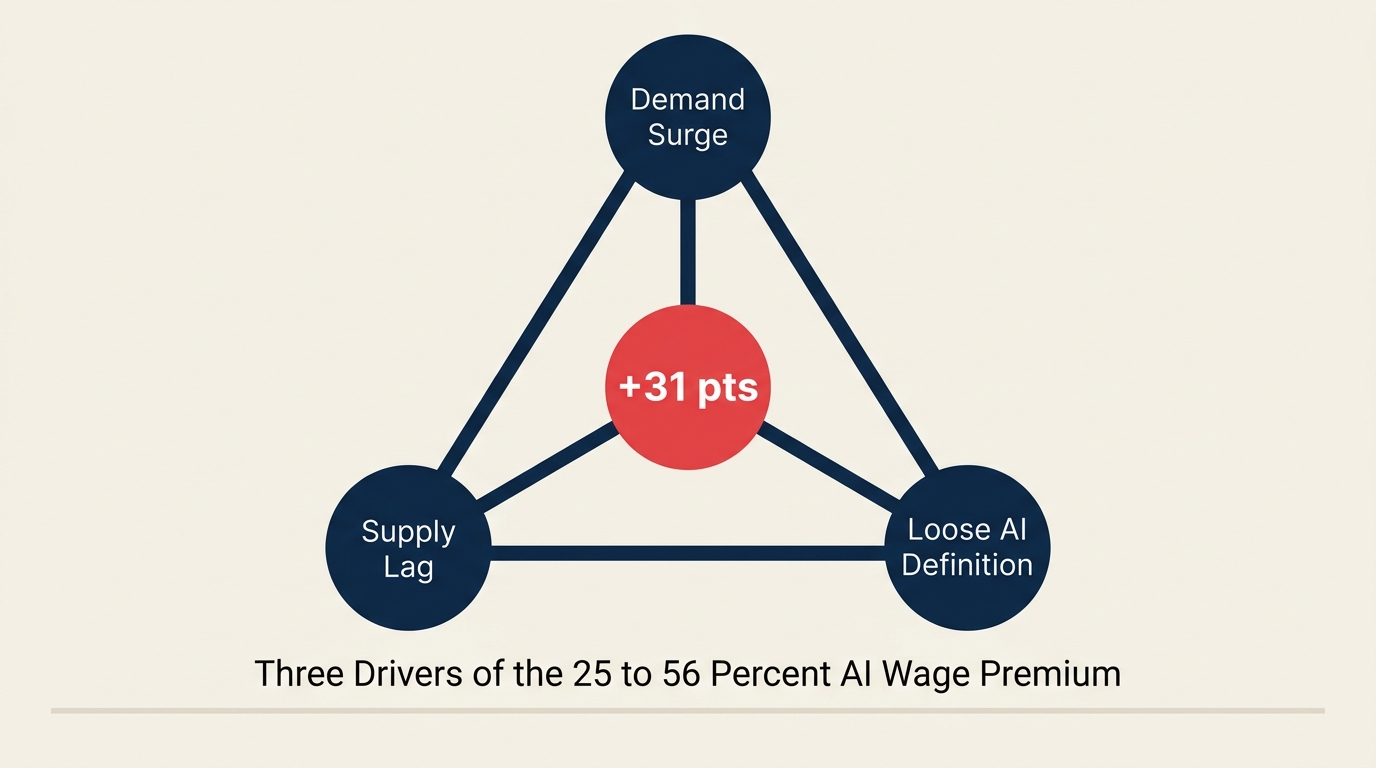
Lonjakan permintaan yang melampaui segalanya. Posting pekerjaan AI tumbuh sekitar 25% secara tahunan, menurut barometer PwC. Itu bukan pertumbuhan kondisi stabil. Ini mencerminkan organisasi yang bergerak dari pilot AI ke operasi yang tertanam AI, yang menghasilkan gelombang persyaratan peran baru sekaligus. Ketika permintaan melonjak lebih cepat dari pasokan yang tersedia, harga naik. Premi upah adalah bentuk nyata dari kenaikan harga itu bagi pekerja.
Pasokan yang masih terbatas. Inilah angka yang menjelaskan batasnya: hanya sekitar 16% tenaga kerja global yang memiliki apa yang dikategorikan PwC sebagai kemahiran AI tinggi, atau yang disebut laporan itu sebagai "AIQ," pada 2025. PwC memproyeksikan angka itu mencapai sekitar 25% pada akhir 2026. Bahkan pada 25% pun, tiga perempat pekerja masih tidak memenuhi standar tersebut. Ketika Anda memiliki batas pasokan bakat 25% dengan tingkat pertumbuhan permintaan tahunan 25%, matematikanya menghasilkan premi. Kelangkaan kedalaman keterampilan yang sesungguhnya adalah mesin di balik lonjakan upah.
Cara "keterampilan AI" didefinisikan dalam iklan lowongan. Pendorong ketiga lebih halus. Perekrut dan manajer perekrutan menulis deskripsi pekerjaan menggunakan bahasa keterampilan AI yang luas, yang menarik berbagai kandidat ke dalam kelompok "berketerampilan AI" untuk tujuan pembandingan gaji. Hal itu menggelembungkan gaji median yang dikaitkan dengan sinyal keterampilan AI dalam survei kompensasi. CHRO yang menjalankan pembandingan terhadap data pasar yang menyertakan peran dengan keterampilan AI yang didefinisikan secara longgar akan melihat angka premi yang menggelembung, yang kemudian menjadi jangkar penawaran internal ke atas. Hasilnya adalah bahkan data pembandingan itu sendiri menjadi sinyal permintaan.
Playbook Penataan Ulang Band Kompensasi CHRO
Empat langkah memisahkan CHRO yang mengelola pergeseran ini dari yang bereaksi setelah fakta terjadi. Kerangka kerja ini disebut Playbook Penataan Ulang Band Kompensasi CHRO, dan urutannya penting.
Langkah 1: Audit peran yang diam-diam menjadi peran keterampilan AI. Naluri alaminya adalah fokus pada penataan ulang band pada jabatan rekayasa dan teknis. Namun data PwC mengindikasikan premi menyebar melampaui teknologi. Koordinator pemasaran yang menggunakan AI untuk analisis kampanye, staf keuangan yang menggunakan AI untuk pemodelan, dan manajer operasional yang menggunakan AI untuk otomasi alur kerja semuanya sedang dihargai berbeda oleh pasar eksternal, baik atau tidak band internal Anda mencerminkan hal itu. Mulailah dengan memetakan peran non-rekayasa mana di organisasi Anda yang sudah memiliki alur kerja yang diperkuat AI, bahkan secara informal, dalam pekerjaan sehari-hari.
Langkah 2: Pisahkan band Anda. Untuk setiap peran di mana keterampilan AI kini bersifat material, bangun varian rentang gaji yang terpisah untuk yang mahir AI daripada mencoba meregangkan satu band untuk mencakup keduanya. Seorang analis pemasaran yang menjalankan pekerjaannya tanpa alat AI dan seorang analis pemasaran yang menjalankan optimasi kampanye berbantuan AI mengerjakan pekerjaan yang berbeda dari segi kualitas output dan penetapan harga pasar. Mencoba mengelola keduanya dengan satu band memaksa Anda ke salah satu dari dua posisi yang buruk: Anda membayar karyawan yang mahir AI terlalu rendah (dan kehilangan mereka) atau membayar karyawan yang tidak mahir AI terlalu tinggi (dan salah menyelaraskan biaya dengan nilai). Dua varian yang didefinisikan dengan jelas adalah pendekatan yang lebih bersih.
Langkah 3: Kaitkan premi dengan bukti kemahiran yang terdefinisi, bukan laporan mandiri. Di sinilah sebagian besar upaya penataan ulang band kompensasi gagal. Jika Anda meminta karyawan mengidentifikasi diri sebagai mahir AI, Anda mendapatkan sinyal yang tidak konsisten. "Saya kadang menggunakan ChatGPT" dan "Saya membangun ulang jalur prakiraan permintaan kami dengan model AI" bukan hal yang sama. Tentukan apa arti kemahiran untuk setiap peran: alat tertentu, output yang dapat dibuktikan, atau penilaian yang diverifikasi. Premi dikaitkan dengan bukti, bukan klaim. Ini juga memberi Anda jawaban yang dapat dipertahankan ketika karyawan bertanya mengapa rekan mereka berada di varian yang lebih tinggi.
Langkah 4: Jalankan penataan ulang band risiko retensi untuk pengguna AI internal quartil teratas sebelum mereka mendapat panggilan perekrut. Karyawan yang paling mungkin mendapatkan penawaran eksternal dengan premi 56% adalah mereka yang sudah melakukan pekerjaan AI berkualitas tertinggi di dalam organisasi Anda. Mereka juga adalah orang yang paling perlu Anda pertahankan. Jangan tunggu penawaran bersaing untuk mengetahui nilai pasar mereka. Identifikasi mereka melalui data kinerja, masukan manajer, atau audit keterampilan ringan. Secara proaktif bawa kompensasi mereka ke dalam band yang mahir AI sebelum pasar eksternal membuat Anda menghadapi skenario penawaran tandingan. Penawaran tandingan itu mahal dan biasanya sudah terlambat.
Apa Artinya Ini Jika Anda Tidak Merekrut Insinyur AI
Sebagian besar CHRO yang membaca ini tidak akan menjalankan perekrutan rekayasa. Masalah premi upah AI mereka bukan tentang ilmuwan data atau insinyur ML. Ini tentang fakta bahwa band gaji pemasaran, keuangan, dan operasional mereka sedang diubah harganya oleh pasar yang tidak mereka perhatikan dengan seksama.
Inilah cara perubahan harga itu bekerja dalam praktiknya. Seorang staf keuangan di organisasi Anda menjadi benar-benar mahir dalam pemodelan dan pelaporan berbantuan AI. Mereka tidak mengumumkannya. Mereka hanya mengerjakan pekerjaan yang lebih baik, lebih cepat. Delapan belas bulan kemudian, seorang perekrut menemukan profil LinkedIn mereka, di mana mereka telah mencantumkan alat AI tertentu di bagian keterampilan. Penawaran perekrut dibangun berdasarkan data kompensasi pasar yang menyertakan premi keterampilan AI 56%. Band internal Anda, yang dibangun dari data survei tahun lalu, 30% di bawah penawaran tersebut.
Anda mengetahuinya ketika karyawan itu menyerahkan surat pengunduran diri.
Ini bukan masalah bakat teknologi. Ini adalah masalah kecerdasan kompensasi. Solusinya sama baik karyawan Anda yang mahir AI adalah insinyur maupun analis: tutup kesenjangan antara penetapan harga pasar eksternal dan struktur band internal sebelum kesenjangan itu menghasilkan karyawan yang pergi.
Bagi CHRO yang mengelola tim dari ukuran berapa pun, memahami cara membangun strategi mobilitas internal menjadi semakin mendesak ketika penetapan harga pasar eksternal berakselerasi lebih cepat dari siklus promosi internal. Dan bagi organisasi yang mencoba mengatasi masalah identifikasi keterampilan, kerangka rekrutmen berbasis keterampilan menyediakan kosakata untuk mendefinisikan apa arti "mahir AI" di setiap level peran.
Pertanyaan yang Sering Diajukan
Apa premi upah AI pada 2026?
Premi upah AI mengacu pada perbedaan gaji antara pekerja yang memiliki keterampilan AI yang dapat diverifikasi dan rekan dalam peran yang sama yang tidak memilikinya. Menurut AI Jobs Barometer PwC, premi itu mencapai sekitar 56% pada 2025 dan 2026, naik dari 25% hanya setahun sebelumnya. Premi tersebut berlaku lintas fungsi, tidak hanya untuk peran teknis atau rekayasa, dan didorong oleh kombinasi pertumbuhan permintaan yang pesat dan pasokan pekerja yang benar-benar mahir AI yang masih terbatas.
Mengapa premi upah AI naik dua kali lipat dalam satu tahun?
Tiga faktor bergabung untuk mendorong premi dari 25% menjadi 56% dalam 12 bulan: peningkatan posting pekerjaan AI sekitar 25% secara tahunan yang melampaui bakat yang tersedia, tenaga kerja global di mana hanya sekitar 16% yang mencapai kemahiran AI tinggi, dan definisi "keterampilan AI" yang semakin luas dalam posting pekerjaan yang mendorong naik median gaji pembandingan. Ketika permintaan tumbuh lebih cepat dari pasokan dan data pembandingan itu sendiri menggelembung akibat definisi keterampilan yang longgar, premi upah berakselerasi.
Bagaimana CHRO sebaiknya menata ulang gaji untuk peran keterampilan AI?
Playbook empat langkah: pertama, audit peran non-rekayasa mana yang sudah menjadi peran keterampilan AI secara de facto di organisasi Anda. Kedua, pisahkan band gaji menjadi varian standar dan varian mahir AI untuk setiap peran yang terpengaruh. Ketiga, definisikan kemahiran AI dengan standar bukti spesifik untuk setiap peran daripada menerima laporan mandiri. Keempat, secara proaktif tata ulang band pengguna AI internal teratas Anda sebelum perekrut eksternal menawarkan penawaran bersaing kepada mereka. Menjalankan proses ini sebelum siklus merit berikutnya memberi Anda pengaruh terbesar.
Yang Harus Dilakukan CHRO Minggu Ini
1. Tarik vintage survei kompensasi Anda saat ini. Periksa kapan band gaji aktif Anda terakhir dibandingankan dengan pasar. Jika data survei mendahului pertengahan 2025, band Anda tidak mencerminkan akselerasi premi AI. Identifikasi tiga hingga lima keluarga peran di mana augmentasi AI paling tertanam dalam pekerjaan sehari-hari yang sebenarnya. Itu adalah urgensi penataan ulang band tertinggi Anda.
2. Buat daftar pendek karyawan mahir AI yang berisiko. Bekerja samalah dengan HRBP dan pemimpin fungsional Anda untuk mengidentifikasi karyawan berprestasi tinggi yang sudah melakukan pekerjaan yang bermakna dan diperkuat AI. Bandingkan kompensasi mereka saat ini dengan apa yang akan ditawarkan perekrut menggunakan tolok ukur pasar saat ini. Siapa pun yang berada lebih dari 20% di bawah tingkat pasar yang mahir AI adalah risiko retensi.
3. Briefing komite kompensasi Anda sebelum siklus berikutnya. Data premi 56% bersifat spesifik, bersumber, dan dapat dipertahankan. Bawa ke komite kompensasi Anda dengan rekomendasi untuk membuat varian band yang mahir AI untuk peran yang paling terpengaruh. Biaya penataan ulang band secara proaktif dapat diprediksi. Biaya kehilangan karyawan terbaik yang mahir AI dan menggantinya dengan harga pasar tidak dapat diprediksi. Bagi CHRO yang menangani masalah kesiapan kepemimpinan yang lebih luas yang mendasari hal ini, analisis kesenjangan kesiapan kepemimpinan memberikan kerangka yang berguna untuk percakapan dewan.
Baca Selengkapnya
- Pekerja dengan Kemahiran AI Mendapatkan Premi Gaji 27%: Apa Artinya bagi Strategi Kompensasi Anda
- Data LinkedIn 2026 Menunjukkan Insinyur AI sebagai Peran yang Tumbuh Paling Cepat. Namun Dukungan Perusahaan Belum Mengimbangi.
- 98% Eksekutif Mendesain Ulang Pekerjaan di Sekitar AI. Hanya Setengah yang Merasa Siap
- Rekrutmen Berbasis Keterampilan: Panduan Eksekutif
Co-Founder, Rework.com
On this page
- Apa yang Dikatakan Data Gaji Terbaru
- Mengapa Premi Naik Dua Kali Lipat dalam 12 Bulan
- Playbook Penataan Ulang Band Kompensasi CHRO
- Apa Artinya Ini Jika Anda Tidak Merekrut Insinyur AI
- Pertanyaan yang Sering Diajukan
- Apa premi upah AI pada 2026?
- Mengapa premi upah AI naik dua kali lipat dalam satu tahun?
- Bagaimana CHRO sebaiknya menata ulang gaji untuk peran keterampilan AI?
- Yang Harus Dilakukan CHRO Minggu Ini
- Baca Selengkapnya