Estilo de Liderazgo de Ray Kroc: Obsesión por los Sistemas y la Máquina de Franquicias
Turn this article into takeaways for your work.


Each assistant summarizes the article only for you and suggests best practices for your work.
Datos Clave: Ray Kroc (1902-1984) compró McDonald's de los hermanos McDonald en 1961 por $2.7 millones, escalándola de un único restaurante de servicio en California a una cadena global de 38,000+ restaurantes hoy. Fue pionero en las operaciones modernas de franquicia y fundó Hamburger University en 1961 para ejecutar su doctrina "Calidad, Servicio, Limpieza, Valor" (QSC&V). Su historia fue dramatizada en The Founder (2016), y en el pico de eficiencia McDonald's promediaba 77 días para lanzar una nueva ubicación bajo su sistema.
La mayoría de las personas escuchan "fundador de McDonald's" e imaginan a un joven emprendedor con una gran idea. Ray Kroc era un vendedor de máquinas mezcladores de batidos de 52 años cuando primero entró al restaurante de servicio de los hermanos McDonald en San Bernardino en 1954. No estaba buscando un legado. Estaba curiosamente por qué un stand de hamburguesas necesitaba ocho de sus máquinas Multimixer.
Lo que encontró no era un restaurante. Era una línea de producción disfrazada de cocina: hamburguesas de 15 centavos armadas de la misma manera cada vez, órdenes listas en 30 segundos, cero camareros, sin platos. El Speedee Service System — desarrollado por Dick y Mac McDonald — ya estaba construido. Kroc solo vio lo que podría convertirse en 30,000 ubicaciones en lugar de una.
Esa distinción importa para ti. El genio de Kroc no fue la invención. Fue la replicación. No construyó el sistema; lo escaló, lo ejecutó con disciplina implacable y lo convirtió en una arquitectura financiera que hace de McDonald's uno de los modelos comerciales más estudiados en la historia empresarial. Su contribución fue ver la oportunidad de escala donde otros veían un negocio local de restaurante.
Desglose del Estilo de Liderazgo
| Estilo | Peso | Cómo se manifestó |
|---|---|---|
| Operacional | 70% | Definió y ejecutó cada elemento de la experiencia del cliente con precisión obsesiva — hamburguesas de res a exactamente 1.6 oz, papas fritas cocinadas a una temperatura específica, lobbies limpiados en una rotación fija. Construyó Hamburger University en 1961 para enseñar este sistema a operadores antes de que abrieran una sola ubicación, creando el estándar de oro para capacitación corporativa. |
| Transaccional | 30% | Estableció claras expectativas de desempeño para franquiciados y proveedores con una firmeza notable. La lealtad era real pero intensamente condicional: proveedores que no podían mantener los estándares de calidad de Kroc fueron reemplazados sin dudarlo; franquiciados que desviaban recibían advertencias documentadas antes de perder sus licencias de manera permanente. |
La división 70/30 es deliberada. Kroc no era un visionario en el sentido de Jobs. No inventó una nueva categoría ni transformó el mercado a través de innovación. Vio un modelo operacional que funcionaba en una ubicación y pasó 20 años haciéndolo replicable en 10,000 ubicaciones. La capa transaccional protegía la operacional — no puedes mantener decenas de miles de ubicaciones al mismo estándar sin dientes reales en tus acuerdos contractuales.
Rasgos de Liderazgo Clave
| Rasgo | Calificación | Qué significa en la práctica |
|---|---|---|
| Pensamiento de Sistemas | Excepcional | Kroc no solo documentó cómo hacer una hamburguesa correctamente. Diseñó toda la cadena de suministro integrada, especificaciones de equipamiento manufacturero, protocolos estructurados de entrenamiento de múltiples semanas y estrategia de bienes raíces como un sistema completamente unificado. Los franquiciados no obtuvieron recetas o lineamientos vagos; obtuvieron una religión operacional con reglas no negociables. |
| Persistencia | Excepcional | Diecisiete años vendiendo vasos de papel desechables y mezcladores de batidos de múltiples brazos antes de McDonald's. La mayoría de las personas leen "triunfador tardío" como cumplido motivacional. No es. Kroc pasó diecisiete años observando qué necesitaban realmente los operadores, dónde sus procesos se rompían bajo volumen y cuáles eran sus puntos de dolor más profundos. Ese conocimiento directo financió todo lo que construyó después. |
| Disciplina | Muy Alta | QSC&V — Calidad, Servicio, Limpieza, Valor — no era un eslogan corporativo para paredes. Kroc visitaba restaurantes personalmente de sorpresa, revisaba las basuras para limpiar, probaba las temperaturas de papas fritas con un termómetro. Cuando descubrió que un franquiciado había agregado camarones al menú sin aprobación explícita, no fue una conversación de coaching. Los estándares eran absolutamente no negociables. |
| Agresión Negociadora | Alta | Kroc compró a los hermanos McDonald en 1961 por $2.7 millones y una promesa de palabra de pagar regalías perpetuas. Después del cierre, nunca pagó las regalías según lo prometido. Los bloqueó activamente de usar el nombre McDonald's en su restaurante original. Su modelo financiero innovador — la Franchise Realty Corp, comprando y arrendando tierra a franquiciados mientras también cobraba tarifas de franquicia — vino de su disposición a reescribir acuerdos cuando veía una estructura comercial mejor. |
La Doctrina QSC&V
La Doctrina QSC&V — Calidad, Servicio, Limpieza, Valor — es el marco operacional de Kroc que traduce promesas de marca abstractas en estándares medibles, ejecutables a diario en cada ubicación de franquicia alrededor del mundo. Define cada pilar en términos específicos e inspeccionables (pesos exactos de hamburguesa, tiempos de servicio medidos en segundos, cronogramas de limpieza de rotación, ratios específicos precio-porción) para que la varianza entre ubicaciones pueda detectarse rápidamente y corregirse antes de que dañe la reputación de marca. En la práctica, convierte la marca misma en un sistema replicable y verificable en lugar de una reputación que depende del juicio inconsistente de operadores individuales.
Las 3 Decisiones Que Definieron a Ray Kroc como Líder
1. Comprando a los Hermanos McDonald en 1961
Kroc había estado franquiciando el nombre McDonald's desde 1955 bajo un arreglo inicial que daba a los hermanos 0.5% de las ventas brutas totales. Era insuficiente para sus ambiciones. Los hermanos McDonald querían mantener un restaurante original en San Bernardino bajo su propio control — Kroc estuvo de acuerdo verbalmente, pero luego, después de que el trato se cerró legalmente, usó cada medida legal para socavar su operación directamente. Eventualmente lo renombraron "The Big M". Kroc abrió un McDonald's completamente nuevo en la calle opuesta. Se cerró dentro de pocos años bajo la presión competitiva.
La compra de $2.7 millones fue barata en retrospectiva. McDonald's ya había vendido 18 millones de hamburguesas a 15 centavos cada una para 1959. Kroc sabía que el modelo comercial funcionaba a escala. Lo que necesitaba era control total y sin ambigüedad sobre los estándares operacionales, y no iba a obtenerlo mientras compartiera propiedad con fundadores que veían la desviación como una opción de negocio familiar válida. Ese mismo instinto hacia la propiedad total del sistema aparece en el enfoque de Walt Disney a Disneyland — otro ejemplo definidor de era de un operador que se negó absolutamente a franquiciar el control creativo.
Esta es la decisión que revela la filosofía operacional fundamental de Kroc: los sistemas verdaderamente grandes requieren propiedad centralizada. No puedes mantener una marca global bajo un mismo estándar si media-posees los elementos operacionales. La brutalidad del trato es innegable y los hermanos McDonald fueron genuinamente desfavorecidos en la transacción. Pero esa decisión también explica por qué McDonald's logró escalar a 100 países cuando competidores que intentaron acuerdos de franquicia más sueltos y colaborativos no lo hicieron.
2. Creando Hamburger University (1961)
Kroc abrió Hamburger University literalmente en el sótano de un McDonald's ubicado en Elk Grove Village, Illinois en 1961. A primera vista, suena como un ardid de relaciones públicas corporativas para impresionar a los periodistas. No era. Fue de hecho la primera universidad corporativa de capacitación operativa en la historia comercial estadounidense — predatando programas similares de otras empresas por una década y estableciendo el estándar industrial que otras corporaciones luego adoptaron. Peter Drucker había estado escribiendo sobre la gestión profesional como una disciplina desde los años 50, y los marcos de Drucker para rendición de cuentas y medición de gestión proporcionaron el contexto intelectual contra el cual el modelo de educación de operador de Kroc se destacó como genuinamente innovador para su tiempo.
La tesis operacional era directa: si cada franquiciado aprendía el sistema del mismo currículo de varios meses, enseñado por instructores consistentes, usando exactamente el mismo equipamiento de demostración, obtendrías varianza significativamente reducida entre ubicaciones. La varianza era el enemigo existencial de Kroc. Una mala experiencia de cliente en un restaurante McDonald's dañaba la reputación de marca en cada otra ubicación geografía — los clientes no separaban mentalmente "esta franquicia en particular" de "la marca McDonald's global". Solo dejaban de volver a todos ellos.
Los graduados de Hamburger University tenían que demostrar competencia pasando exámenes escritos y prácticos rigurosos antes de se les permitía abrir una ubicación. Para el año 2000, la institución había capacitado más de 70,000 operadores de franquicia. Hoy, McDonald's corporativo lo llama una de las inversiones más importantes jamás realizadas en su historia operacional. La decisión de invertir recursos sustanciales en educación estructurada de operadores antes de que fue mandatario por ley — en una era cuando la mayoría de otros franquiciadores simplemente entregaban un manual de operaciones y te deseaban suerte — es probablemente la razón principal por la que la calidad del sistema McDonald's se mantuvo relativamente estable mientras la de los competidores divergía significativamente.
3. El Juego de Bienes Raíces de Franchise Realty Corp
A fines de los años 50, McDonald's estaba creciendo en número de ubicaciones pero no era particularmente rentable desde una perspectiva de flujo de caja. Las tarifas de franquicia eran modestas. El asesor financiero de Kroc, Harry Sonneborn, le señaló el apalancamiento real escondido en el modelo: McDonald's podía comprar o contratar tierra, luego subarrendar ese mismo inmueble a franquiciados con un margen de markup. La tarifa de franquicia no era realmente el negocio rentable. Los bienes raíces eran.
Kroc formó la Franchise Realty Corporation en 1956. McDonald's comenzó sistemáticamente a comprar tierra en ubicaciones estratégicas y luego arrendar a los operadores de franquicia, lo que dio a la empresa corporativa dos flujos de ingresos separados: tarifas de franquicia y ganancias de alquiler inmobiliario. Más importante aún, le dio a McDonald's apalancamiento operacional estructural — un franquiciado que violó los estándares de marca podría ser amenazado con perder tanto su licencia de operación como su arrendamiento inmobiliario. La amenaza era lo suficientemente real y creíble como para que la mayoría de franquiciados no la pusiera a prueba deliberadamente.
Este concepto vale la pena entender profundamente para cualquier operador ejecutando un negocio de múltiples ubicaciones o uno que depende de redes de socios. Kroc no simplemente franquició un nombre de marca y estándares. Hizo de McDonald's corporativo el propietario de la tierra, el prestamista de equipamiento, y el licenciante de la marca simultáneamente. Esa posición estructural concentrada hizo el sistema ejecutable de maneras que un acuerdo de franquicia basado en un apretón de manos nunca podría ser.
Lo Que Ray Kroc Haría en Tu Rol
Si eres un CEO ejecutando una empresa de 50-500 personas, la idea más transferible de Kroc es que tu producto podría no ser exactamente lo que piensas que es. McDonald's era un negocio de bienes raíces y capacitación corporativa que ocurría a vender comida, no al revés. ¿Cuál es tu equivalente? Si eres una empresa de SaaS, tu producto real podría ser infraestructura de onboarding y retención, no la lista de características. Kroc comenzaría allí — encontrar la parte de tu modelo que realmente crea margen duradero y defensible, luego construir todo el sistema alrededor de protegerlo.
Si eres un COO, la lección de Hamburger University se aplica directamente a ti en 2026. Antes de que tu empresa abra una nueva oficina regional, lance en un nuevo mercado geográfico u onboarde a un nuevo cliente empresarial grande, ¿qué se parece tu educación de operador? No a un PDF de 40 páginas en Notion. A un currículo estructurado de múltiples sesiones con una prueba final. Kroc no podía estar físicamente en cada restaurante supervisando. Su programa de capacitación lo estaba, codificando sus valores. Tampoco puedes estar en cada trato o en cada despliegue de cliente. Tu programa de capacitación es lo que mantiene la varianza baja cuando no estás en la sala.
Si eres un líder de producto, estudia QSC&V como una disciplina operacional, no solo un eslogan de marketing corporativo. Kroc definió Calidad, Servicio, Limpieza y Valor en términos medibles y auditables: pesos de hamburguesa específicos en onzas, tiempos de servicio medidos en segundos, listas de verificación de inspección detalladas con criterios de aprobación/fallo concretos. Cuando tu equipo habla abstractamente de "calidad" o "experiencia del cliente", ¿tienes realmente números adjuntos? ¿O estás confiando en llamadas de juicio que varían por miembro del equipo o por día? Kroc te haría definirlo todo mediblemente.
Si eres un líder de ventas o marketing, la lección del modelo de franquiciado de Kroc es fundamental: claridad sobre propiedad versus asociación. Kroc llevó franquiciados a un sistema donde invirtieron dinero personal real, trabajaron el piso activamente y tuvieron piel significativa en el juego. No quería licenciatarios pasivos; quería verdaderos operadores. Cuando estés construyendo un canal, una red de revendedores o un programa de socios, la misma pregunta aplica: ¿están tus socios lo suficientemente invertidos personalmente para actuar realmente como dueños? Si no, los estándares que establezcan no se mantendrán a través del tiempo.
Cómo Rework Operacionaliza el Modelo Kroc
La visión de Kroc — que la escala viene de replicación sistémica a nivel de sistema, no de desempeño individual heroico — mapea directamente a cómo operan las operaciones modernas de múltiples ubicaciones y múltiples equipos distribuidos. La Doctrina QSC&V solo funciona cuando cada ubicación ejecuta consistentemente los mismos estándares con la misma visibilidad en desviación y varianza. Para operadores ejecutando múltiples sucursales, franquicias o equipos distribuidos, ese problema exacto de replicación es lo que la plataforma de Operaciones de Trabajo de Rework resuelve directamente: SOPs estandarizados y reproducibles, flujos de trabajo plantilla, y paneles de rollup que muestran exactamente qué ubicación o equipo está comenzando a deslizarse fuera del playbook. Donde Kroc usaba inspectores de campo in-person y graduados de Hamburger University, Rework usa listas de verificación digitales, auditorías de tareas en tiempo real y visibilidad entre equipos. La lección de Kroc no es que deberías convertir tu empresa en una franquicia. Es que la consistencia operacional a escala es fundamentalmente un problema de infraestructura, no puramente un problema de cultura u motivación. Dale a tus operadores el sistema, mide la desviación, y la marca se mantiene — ya sea que ejecutes 5 oficinas o 5,000.
Citas Notables y Lecciones Más Allá de la Sala de Juntas
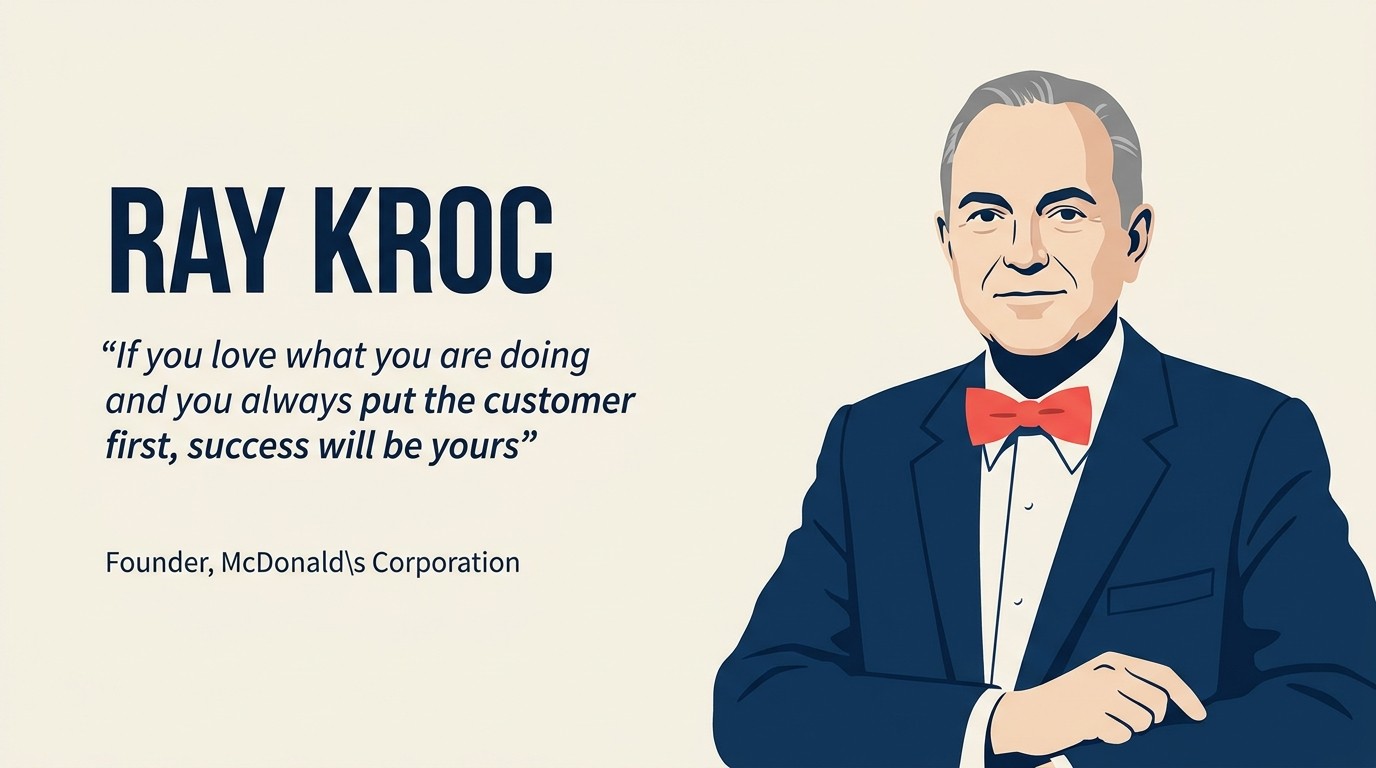
"Si trabajas solo por dinero, nunca lo lograrás. Pero si amas lo que haces y siempre pones al cliente primero, el éxito será tuyo".
Kroc dijo esto, y ha sido repetido lo suficientemente que suena pulido y motivacional. Lo más revelador es cómo él realmente operó día a día: pagaba a proveedores deliberadamente por debajo de tasas de mercado para presionarlos, cambió temporalmente de Coca-Cola a Pepsi brevemente para extraer mejores términos negociados (luego cambió de nuevo), y trató la promesa verbal de palabra de los hermanos McDonald como opcional después de cerrar el trato. Amaba el sistema de verdad. Fue menos sentimental acerca de las personas operando dentro de él.
Su cita más honesta: "La suerte es un dividendo del sudor. Cuanto más sudas, más suerte obtienes". Kroc tenía 52 años cuando encontró McDonald's. Había pasado diecisiete años en ventas, lo que significaba diecisiete años de rechazos, trimestres lentos y acuerdos que simplemente no cerraban. Ese trasfondo lo hizo metodológico de una manera que los fundadores más jóvenes a menudo no son, porque había visto suficiente fracaso para saber que volumen implacable y consistencia vencen inspiración o intuición.
La lección que no se cita: Kroc era un adicto al trabajo que pasó por dos matrimonios difíciles antes de encontrar estabilidad en su tercero. Bebía fuertemente durante gran parte de su carrera profesional. La misma obsesividad que hizo que McDonald's sea lo que es también lo hizo una persona profundamente difícil de estar cerca de. Los perfiles de liderazgo corporativos tienden a saltarse esta parte completamente. No deberían. Las cualidades que impulsaron su éxito profesional y ambición fueron precisamente las mismas que crearon ruina y daño personal. Eso no es inusual — pero merece ser nombrado honestamente y sin romanticismo.
Dónde Este Estilo Se Quiebra
El modelo de sistemas primero de Kroc tiene un techo real cuando el entorno externo cambia. Cuando el sistema es correcto, escala hermosamente. Cuando es incorrecto o anticuado, es incorrecto en 30,000 ubicaciones simultáneamente causando daño de marca distribuido. Howard Schultz se enfrentó a una versión de esto en Starbucks — la expansión minorista sistematizada de Schultz golpeó un muro duro cuando la experiencia de marca divergió del sistema, forzando una retracción dolorosa que espeja lo que McDonald's enfrentó en los años 2000. McDonald's pasó décadas defendiendo sus estándares nutricionales porque la misma consistencia operacional que protegía la calidad en 1965 se convirtió en una responsabilidad de imagen en 2005 cuando los consumidores comenzaron a preocuparse profundamente por los ingredientes.
Su disciplina de proveedor y franquiciado también creó fragilidad organizacional. Las relaciones construidas puramente en umbrales de desempeño mensurables no generan el tipo de lealtad relacional que te ayuda a navegar crisis genuinas. Cuando McDonald's necesitó moverse rápidamente en cosas como pedidos digitales y entrega en los años 2010, la estructura de franquicia — diseñada para uniformidad, no agilidad — la ralentizó comparado con competidores más descentralizados.
Y la lección de los hermanos McDonald es una real que perdura: si tu crecimiento depende de socios, los términos que estableces al principio te siguen durante décadas. La disposición de Kroc a romper el espíritu de ese trato original le permitió obtener lo que necesitaba. Pero eso también se convirtió en la historia que las personas cuentan cuando quieren explicar por qué nunca deberías confiar en un socio corporativo sin un contrato escrito comprensivo.
Aprende Más
- Modelos de Negocios de Franquicia: Cómo Construir para la Replicación
- Cómo Construir Procedimientos Operacionales Estándar Que Realmente Se Sigan
- Negociación de Cadena de Suministro: Lecciones de Operadores Que Construyeron a Escala

Co-Founder, Rework.com
On this page
- Desglose del Estilo de Liderazgo
- Rasgos de Liderazgo Clave
- La Doctrina QSC&V
- Las 3 Decisiones Que Definieron a Ray Kroc como Líder
- 1. Comprando a los Hermanos McDonald en 1961
- 2. Creando Hamburger University (1961)
- 3. El Juego de Bienes Raíces de Franchise Realty Corp
- Lo Que Ray Kroc Haría en Tu Rol
- Cómo Rework Operacionaliza el Modelo Kroc
- Citas Notables y Lecciones Más Allá de la Sala de Juntas
- Dónde Este Estilo Se Quiebra
- Aprende Más