More in
AI Jobs und Kompetenzen: Aktuelle Meldungen
Der Finanzsektor baut weiter Stellen ab, waehrend die Gesamtwirtschaft einstellt: Die White-Collar-Warnung
Juni 6, 2026
AI-Kompetenzen sind gerade die schwierigsten Einstellungen weltweit. Durch reine Personalbeschaffung kommen Sie nicht heraus
Juni 6, 2026
Vernichtet AI wirklich Jobs? Die Einstellungszahlen vom Mai sagen: Nicht so schnell
Juni 5, 2026
Sie haben Ihre AI-Agenten in das Organigramm aufgenommen. Die Verantwortlichkeit ist still verschwunden
Juni 5, 2026
Alle geben AI die Schuld fuer die Gen-Z-Jobkrise. Die Federal Reserve zeigt auf Remote Work
Juni 5, 2026
Der Nettorückgang von AI-Jobs sank auf 11.000 pro Monat. Das Baugewerbe verdeckt die Wahrheit
Juni 4, 2026
AI wird fuer einen Rekordanteil von 40 Prozent der US-Entlassungen im Mai verantwortlich gemacht, den dritten Monat in Folge
Juni 4, 2026
Vier Zukunftsszenarien fuer Jobs bis 2030: Der Halbzeit-Check fuer CEOs in der Mitte 2026
Juni 3, 2026
Koennen bundesstaatliche AI-Ausbildungsprogramme Ihre Kompetenzluecke guenstiger schliessen als Neueinstellungen?
Juni 3, 2026
AI-Engineer-Gehaelter teilen sich in zwei Maerkte auf. Nur das obere Segment ist eine Blase
Juni 3, 2026 · Currently reading
AI-Engineer-Gehälter: Zwei Märkte, eine Blase. Nur das oberste Segment ist überhitzt
Turn this article into takeaways for your work.


Each assistant summarizes the article only for you and suggests best practices for your work.
Wer die Schlagzeilen liest, könnte meinen, dass die Einstellung eines Machine-Learning-Engineers ein neunstelliges Budget erfordert. Das ist ein Irrtum.
Die 1-Milliarden-Dollar-Vergütungspakete sind real. Ebenso die Berichte über 600.000 US-Dollar Gesamtvergütung für Positionen, die identisch mit dem klingen, was Ihr Unternehmen zu besetzen versucht. Aber diese Zahlen beschreiben einen Markt, in dem Sie mit an Sicherheit grenzender Wahrscheinlichkeit nicht konkurrieren. Und diesen Markt mit Ihrem tatsächlichen Wettbewerbsumfeld zu verwechseln, gehört zu den kostspieligsten Fehlern, die ein CEO 2026 begehen kann.
Laut Ravios Vergütungsdaten 2026 beträgt die tatsächlich gemessene Lohnprämie für AI- und ML-Positionen auf der Ebene erfahrener Einzelbeiträger (Individual Contributor) etwa 12 Prozent gegenüber vergleichbaren Nicht-AI-Positionen. Nicht 56 Prozent. Nicht das Zehnfache. Zwölf Prozent. Auf der Führungsebene schrumpft diese Prämie auf etwa 3 Prozent. Ravios Warnung ist klar: Das größte Risiko für die meisten Unternehmen besteht nicht im Unterbezahlen von AI-Talenten, sondern im Abschluss mehrjähriger Pakete für Kenntnisse, die sich schnell zur Standardkompetenz entwickeln könnten.
Zwei Märkte. Eine Schlagzeile. Die meisten CEOs lesen die falsche.
Die Spaltung: Was die Daten tatsächlich zeigen
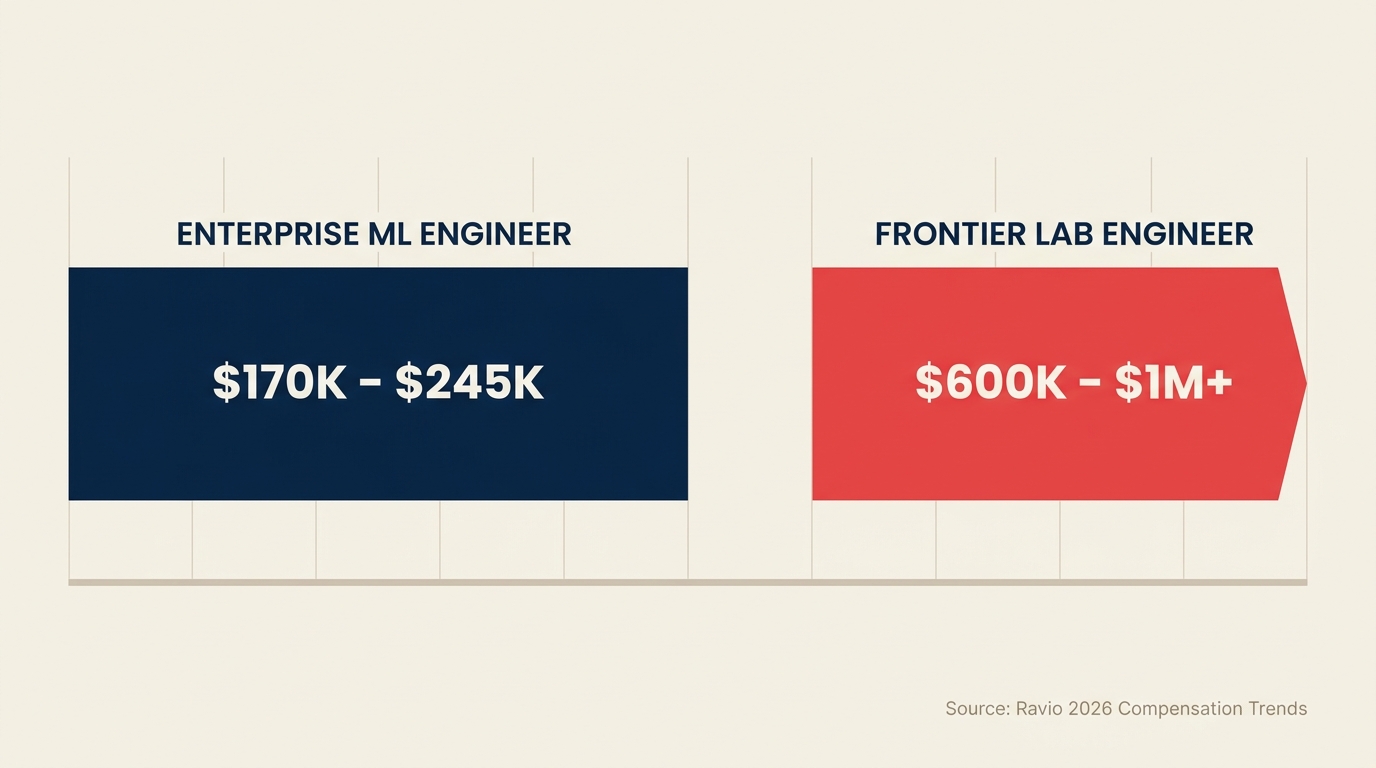
Die Spaltung ist real, aber sie ist scharf. Es gibt nicht drei oder vier Vergütungsbänder. Es gibt zwei, und die Lücke zwischen ihnen ist enorm.
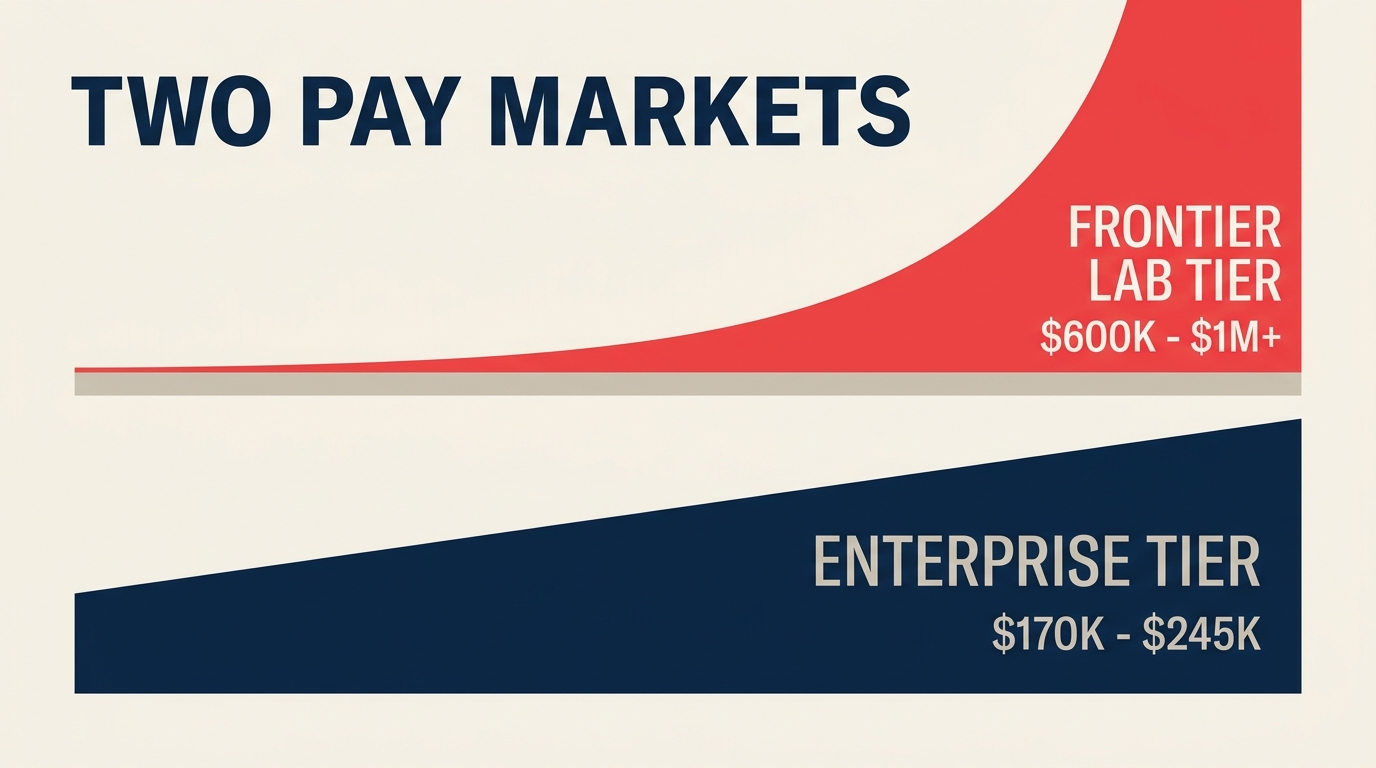
Das Enterprise-Segment umfasst ML-Engineers und AI-Spezialisten, die bei Unternehmen des Mainstreams arbeiten, darunter skalierte Startups, Fortune-1000-Unternehmen und mittelgroße Technologieunternehmen. Die Gesamtvergütung in diesem Segment liegt bei etwa 170.000 bis 245.000 US-Dollar. Das sind Personen, die ML-Produktivsysteme entwickeln und einsetzen, Modelle feinabstimmen und Inferenz-Pipelines betreiben. Echte Arbeit, echte Angebotsengpässe, echte Gehälter, und nichts, was einer Blase ähnelt.
Das Frontier-Segment ist etwas anderes. Eine kleine Gruppe von Forschern und Engineers bei einer Handvoll führender Labs erzielt 600.000 bis über 1.000.000 US-Dollar Gesamtvergütung für Positionen mit ähnlichen Titeln. Eine kleine Zahl von Spitzenkräften hat Berichten zufolge Pakete von über einer Milliarde US-Dollar über mehrere Jahre erhalten. Das sind Personen, die die Leistungsgrenze der AI verschieben: Sie trainieren neuartige Architekturen vor, entwickeln Alignment-Techniken oder leiten Forschungsprogramme mit direkten kommerziellen Implikationen. Das Angebot an Personen, die diese Arbeit leisten können, ist wirklich minimal, weshalb die Preise wirklich extrem sind.
Zentrale Fakten
- Ravios Vergütungsdaten 2026 zeigen eine Lohnprämie von 12 Prozent für AI/ML Individual Contributors und nur rund 3 Prozent auf Führungsebene gegenüber vergleichbaren Nicht-AI-Positionen. (Ravio 2026 Compensation Trends)
- Enterprise-ML-Engineers verdienen rund 170.000 bis 245.000 US-Dollar Gesamtvergütung; Frontier-Lab-Positionen bei Top-Labs zahlen 600.000 bis über 1.000.000 US-Dollar für ähnliche Titel. (Ravio 2026 Compensation Trends; Pin AI Compensation Benchmarks 2026)
- Die globale Umfrage von ManpowerGroup 2026 unter mehr als 39.000 Arbeitgebern in 41 Ländern ergab, dass AI-Kenntnisse nun weltweit die am schwierigsten zu findende Qualifikation sind und damit zum ersten Mal Engineering, IT und Fachhandwerk übertrafen.
Die Frage nach der Blase ist eigentlich eine Frage danach, welches Segment gemeint ist. Das Frontier-Segment zeigt klassische Blasenmerkmale: Preise ohne Bezug zur kommerziellen Rendite, Angebot getrieben durch Prestigewettbewerb zwischen wenigen gut kapitalisierten Labs und Vergütungsstrukturen, die möglicherweise keinen einzigen Finanzierungszyklus überstehen. Das Enterprise-Segment zeigt das Gegenteil: anhaltende Nachfrage, ein Angebot, das mit der Einführung nicht Schritt gehalten hat, und Gehälter, die hoch wirken, bis man einrechnet, was eine unbesetzte Stelle an verzögerten Projekten und Wettbewerbsnachteilen tatsächlich kostet.
Eine Korrektur an der Spitze erscheint plausibel. Eine Korrektur im Enterprise-Segment nicht.
Die Argumente auf beiden Seiten
Das Blasen-Argument hat echte Belege. Entlassungen im Technologiesektor erreichten in Q1 2026 weltweit rund 78.557 Stellen, wobei laut den im Pin AI Compensation Benchmarks-Bericht zitierten Daten knapp die Hälfte auf AI- und Automatisierungsverdrängung zurückgeführt wurde. Wenn AI-Systeme Positionen in diesem Tempo eliminieren, lautet das Argument, preisen die Menschen, die diese Systeme entwickeln, sich gegen eine Belegschaft an, die in wenigen Jahren nicht mehr existieren wird.
Aber die Gegenbelege lassen sich schwerer abtun. ManpowerGroup befragte mehr als 39.000 Arbeitgeber in 41 Ländern und stellte fest, dass AI-Kenntnisse weltweit zur am schwierigsten zu besetzenden Qualifikation geworden sind und damit in der Geschichte dieser Umfrage erstmals Engineering, IT und Fachhandwerk übertreffen. Das ist kein Blasensignal. Das ist ein Angebotsengpass.
Die Auflösung liegt in der Spaltung. Frontier-Lab-Vergütung wird von einer Handvoll gut kapitalisierter Labs hochgeboten, die um einige Hundert Menschen konkurrieren. Enterprise-Segment-Vergütung wird von Zehntausenden von Unternehmen angetrieben, die um einen weitaus größeren, aber immer noch unzureichenden Pool von Engineers konkurrieren, die ML-Produktivsysteme entwickeln können. Das sind unterschiedliche Märkte mit unterschiedlichen Dynamiken, und sie entwickeln sich in verschiedene Richtungen.
Für die meisten CEOs ist der relevante Datenpunkt die von Ravio gemessene Enterprise-Prämie von 12 Prozent, nicht die Frontier-Lab-Pakete, die Schlagzeilen machen. Ihr Wettbewerb um Talente findet mit anderen Unternehmen statt, nicht mit OpenAI.
Der Zwei-Märkte-Test
Beantworten Sie vor jeder AI-Einstellungs- oder Vergütungsentscheidung drei Fragen, um festzustellen, in welchem Markt Sie sich befinden.
Frage 1: Was entwickeln Sie tatsächlich?
Wenn die Arbeit darin besteht, bestehende Modelle einzusetzen, feinabzustimmen oder in Produktivsysteme zu integrieren, befinden Sie sich im Enterprise-Segment. Wenn Sie neuartige Architekturen von Grund auf vortrainieren oder originäre Forschung betreiben, die AI-Fähigkeiten verschieben könnte, fischen Sie möglicherweise in Frontier-Gewässern. Die meisten Unternehmen, auch die meisten gut finanzierten AI-Startups, befinden sich im Enterprise-Segment, auch wenn ihr Pitch-Deck etwas anderes andeutet.
Frage 2: An wen verlieren Sie Kandidaten?
Ihre tatsächlichen Konkurrenten um Talente sind die Unternehmen, zu denen Ihre verlorenen Kandidaten tatsächlich gehen. Wenn sie zu Google DeepMind oder Anthropic-Forschungslabs wechseln, gilt die Frontier-Prämie für einige Ihrer Positionen. Wenn sie zu anderen Enterprise-Technologieunternehmen gehen, orientieren Sie sich an den falschen Zahlen, wenn Sie Frontier-Pakete als Maßstab nehmen.
Frage 3: Was erfordert die Position tatsächlich?
ML-Engineering erfordert bei den meisten Unternehmen solide Softwareentwicklungskenntnisse, praktische Erfahrung mit der Einführung und Überwachung von Modellen sowie Vertrautheit mit den wichtigsten Frameworks. Das ist eine Enterprise-Segment-Position. Positionen, die Frontier-Vergütung rechtfertigen, sind eng definiert: Entwurf neuartiger Architekturen, Alignment-Forschung und eine Handvoll hochspezialisierter Engineering-Positionen an der Schnittstelle von Forschung und Produktion. Seien Sie ehrlich darüber, was Sie tatsächlich benötigen.
Die meisten Unternehmen, die zu viel zahlen, scheitern an der dritten Frage. Sie verfassen eine Stellenbeschreibung, die darauf ausgelegt ist, einen Frontier-Forscher anzulocken, und fragen sich dann, warum sie Frontier-Forscher-Sätze für eine Position zahlen, die einen kompetenten ML-Engineer gebraucht hätte.
Die Kommoditisierungsfalle
Ravios Warnung verdient mehr Aufmerksamkeit, als sie bekommt. Die Enterprise-Prämie von 12 Prozent besteht derzeit teilweise, weil sich das Tooling und die Infrastruktur für ML-Engineering noch entwickeln. Aber die Tools werden dramatisch besser und deutlich günstiger. Die Arbeit, die vor zwei Jahren einen erfahrenen ML-Engineer erforderte, erledigt zunehmend ein kompetenter Softwareentwickler mit fundierter KI-Kompetenz.
Diese Entwicklung ist relevant für mehrjährige Vergütungszusagen. Wer jemanden auf Basis einer Knappheit, die 2024 bestand, in ein hochprämiertes Paket einschließt, zahlt 2027 möglicherweise überdurchschnittliche Sätze für Kenntnisse, die verbreiteter geworden sind. Das ist kein Grund, zu wenig zu zahlen. Aber es ist ein Grund, Vergütungsstrukturen mit kürzeren Neuankopplungszenstern aufzubauen und in die Weiterqualifizierung bestehender Engineering-Talente neben externen Einstellungen zu investieren.
Die Kompetenzlücke bei der Weiterqualifizierungsunterstützung im Bereich AI ist real und dokumentiert. Unternehmen, die sie intern schließen, reduzieren ihr Exposure gegenüber der Kommoditisierungsfalle, indem sie den Pool der Personen vergrößern, die die Arbeit leisten können.
Aufbauen, Einstellen oder Weiterqualifizieren: Die CEO-Entscheidung
Die AI-Talentfrage ist selten eine einzige Entscheidung. Für die meisten Unternehmen spielt sie sich gleichzeitig auf drei Ebenen ab.
Extern einstellen für Positionen, bei denen die Kompetenzlücke zu groß ist, um sie durch Ausbildung zu schließen, und der Projektzeitplan nicht warten kann. Hier gelten die Enterprise-Segment-Vergütungsbenchmarks. Zahlen Sie in diesem Segment wettbewerbsfähig. Orientieren Sie sich nicht an Frontier-Paketen.
Intern weiterqualifizieren für das große Mittelsegment, in dem bestehende Engineers mit strukturierter Unterstützung ML-Engineering-Kompetenzen entwickeln können. Das ist günstiger als externe Einstellungen, erhält institutionelles Wissen und reduziert das Kommoditisierungsrisiko. Die Daten zur KI-Kompetenz-Lohnprämie zeigen, dass selbst bescheidene AI-Kompetenz mittlerweile vergütet wird, was bedeutet, dass sich die Investition in Weiterqualifizierung auch in der Mitarbeiterbindung niederschlägt.
Mit AI-Tools aufbauen für Anwendungsfälle, in denen Sie überhaupt keinen dedizierten ML-Engineer benötigen. Das 2026 verfügbare Tooling ermöglicht es, dass Produktentwickler, Datenanalysten und Operations-Teams substantielle KI-gestützte Workflows ohne spezialisierte ML-Expertise aufbauen und einsetzen. Das ist die am schnellsten wachsende Kategorie und jene, die bei der AI-Personalplanung am stärksten unterschätzt wird.
Die Branchen, die bei der AI-Einstellung am schnellsten voranschreiten, sind nicht immer jene, die am meisten zahlen. Oft sind es jene, die die richtige Mischung aus diesen drei Hebeln gefunden haben, anstatt ausschließlich auf dem externen Einstellungsmarkt zu bieten.
Worauf bei einer Korrektur im Spitzensegment zu achten ist
Wenn das Frontier-Segment überhitzt ist, welche Signale kündigen eine Korrektur an? Beobachten Sie drei Dinge.
Das erste ist die Geschwindigkeit der Lab-Finanzierungen. Frontier-Vergütung wird durch Kapital aufrechterhalten. Wenn sich das Finanzierungsumfeld für Top-Labs verschlechtert, schrumpfen Vergütungspakete schnell, weil der Wettbewerbsdruck zwischen den Labs der primäre Treiber der extremen Zahlen ist. Berichtstattung über Finanzierungsrunden bei OpenAI, Anthropic und ihren nächsten Wettbewerbern sind Ihr führender Indikator.
Das zweite ist das Abflachen der Leistungsfortschritte. Wenn die Renditen des Pre-Training-Scalings stärker als erwartet sinken, schwächt sich die kommerzielle Rechtfertigung für Frontier-Forscher-Gehälter ab. Frontier-Vergütung ist teilweise eine Wette darauf, dass der nächste Durchbruch es wert ist, ihn zu sichern. Wenn Durchbrüche seltener werden, wird diese Wette schwerer aufrechtzuerhalten.
Das dritte ist die Qualität von Open-Weight-Modellen. Jedes Mal, wenn ein Open-Weight-Modell die Lücke zu geschlossenen Frontier-Modellen verringert, schwindet der Einfluss, den Frontier-Labs gegenüber Unternehmen haben. Leistungsfähigere Open-Weight-Modelle bedeuten, dass mehr Enterprise-Teams anspruchsvolle Arbeit leisten können, ohne Talente aus Frontier-Labs zu gewinnen. Das verringert den indirekten Druck, den Frontier-Lab-Vergütung auf die Enterprise-Segment-Vergütung ausübt.
Keiner dieser Indikatoren hat bisher ausgelöst. Aber die Richtung der Entwicklung ist klar genug, dass jeder CEO, der mehrjährige AI-Personalplanung betreibt, sie im Blick behalten sollte. Die Lohnprämiendaten von 2026 zeigen, wie schnell sich diese Zahlen nach oben bewegt haben. Sie können sich auch in die andere Richtung bewegen.
Was in diesem Quartal zu tun ist
Drei Maßnahmen, die keine weiteren Daten erfordern.
Wenden Sie den Zwei-Märkte-Test auf jede offene AI-Position an. Überprüfen Sie Ihre aktuellen Stellenbeschreibungen und Vergütungsziele anhand der drei obigen Fragen. Wenn Sie Frontier-Segment-Vergütung für Enterprise-Segment-Arbeit anbieten, korrigieren Sie das jetzt. Wenn Sie unter Enterprise-Segment-Vergütung für tatsächlich knappe Kenntnisse bieten, werden Sie weiterhin Kandidaten verlieren.
Prüfen Sie Ihre mehrjährigen AI-Vergütungszusagen. Jedes Gesamtvergütungspaket mit garantiertem Eigenkapital oder Boni, das über 2028 hinausgeht, sollte anhand des Kommoditisierungszeitplans überprüft werden. Das bedeutet nicht, in unredlicher Absicht nachzuverhandeln. Es bedeutet sicherzustellen, dass Ihre nächste Runde von Angeboten angemessene Neuankopplungsmechanismen enthält.
Bauen Sie einen parallelen Weiterqualifizierungstrack auf. Externe AI-Einstellungen sollten nicht Ihre einzige Strategie sein. Wählen Sie ein oder zwei Bereiche, in denen interne Weiterqualifizierung in einem Sechs-Monats-Zeitrahmen realistisch ist, und starten Sie ein strukturiertes Programm. Ziel ist es, Ihre Abhängigkeit vom externen Markt für Positionen zu reduzieren, in denen Sie die Kompetenz intern entwickeln können. Die Unterstützungslücke bei der AI-Weiterqualifizierung ist genau jener Bereich, in dem die meisten Unternehmen zu wenig investieren.
Die Spaltung ist eine echte strukturelle Veränderung in der Preisgestaltung von AI-Talenten. Wer sie klar versteht, kann effektiv in dem Segment konkurrieren, das tatsächlich auf das eigene Unternehmen zutrifft: ohne Panikausgaben in einem Markt, in dem man nie mitgespielt hat, und ohne einzufrieren, weil die Schlagzeilen untragbar erscheinen.
Die meisten Schlagzeilen beschreiben einen Markt für etwa tausend Menschen weltweit. Ihre Einstellungen finden im anderen statt.
Häufig gestellte Fragen
Ist AI-Talent 2026 eine Blase?
Das hängt davon ab, welches Segment gemeint ist. Das Frontier-Lab-Segment, wo eine kleine Gruppe von Spitzenforschern 600.000 bis über 1.000.000 US-Dollar Gesamtvergütung erzielt, zeigt Blasenmerkmale: Preise, die durch den Wettbewerb zwischen wenigen gut finanzierten Labs getrieben werden, nicht durch die kommerzielle Rendite der Einstellung. Das Enterprise-Segment, wo die meisten Unternehmen tatsächlich rekrutieren, ist angebotseingeschränkt und zeigt keine Blasendynamik. Die ManpowerGroup-Umfrage 2026 unter mehr als 39.000 Arbeitgebern ergab, dass AI-Kenntnisse weltweit am schwersten einzustellen sind, was das Gegenteil eines Blasensignals ist. Eine Korrektur an der Spitze erscheint plausibel. Eine Korrektur im Enterprise-Segment wird durch die aktuellen Daten nicht gestützt.
Wie viel verdienen AI-Engineers 2026 tatsächlich?
Das hängt stark vom Positionstyp ab. Enterprise-ML-Engineers bei Mainstream-Unternehmen, darunter große Startups und Fortune-1000-Firmen, verdienen rund 170.000 bis 245.000 US-Dollar Gesamtvergütung. Das ist der Bereich, in dem die meisten Einstellungen stattfinden. Bei Top-Forschungslabs reicht die Gesamtvergütung für Frontier-Forscher von 600.000 bis über 1.000.000 US-Dollar, wobei eine kleine Anzahl von Spitzenpaketen Berichten zufolge über mehrere Jahre hinweg eine Milliarde US-Dollar übersteigt. Ravios Daten 2026 messen die tatsächliche Enterprise-Prämie bei etwa 12 Prozent gegenüber vergleichbaren Nicht-AI-Positionen auf Individual-Contributor-Ebene, und nur 3 Prozent auf Führungsebene.
Zahlen wir zu viel für AI-Engineers?
Einige Unternehmen tun das, aber nicht weil AI-Talent generell überbewertet ist. Überzahlung tritt auf, wenn ein Unternehmen Frontier-Segment-Pakete als Maßstab für Positionen nimmt, die eigentlich Enterprise-Segment-Arbeit sind, oder wenn Stellenbeschreibungen verfasst werden, um ein Niveau an Forschern anzuziehen, das die Position nicht erfordert. Das von Ravio benannte Kommoditisierungsrisiko ist real: AI-Tooling entwickelt sich schnell genug, dass Kenntnisse, die 2024 eine Prämie erzielten, bis 2027 verbreiteter sein könnten. Die praktische Lösung besteht darin, die Vergütung an die tatsächlich erforderliche Arbeit anzupassen, kürzere Neuankopplungszeiträume bei mehrjährigen Paketen zu verwenden und intern Weiterqualifizierung neben externen Einstellungen aufzubauen, um die Abhängigkeit von einem teuren externen Markt zu reduzieren.
Weiterführende Inhalte

Co-Founder, Rework.com
On this page
- Die Spaltung: Was die Daten tatsächlich zeigen
- Die Argumente auf beiden Seiten
- Der Zwei-Märkte-Test
- Die Kommoditisierungsfalle
- Aufbauen, Einstellen oder Weiterqualifizieren: Die CEO-Entscheidung
- Worauf bei einer Korrektur im Spitzensegment zu achten ist
- Was in diesem Quartal zu tun ist
- Häufig gestellte Fragen
- Weiterführende Inhalte