More in
Notícias sobre Empregos e Habilidades em IA
O Setor Financeiro Continua Cortando Empregos Enquanto a Economia Contrata: O Alerta para os Colarinhos-Brancos
jun 6, 2026
Habilidades em IA Se Tornaram a Contratação Mais Difícil do Mundo. Você Não Vai Sair Disso Apenas Recrutando
jun 6, 2026
A IA Está Realmente Eliminando Empregos? Os Dados de Contratação de Maio Dizem Que Não Tão Rápido
jun 5, 2026
Você Colocou Seus AI Agents no Organograma. A Responsabilidade Silenciosamente Desapareceu
jun 5, 2026
Todos Culpam a IA pela Crise de Emprego da Geração Z. O Fed Aponta para o Trabalho Remoto
jun 5, 2026
O Impacto Líquido da IA nos Empregos Caiu para 11.000 por Mês. A Construção Civil Está Mascarando a Verdade
jun 4, 2026
IA Apontada como Causa de 40% das Demissões nos EUA em Maio, Pelo Terceiro Mês Consecutivo
jun 4, 2026
Quatro Cenários para os Empregos até 2030: O Ponto de Verificação de Meados de 2026 para CEOs
jun 3, 2026
Os Aprendizados Federais em IA Podem Resolver Sua Lacuna de Competências por um Custo Menor do Que Contratar?
jun 3, 2026
A Remuneração de AI Engineers Se Dividiu em Dois Mercados. Apenas o Topo É uma Bolha
jun 3, 2026
67% dos Líderes de HR Não Sabem o que a IA Pode Fazer de Verdade. Os Dados do SHRM de 2026 Mostram que o Principal Obstáculo do CHRO Não É o Orçamento
Turn this article into takeaways for your work.


Each assistant summarizes the article only for you and suggests best practices for your work.
O argumento do orçamento acabou. O argumento da conformidade também acabou. De acordo com o relatório State of AI in HR 2026 da Society for Human Resource Management (SHRM), o principal motivo pelo qual HR ainda não adotou a IA é que os líderes da área não sabem o que ela pode fazer.
Esse é um problema mais difícil de resolver do que uma linha no orçamento.
O que os Dados do SHRM de 2026 Realmente Dizem
O SHRM entrevistou 1.908 profissionais de HR em dezembro de 2025. Os resultados chegaram com uma clareza incomum para um relatório de pesquisa que cobre um tema tão ruidoso quanto inteligência artificial e gestão de pessoas.
Fatos-Chave
- 92% dos CHROs esperam que a IA seja ainda mais integrada à força de trabalho neste ano (SHRM, 2026).
- 67% dos líderes de HR afirmam que "não saber o que a IA pode fazer" é o principal motivo para não terem adotado a IA em HR (SHRM, 2026).
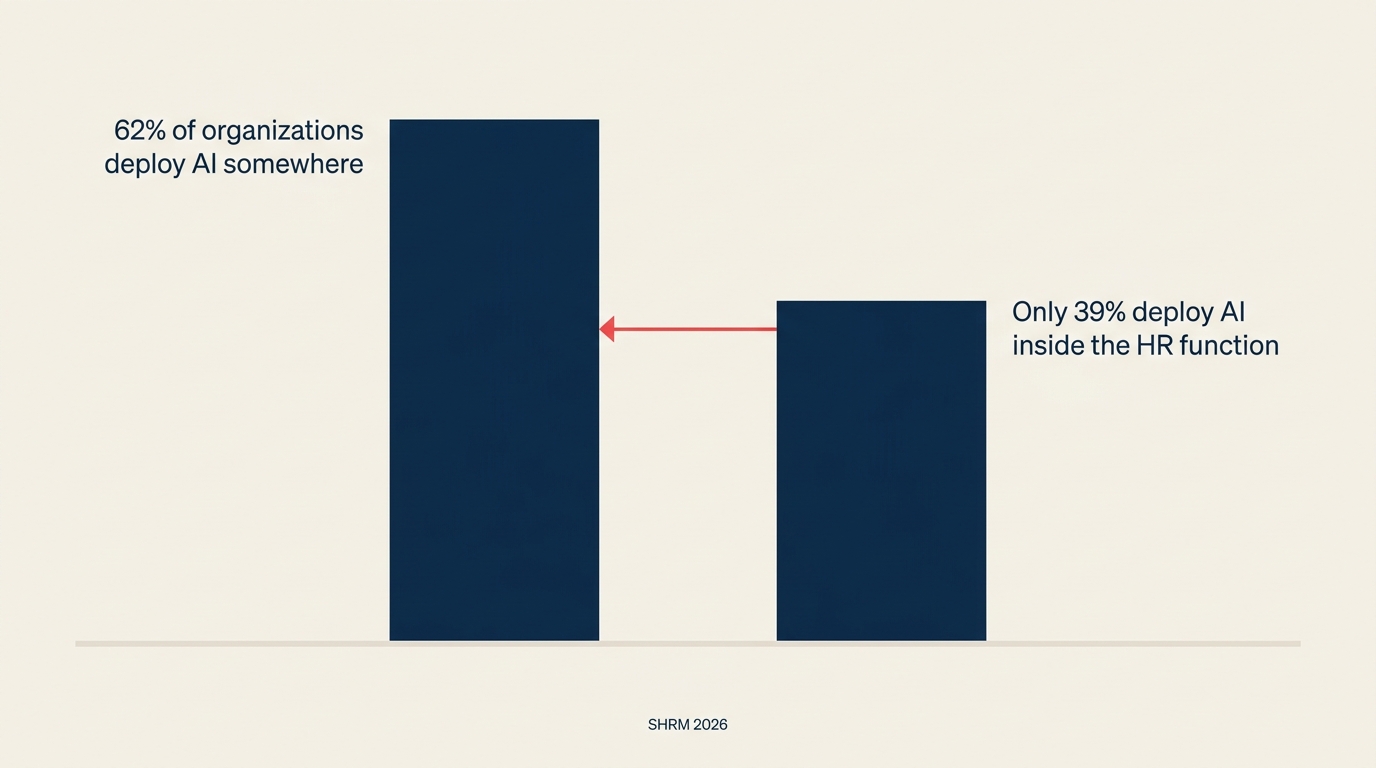
- 62% das organizações usam IA em alguma área, mas apenas 39% a utilizam dentro do próprio HR (SHRM, 2026).
Noventa e dois por cento dos chief human resources officers (CHROs) esperam que a IA seja ainda mais integrada à força de trabalho neste ano. Oitenta e sete por cento preveem maior adoção de IA especificamente nos processos de HR, ante 83% em 2025. O lado das expectativas é praticamente universal.
O lado da adoção conta outra história. Sessenta e dois por cento das organizações estão implementando IA em alguma área das operações. Mas apenas 39% a implantaram dentro da função de HR. Essa diferença entre o uso organizacional amplo de IA e o uso específico em HR aponta para algo estrutural, não situacional.
E os dados do SHRM nomeiam isso diretamente. Quando os líderes de HR foram perguntados por que não adotaram IA em HR, 67% citaram um único motivo: não sabemos o que ela pode fazer na prática. Não o orçamento. Não a privacidade de dados. Não a falta de apoio executivo. A conscientização é o principal obstáculo.
Para referência, o recrutamento é o principal caso de uso de IA em HR atualmente, ativo em apenas 27% das organizações. Portanto, a função que processa, avalia e desenvolve talentos em escala opera, em grande medida, sem a tecnologia que lhe foi prometida há dois anos como aquela que vai transformar tudo, e o motivo é que os responsáveis por essa função ainda não conseguem descrever o que estariam adotando.
Por que Isso Importa Mais do que a Lacuna de Prontidão da Mercer
Se você acompanha o ciclo de dados de CHROs de 2026, já viu os números da Mercer mostrando que 98% dos executivos reconhecem a importância da IA, enquanto apenas 50% se sentem prontos para liderar nesse contexto. Os dados de cargos de crescimento mais rápido do LinkedIn mostram posições relacionadas à IA subindo mais rápido do que qualquer outra categoria. Os dados de contratação da iCIMS sinalizam um colapso nas oportunidades de nível inicial à medida que a IA absorve tarefas de início de carreira.
Todos esses dados compartilham uma premissa silenciosa: a de que os líderes de HR entendem o que a IA é e o que pode fazer num contexto de HR. A lacuna de prontidão da Mercer pressupõe que você sabe para o que não está pronto. Os dados de competências do LinkedIn pressupõem que HR consegue avaliar se as habilidades em IA de um candidato são genuínas. A história dos cargos de nível inicial da iCIMS pressupõe que HR está em posição de redesenhar o pipeline de talentos com intenção.
O achado do SHRM desfaz essa premissa para dois terços da profissão.
Pense no que significa conduzir um processo de RFP para uma plataforma de tecnologia de HR quando 67% da equipe de avaliação não consegue distinguir um recurso genuíno de IA de um rótulo de marketing. Os fornecedores sabem disso. Eles usam termos como "com tecnologia de IA", "correspondência inteligente" e "análise preditiva" nos materiais de produto sem especificar qual modelo está sendo executado, em quais dados foi treinado, como trata vieses ou o que realmente prevê. Se os compradores não conseguem questionar afirmações vagas, não há incentivo para oferecer precisão.
Esta é a consequência prática da lacuna de conscientização: os processos de aquisição selecionam pela confiança no marketing, não pela solidez técnica. E as organizações que vencem esses RFPs não estão necessariamente implantando uma IA melhor: estão implantando um posicionamento melhor.
A lacuna de prontidão da força de trabalho para IA explorada no contexto do CHRO de 2026 é relacionada, mas distinta. A prontidão da força de trabalho pergunta se os colaboradores conseguem trabalhar ao lado da IA. Os dados do SHRM fazem uma pergunta anterior: a liderança de HR consegue avaliar a IA ao lado da qual os colaboradores supostamente trabalharão? Não é possível desenhar um programa de prontidão em torno de um sistema que você não consegue nomear.
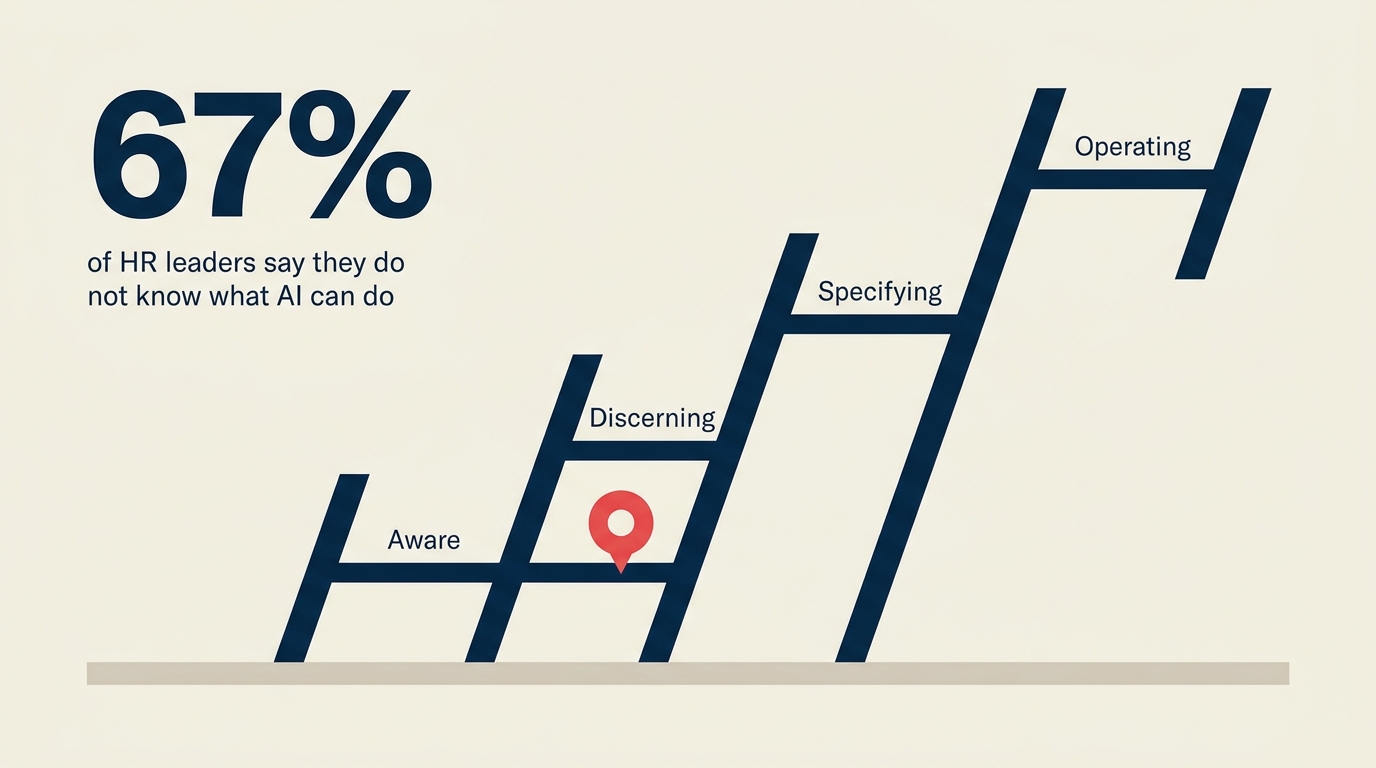
A Escada de Letramento em IA para HR
O reencadramento mais útil para os CHROs agora não é "como adotamos mais IA", mas sim: "onde nossa função está na curva de letramento, e como é subir um degrau?"
Aqui está um framework que mapeia o terreno:
A Escada de Letramento em IA para HR descreve quatro níveis de compreensão funcional de IA para líderes de HR:
Nível 1: Consciente. O líder de HR sabe que a IA existe nas ferramentas de HR. Viu demonstrações. Leu os relatórios de analistas. Consegue confirmar, numa reunião de conselho, que a IA está transformando a aquisição de talentos. Mas não consegue dizer quais tarefas específicas a IA está executando em nenhum produto específico, nem como verificar a afirmação de um fornecedor.
Nível 2: Criterioso. O líder de HR consegue distinguir um recurso genuíno de IA de um rótulo de marketing. Entende a diferença entre um chatbot baseado em regras e um modelo de linguagem de grande escala. Sabe que deve perguntar com quais dados o modelo foi treinado e o que "triagem com tecnologia de IA" realmente filtra.
Nível 3: Especificador. O líder de HR consegue redigir um requisito útil de IA em um RFP. Consegue articular qual resultado deseja, quais dados estão disponíveis para treinar ou ajustar o modelo, qual auditoria de viés espera e como é o sucesso nos primeiros 90 dias.
Nível 4: Operador. O líder de HR consegue conduzir um piloto e avaliar se funcionou. Consegue comparar métricas antes e depois da implantação, identificar variáveis de confusão e decidir se vai expandir, ajustar ou interromper.
Os dados do SHRM colocam a maioria dos líderes de HR entre o Nível 1 e o Nível 2. Eles sabem que a IA está chegando: os 92% de expectativa confirmam isso. Mas ainda não conseguem dizer se o recurso de IA de uma ferramenta específica é substantivo ou cosmético. Essa diferença de um degrau, de Consciente a Criterioso, vale mais para um CHRO em 2026 do que qualquer compra de ferramenta isolada.
Você pode comprar um ótimo produto e não obter nada dele se não conseguir especificar o que precisa ou avaliar o que recebeu. A Escada de Letramento em IA para HR não é apenas um diagnóstico: é um filtro de aquisição.
Para um contexto mais aprofundado sobre como o letramento em IA se conecta à capacidade de liderança estratégica, veja liderando a transformação de IA no nível organizacional e por que a maioria das transformações de IA fracassa.
O Problema de Governança Escondido nos Dados
Há uma segunda implicação que é fácil de perder. Os CHROs estão sendo cada vez mais solicitados a liderar a governança de IA: assumir frameworks de ética, auditorias de viés e avaliações de impacto na força de trabalho. Esse trabalho está sendo conduzido por profissionais que, segundo os dados do SHRM, em grande parte ainda não conseguem articular o que os sistemas que estão governando realmente fazem.
Isso não é uma crítica aos CHROs como indivíduos. É uma descrição de onde a profissão está num ciclo de mudanças muito acelerado. Mas tem consequências reais. Um framework de governança de IA construído sem letramento funcional em IA é um framework construído sobre suposições, não sobre mecânismos. Ele governa a ideia de IA, não a prática dela.
Os dados do LinkedIn 2026 sobre lacunas de qualificação adicional autônoma para engenheiros de IA e profissionais de HR sugerem que mesmo em funções com mais proximidade com IA do que HR, a infraestrutura de suporte para fechar lacunas de competências é precária. Para HR, que ainda está em grande parte no Nível 1 da escada de letramento, a lacuna é maior e o suporte é mais escasso.
Isso se conecta diretamente à questão da maturidade na execução de IA versus experimentação: organizações que experimentam sem uma classe compradora criteriosa em HR tendem a comprar de forma ampla e implantar de forma restrita, o que produz exatamente a diferença de 62%/39% que o SHRM está documentando.
O que Fazer Neste Trimestre
Os dados do SHRM são um diagnóstico, não uma sentença. Subir um degrau na escada de letramento é viável em um trimestre, se o trabalho for estruturado. Veja como isso fica na prática:
1. Conduza um sprint de descoberta de IA com 3 fornecedores. Convide três fornecedores de tecnologia de HR: um que você já usa, um que está avaliando e um que nunca ouviu falar. Peça a cada um que oriente sua equipe por exatamente um recurso de IA: o que ele faz, quais dados utiliza, como trata casos extremos e como mediriam seu desempenho. Não avalie o produto. Avalie a capacidade de sua equipe de fazer as perguntas certas. Documente as lacunas.
2. Reescreva um RFP ativo com uma especificação de IA. Pegue um RFP de tecnologia de HR atual ou próximo e adicione uma seção dedicada a requisitos de IA. Force a especificidade: qual tarefa a IA executa, quais dados a treinam, qual é o processo de auditoria de viés, como é o sucesso em 90 dias? O ato de escrevê-la é o exercício de letramento. Você aprenderá mais ao redigir a especificação do que em qualquer demonstração de fornecedor.
3. Realize um "show-and-tell" interno de IA. Peça a dois ou três gestores ou human resource business partners (HRBPs) que já usam ferramentas de IA, em qualquer função, que demonstrem o que estão fazendo durante 20 minutos cada. Transforme isso em uma reunião mensal recorrente, não um evento isolado. A conscientização se acumula. Quem sabe algo ensina quem não sabe.
4. Construa um dashboard básico de letramento. Acompanhe onde seus HRBPs estão na escada de letramento. Uma autoavaliação simples: você consegue nomear três casos de uso de IA em sua função? Consegue descrever um recurso de IA que usa nas ferramentas atuais? Participou de um piloto de IA? Isso dá uma linha de base. Com uma linha de base, você pode movê-la. Para um framework sobre como abordagens baseadas em competências se aplicam ao desenvolvimento interno de capacidades de HR, o princípio se transfere diretamente.
A lacuna de prontidão da liderança em IA é real em todas as funções, mas a versão do HR é particularmente urgente porque HR é simultaneamente o dono da governança e o adotante tardio. Fechar a lacuna de conscientização dentro da função de HR não é uma preparação opcional: é o pré-requisito para todo o resto.
FAQ
O que significa "letramento em IA" para um líder de HR em 2026?
Letramento em IA para um líder de HR não é sobre programação nem ciência de dados. Significa ser capaz de avaliar afirmações de fornecedores (você consegue distinguir um recurso genuíno de IA de um rótulo de marketing?), redigir um requisito de IA significativo em um RFP e julgar se um piloto produziu um resultado que vale a pena escalar. Os dados do SHRM de 2026 sugerem que a maioria dos líderes de HR está no Nível 1 desse espectro: conscientes de que a IA está chegando, mas ainda não capazes de distinguir substância de posicionamento.
Por que o orçamento não é o principal obstáculo à adoção de IA em HR?
A pesquisa do SHRM de 2026 com 1.908 profissionais de HR constatou que 67% apontaram "não sabemos o que a IA pode fazer na prática" como o principal motivo para não adotar IA em HR. Orçamento, conformidade e apoio executivo ficaram em posições mais baixas. Isso é notável porque restrições de orçamento se resolvem com um business case. Lacunas de conscientização exigem um tipo diferente de investimento: exposição deliberada, avaliação estruturada e construção interna de letramento que leva tempo mesmo quando o dinheiro está disponível.
Como um CHRO pode fechar a lacuna de conscientização sobre IA em um trimestre?
Quatro iniciativas: conduzir um sprint de descoberta com 3 fornecedores focado em aprender a fazer melhores perguntas (não em selecionar um produto); reescrever um RFP ativo para incluir requisitos específicos de IA; criar um "show-and-tell" interno mensal onde HRBPs que usam ferramentas de IA as demonstrem para os pares; e construir uma linha de base simples de letramento para a população de HRBPs. Essas iniciativas não exigem aprovação de orçamento nem um documento de estratégia de IA. Exigem compromisso de agenda. O framework dos 5 estágios de maturidade em IA mapeia como as organizações se apresentam em cada estágio, e saber onde HR está ajuda os CHROs a sequenciar o trabalho.
Saiba Mais