More in
Berita Sales Tech
Tim Sales Berbasis AI Tumbuh 2,6x Lebih Cepat. Gartner Menyatakan Pembeli Masih Menginginkan Rep Manusia
Jun 6, 2026
Aircall Mengakuisisi Piper AI untuk Mengubah Setiap Sales Call Menjadi Pipeline
Jun 6, 2026
Salesforce Baru Saja Memberi Pemasar AI Agent yang Membangun Sales Pipeline
Jun 6, 2026
Revenue Intelligence Menunjukkan Risikonya. Revenue Execution Bertindak Atasnya.
Jun 5, 2026
Meta Menempatkan AI Agent di WhatsApp yang Menutup Penjualan untuk Bisnis Mana Pun
Jun 4, 2026
VC Menggelontorkan Lebih dari $200M ke Startup AI Sales: Sinyal GTM Stack
Jun 4, 2026
Apakah AI SDR Sepadan di 2026? Data Menunjukkan Bangun Tim Hibrida
Jun 3, 2026 · Currently reading
GTM Engineering di 2026: Rekrutan Sales yang Menggantikan Tiga Peran Sekaligus
Jun 3, 2026
ZoomInfo Memasok Data Terverifikasi ke AI Sales Agent Anda: Pertimbangan Vendor Tunggal
Jun 3, 2026
Salesforce Summer '26 Menghadirkan Multi-Agent Orchestration pada 15 Juni. Inilah Audit Sales Ops Sebelum Agent Anda Mulai Melakukan Handoff
Jun 2, 2026
Bahasa Indonesia
Apakah AI SDR Sepadan di 2026? Data Menunjukkan Perlunya Tim Hybrid
Turn this article into takeaways for your work.


Each assistant summarizes the article only for you and suggests best practices for your work.
Tawarannya terdengar sederhana: ganti tenaga SDR Anda dengan agen AI otonom, pangkas biaya headcount, dan saksikan volume outbound melonjak. Namun pada pertengahan 2026, tawaran itu sudah menemui jalan buntu. Perusahaan yang masih menerimanya justru mengalami churn dalam hitungan bulan.
Menurut analisis UserGems terhadap pasar AI SDR saat ini, vendor yang berhasil menutup transaksi bukan lagi mereka yang menjanjikan penggantian penuh. Melainkan mereka yang membantu tim mengotomasi pekerjaan volume tinggi agar tenaga penjual manusia dapat fokus pada hal yang benar-benar menghasilkan konversi: percakapan setelah balasan pertama diterima.
Peringatan dari 11x.ai
Kisah peringatan yang paling banyak disebut saat ini adalah 11x.ai. Perusahaan ini berhasil mengumpulkan lebih dari 74 juta dolar dari Andreessen Horowitz dan Benchmark, memposisikan diri sebagai pemimpin AI SDR otonom. Namun pada awal 2026, laporan muncul bahwa perusahaan kehilangan sebagian besar basis pelanggannya dalam hitungan bulan setelah kontrak ditandatangani. Bagi perusahaan yang didukung modal ventura dengan tingkat kredibilitas setinggi itu, churn tersebut menjadi sinyal yang tidak bisa diabaikan pasar.
11x.ai bukan satu-satunya kasus. Di seluruh kategori AI SDR, tingkat churn tahunan berkisar antara 50 hingga 70 persen, menurut analisis sales-tech 2026. Lebih dari separuh pembeli meninggalkan alat-alat ini dalam tahun pertama. Angka itu saja sudah cukup untuk mengubah cara Anda memandang keputusan pembelian.
Key Facts
- Alat AI SDR mengalami churn tahunan 50-70%; sebagian besar pembeli berhenti dalam 12 bulan (analisis sales-tech 2026)
- Net headcount SDR B2B SaaS di AS turun sekitar 18% YoY pada 2026, tetapi peran junior turun 31% sementara peran senior "reply specialist" NAIK 14% (Prospeo, 2026)
- Biaya per prospek terkualifikasi turun sekitar 54% (dari $487 menjadi $224) ketika AI menangani sequencing, tetapi hanya dalam model hybrid (Digital Applied, 2026)
Apa yang Sebenarnya Ditunjukkan oleh Matematika Outbound
Ekonomi outbound yang dibantu AI memang terlihat menarik di atas kertas, dan angkanya nyata. Volume outbound per tenaga penjual naik sekitar 6,4 kali lipat dengan adanya alat AI. Biaya per prospek terkualifikasi turun sekitar 54 persen, dari sekitar $487 menjadi sekitar $224, menurut data penjualan outbound 2026 dari Digital Applied.
Namun tingkat balasan mentah turun 38 persen secara bersamaan. Dan tren jangka panjangnya lebih buruk: rata-rata tingkat balasan email dingin turun dari sekitar 8,5 persen pada 2019 menjadi sekitar 3,4 persen pada 2026. Sebagian besar penurunan ini disebabkan oleh banjirnya jangkauan berkualitas rendah yang dihasilkan AI, yang melatih para pembeli untuk mengabaikan email berurutan.
Jadi ya, alat AI SDR bisa memangkas biaya per peluang secara signifikan. Namun hal itu dicapai dengan memungkinkan volume lebih tinggi menggunakan lebih sedikit orang pada sequencing, bukan dengan menggantikan penilaian manusia yang dibutuhkan untuk menangani percakapan penjualan yang sesungguhnya.
Perusahaan yang menang adalah mereka yang memahami perbedaan itu.
Kerangka Kerja The Reply Line
Inilah kerangka kerja yang dijalankan tim penjualan berperforma terbaik di 2026: tarik sebuah garis di seluruh proses outbound Anda dan sebut itu Reply Line.
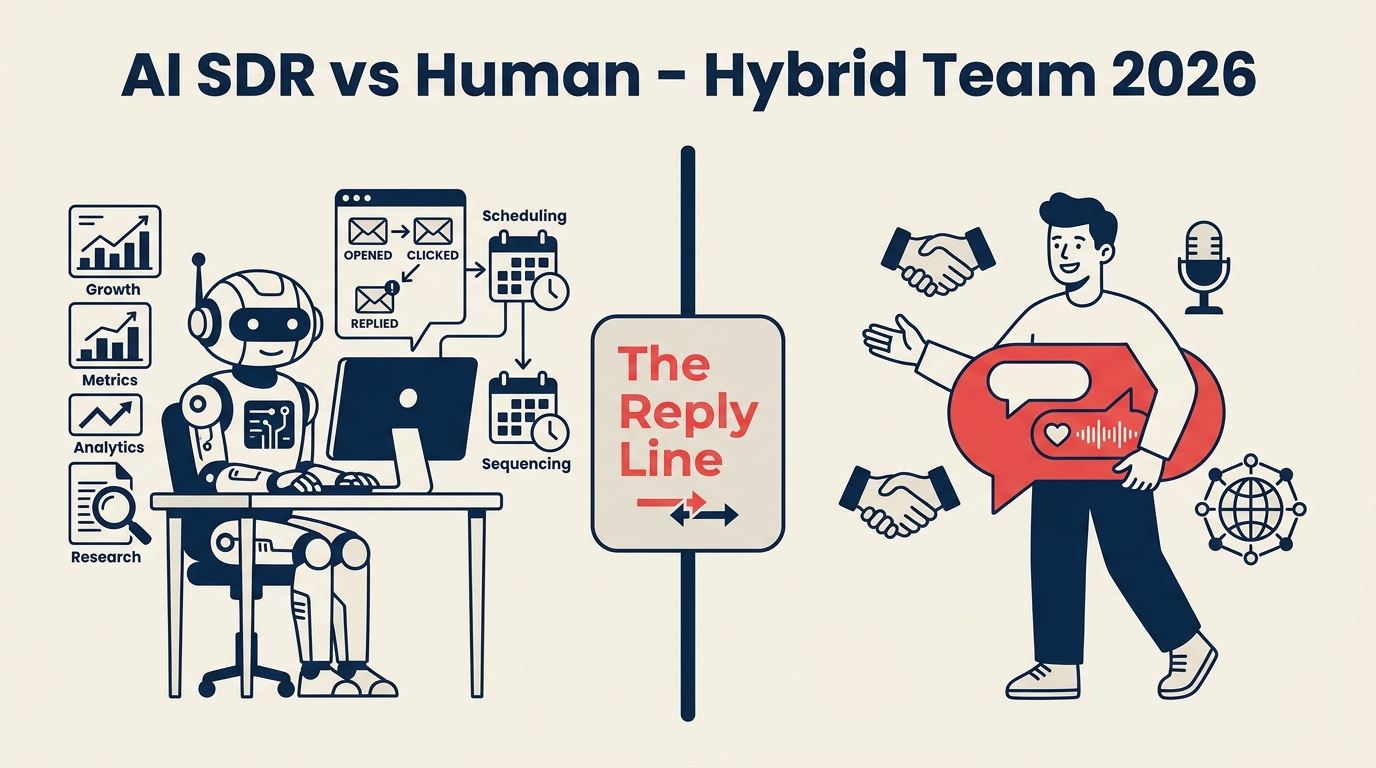
Semua yang ada sebelum Reply Line layak untuk diotomasi. Itu mencakup riset prospek, penilaian sinyal niat, pembuatan urutan penjangkauan keluar, optimasi waktu pengiriman, perutean ke tenaga penjual yang tepat, dan penjadwalan kalender. AI benar-benar unggul dalam semua ini. Ia lebih cepat, lebih konsisten, dan lebih murah untuk volume besar dibandingkan manusia.
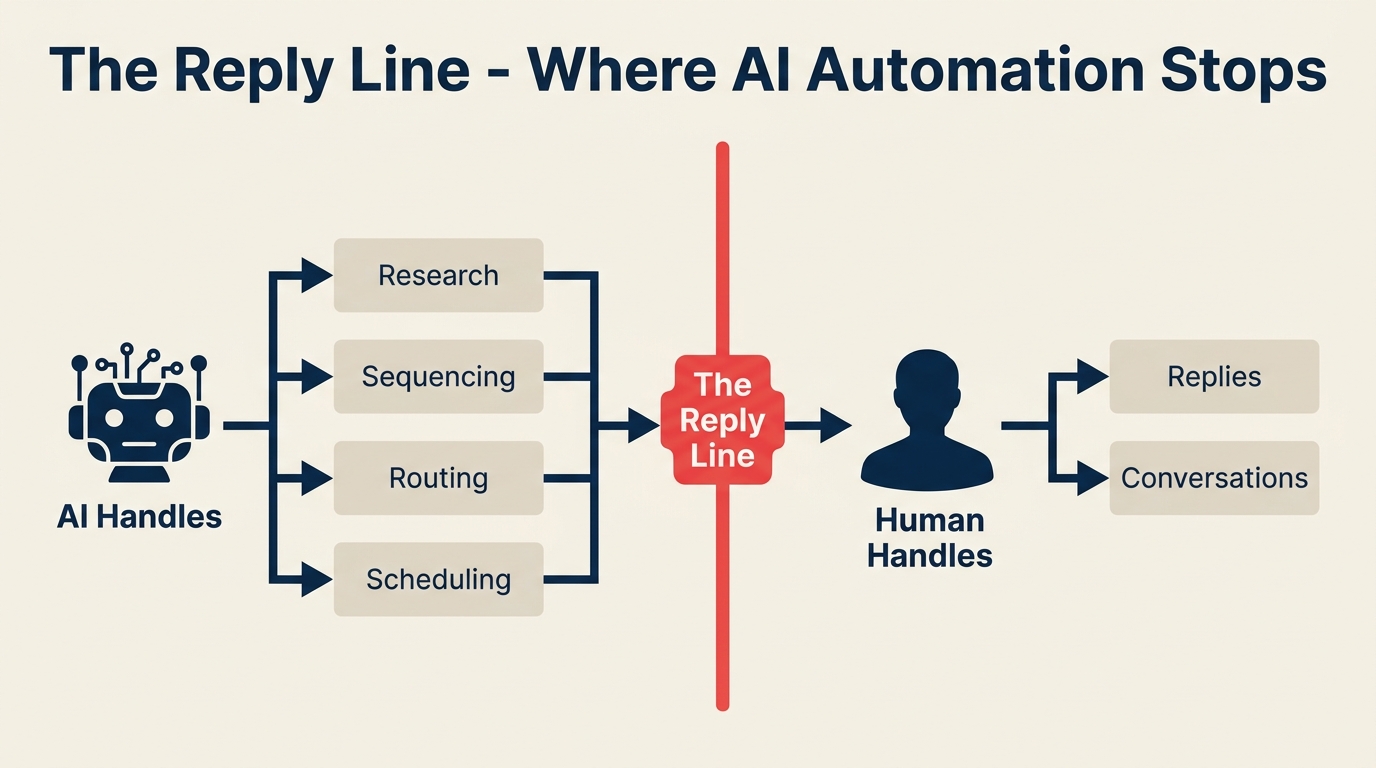
Semua yang ada setelah Reply Line membutuhkan manusia. Ketika seorang prospek merespons (dengan pertanyaan, keberatan, atau "menarik, ceritakan lebih lanjut"), kualitas tindak lanjut yang dilakukan menentukan apakah peluang itu akan berkonversi. AI bisa menyusun draf balasan. Namun tenaga penjual yang terampil membaca konteks tersembunyi, menyesuaikan nada secara real time, dan tahu kapan harus melambat alih-alih menekan.
Data headcount mengonfirmasi pembagian ini. Net headcount SDR B2B SaaS di AS turun sekitar 18 persen secara year over year pada 2026, menurut analisis penggantian Prospeo. Namun pemotongan itu tidak merata. Peran SDR junior yang berfokus pada sequencing volume tinggi turun 31 persen. Peran SDR senior dan "reply specialist" yang menangani percakapan langsung naik 14 persen.
Pasar tidak menggantikan SDR. Ia menggantikan bagian pekerjaan SDR yang lebih baik dikerjakan AI.
Mengapa "Penggantian Penuh" Terus Gagal
Vendor yang menawarkan penggantian penuh AI SDR memecahkan masalah yang salah. Volume outbound mudah digelembungkan dengan otomasi. Pipeline yang terkualifikasi tidak.
Ketika Anda menggantikan manusia dengan agen AI pada seluruh gerakan outbound, Anda kehilangan akumulasi konteks. Seorang SDR manusia pada email kelimanya dengan seorang prospek mengetahui hal-hal tentang prospek itu yang tidak tertangkap oleh satu pun field CRM. Agen AI memulai dari awal setiap kali.
Anda juga menghadirkan risiko deliverabilitas. Jangkauan AI bervolume tinggi dari domain yang sama, terutama dengan template yang menyebar ke ribuan urutan serupa, merusak reputasi pengirim dengan cepat. Beberapa pelanggan AI SDR yang melaporkan churn awal menyebut penempatan kotak masuk dan kesehatan domain sebagai kontributor utama hasil yang mengecewakan.
Dan ketika sesuatu rusak dalam proses itu, tidak ada manusia yang memiliki tanggung jawab atas hasilnya. Kesenjangan akuntabilitas itu sulit dipulihkan dalam tim yang menanggung quota.
Platform seperti suite GTM agentik Apollo dan Customer Engagement Agent Summer '26 Salesforce keduanya telah menarik diri dari bahasa penggantian penuh. Laporan Salesforce State of Sales 2026, yang dapat Anda baca dalam ulasan kami tentang agen AI dan Sales Ops, menemukan bahwa tim berperforma tinggi mengadopsi AI sebagai pengganda kapasitas, bukan pengganti headcount. Framing itu penting.
Seperti Apa Tim Hybrid yang Sesungguhnya
Dalam pengaturan hybrid yang berjalan baik, tumpukan teknologi penjualan AI menangani:
- Riset akun dan kontak (sinyal niat, technographic, peristiwa pemicu)
- Pembuatan urutan penjangkauan dan pengujian A/B
- Optimasi waktu pengiriman dan rotasi kotak masuk
- Perutean lead dan penugasan wilayah
- Penjadwalan dan konfirmasi pertemuan
Tim manusia menangani:
- Kualifikasi dan triase balasan
- Discovery langsung dan manajemen percakapan
- Penanganan keberatan
- Pengembangan hubungan dengan akun multi-pemangku kepentingan
- Setiap transaksi yang menunjukkan sinyal pembelian nyata
Ini bukan latihan pemotongan biaya. Ini adalah perluasan kapasitas. SDR manusia yang sama yang dulu menghabiskan 60 persen waktunya untuk riset dan sequencing kini bisa mengelola tiga hingga empat kali lebih banyak percakapan langsung per minggu. Di situlah peningkatan biaya per peluang sebesar 54 persen sebenarnya berasal: bukan dari memecat tenaga penjual, melainkan dari membuat waktu setiap tenaga penjual lebih produktif.
Untuk pemahaman lebih dalam tentang bagaimana agen AI membentuk ulang kualifikasi inbound bersamaan dengan outbound, lihat liputan kami tentang perusahaan yang melewatkan target pendapatan akibat ketidakselarasan pengeluaran AI dan RevvyAI 6sense untuk kualifikasi akun.
Uji 4 Pertanyaan Sebelum Anda Menandatangani
Jika Anda sedang mengevaluasi vendor AI SDR saat ini, jawab empat pertanyaan ini sebelum kontrak apa pun dikirimkan:
1. Apakah vendor masih menjanjikan penggantian SDR penuh? Jika ya, itu tanda bahaya. Vendor dengan tingkat retensi terbaik di 2026 telah beralih ke framing pengganda kapasitas. Bahasa penggantian penuh biasanya berarti produk dioptimalkan untuk demo, bukan penerapan nyata.
2. Tingkat balasan berapa yang diasumsikan model ROI vendor? Jika model itu mengasumsikan lebih dari 4 persen untuk outbound dingin, minta mereka menunjukkan data pelanggan nyata dari enam bulan terakhir. Rata-rata industri saat ini adalah 3,4 persen. Model yang dibangun berdasarkan tolok ukur 2022 akan mengecewakan.
3. Apa yang terjadi pada reputasi domain Anda dalam skala besar? Tanyakan secara spesifik bagaimana platform mengelola volume pengiriman di berbagai kotak surat, bagaimana cara menangani bounce rate, dan seperti apa protokol warm-up untuk domain baru. Deliverabilitas adalah pembunuh diam-diam dalam penerapan AI SDR.
4. Peran manusia mana yang direlokasi, bukan dihapus? Jawaban yang benar adalah rencana spesifik: tenaga penjual ini berpindah dari sequencing ke penanganan balasan, SDR ini menjadi spesialis percakapan, dan inilah cara kami mengukur output baru mereka. Jika jawaban vendor adalah "Anda akan membutuhkan lebih sedikit orang," Anda hampir menjadi bagian dari statistik churn tahunan 50 hingga 70 persen itu.
Apa yang Harus Dilakukan Pemimpin Penjualan Sekarang
Keputusan ringkasnya sangat jelas. Jika Anda belum memiliki alat AI yang mendukung gerakan outbound, Anda berada pada posisi tidak menguntungkan dari sisi biaya. Penurunan 54 persen dalam biaya per prospek terkualifikasi itu nyata dan dapat dicapai dengan pengaturan hybrid yang tepat.
Namun jika Anda tengah ditawari untuk memangkas seluruh tim SDR dan membiarkan AI menangani seluruh siklus outbound, data 2026 mengatakan tidak. Bukan karena outbound AI tidak bisa berhasil. Bisa. Tetapi karena nilainya ada pada serah terima, dan serah terima itu membutuhkan manusia di sisi lain Reply Line.
Investasikan pada AI yang membebaskan tenaga penjual terbaik Anda untuk memiliki lebih banyak percakapan. Pertahankan staf di Reply Line. Itulah panduan yang sedang diadopsi pasar, dan tingkat churn pada alat penggantian penuh menunjukkan hal itu tidak akan berubah dalam waktu dekat.
Untuk lebih lanjut tentang bagaimana agen AI membentuk ulang tumpukan teknologi penjualan modern, lihat analisis CRM berbasis AI-native vs. Salesforce kami.
Pertanyaan yang Sering Diajukan
Apakah AI SDR benar-benar menggantikan tenaga SDR manusia di 2026? Tidak di tingkat tim. Net headcount SDR dalam B2B SaaS AS turun sekitar 18 persen secara year over year, namun pemotongan terkonsentrasi pada peran junior dengan volume tinggi (turun 31 persen). Peran SDR senior dan reply-specialist naik 14 persen. Peran itu bergeser, bukan menghilang.
Apa risiko terbesar dari membeli platform AI SDR penggantian penuh? Churn dan deliverabilitas. Tingkat churn tahunan untuk alat AI SDR berkisar antara 50 hingga 70 persen, artinya sebagian besar pembeli pergi dalam satu tahun. Dua alasan paling umum adalah tingkat balasan yang jatuh di bawah proyeksi vendor dan kerusakan reputasi domain akibat jangkauan otomatis bervolume tinggi. Bangun model hybrid: AI menangani riset dan sequencing, manusia menangani balasan.
Bagaimana cara mengetahui apakah vendor AI SDR layak dibeli? Gunakan uji empat pertanyaan: Apakah vendor menjanjikan penggantian penuh (tanda bahaya)? Tingkat balasan apa yang diasumsikan model ROI mereka (seharusnya pada atau di bawah 3,4 persen untuk outbound dingin)? Bagaimana mereka melindungi reputasi domain dalam skala besar? Dan peran manusia mana yang direlokasi, bukan dipangkas, dalam model mereka?
Sumber: UserGems: Are AI SDRs Worth It?
Co-Founder, Rework.com
On this page
- Peringatan dari 11x.ai
- Apa yang Sebenarnya Ditunjukkan oleh Matematika Outbound
- Kerangka Kerja The Reply Line
- Mengapa "Penggantian Penuh" Terus Gagal
- Seperti Apa Tim Hybrid yang Sesungguhnya
- Uji 4 Pertanyaan Sebelum Anda Menandatangani
- Apa yang Harus Dilakukan Pemimpin Penjualan Sekarang
- Pertanyaan yang Sering Diajukan